Blog

  • 65,000 Sign Petition to Block Mamdani From NYC 9/11 Ceremony

    65,000 Sign Petition to Block Mamdani From NYC 9/11 Ceremony

    A petition with more than 65,000 signatures asks the National September 11 Memorial & Museum to exclude Mamdani. The larger disagreement is whether a mayor’s limited ceremonial presence protects or politicizes a day of remembrance.

    Curtis Sliwa criticized 9/11 families seeking to exclude Zohran Mamdani from the ceremony, calling them “sore losers,” according to the source headline. The dispute concerns Mamdani’s planned attendance at New York City’s September 11 remembrance ceremony marking the 25th anniversary.

    Some relatives want the National September 11 Memorial & Museum to bar New York City Mayor Zohran Mamdani from the commemoration. Mamdani says he will attend to honor families, survivors and first responders, leaving organizers’ established protocol at the center of an intensely personal public argument.

    A petition targets Mamdani’s presence

    More than 65,000 people had signed a petition by Aug. 1 asking the memorial and museum to exclude Mamdani, USA TODAY reported. The request is specifically about his attendance at the annual observance, not a proposed change to the event’s broader policies.

    New York National September 11 Memorial South Pool April 2012 9693C
    Image: NormanB, via Wikimedia Commons, CC BY-SA 3.0.

    Giovanni Galante, whose wife, Grace Catherine Galante, was working on the 105th floor of the North Tower, helped launch the petition. USA TODAY reported that a woman whose husband was killed in the attacks also helped launch it.

    Supporters say the anniversary should remain focused on mourning, unity, and rejection of the violence and extremism behind the 2001 attacks. They argue that Mamdani’s public positions, associations and statements make his presence inconsistent with that purpose.

    For those relatives, the question is not an abstract debate over civic etiquette. It is about the setting in which names are read and loved ones are remembered.

    Sliwa’s words sharpen the conflict

    Sliwa’s response — “Stop being sore losers!” — introduced a confrontational political frame into a dispute voiced by people grieving spouses, siblings and other relatives. His criticism characterizes the effort to exclude Mamdani as a reaction to the mayor rather than a request rooted in the meaning of the ceremony.

    That assessment is likely to anger petition supporters, who say they are trying to prevent the observance from becoming a fight over an elected official. Their concern is that Mamdani’s attendance itself could pull attention away from victims, survivors and first responders.

    Yet the opposing view is that singling out and excluding a sitting mayor could create its own political controversy. An official’s attendance is not necessarily an endorsement of every position associated with that official.

    The essential disagreement is therefore narrow but consequential: would Mamdani’s presence interrupt the day’s solemnity, or would barring him from a customary civic role do more to transform remembrance into political conflict?

    Families and survivors are not united

    The petition’s size shows substantial support for the request, but it does not establish that every signer is a victim’s relative, a survivor or a New Yorker. Nor does it show a single view among the people most directly affected by September 11.

    Jennifer Glass, a 9/11 survivor, told USA TODAY that she did not object to Mamdani attending if he did not speak or directly interact with families. Her position draws a line between bearing witness at the event and taking a visible role in it.

    Dennis McKeon, who organizes a Staten Island group for 9/11 survivors, made a similar point to CBS New York. He noted that mayors and governors have attended memorial events before, including when survivors and relatives had criticized their records on 9/11-related matters.

    Other relatives remain firmly opposed. Meryl Mayo-Marshall’s husband, Robert J. Mayo, died after staying behind at the World Trade Center to help people evacuate. Lori Schertzer Brody, whose brother Scott Schertzer was killed in the attacks, told a USA TODAY network partner that Mamdani should stay home.

    The memorial’s protocol sets limits

    The National September 11 Memorial & Museum has described its annual commemoration as intentionally free of politics. CBS New York reported that officials across the political spectrum attend, do not make remarks and stay in a designated area during the ceremony.

    That structure matters because it separates attendance from participation. The event can recognize the presence of public officials while reserving its central space for the names of those killed, their families, survivors and first responders.

    It also means the current request appears to challenge a longstanding practice rather than a rule created for Mamdani. There is no indication in the available reporting that he is scheduled to speak.

    Mamdani said in a statement reported by CBS New York that he would “proudly honor” families, survivors and first responders affected by the terror attack by standing alongside them at the commemoration.

    Why the attendance question persists

    A designated, non-speaking role may be a practical compromise for people who accept that elected leaders attend public memorials but do not want them to dominate the program. For relatives seeking Mamdani’s exclusion, however, limiting his role does not resolve their objection to his presence.

    Both sides describe the ceremony as a day that should remain solemn. Their conflict is over the method of protecting that solemnity and over whether the office of mayor belongs within the boundaries of an occasion shaped by individual loss.

    The petition also carries resonance because September 11 commemorations are unlike routine government events. For bereaved relatives and survivors, decisions about proximity, participation and public visibility can carry a weight that standard political protocol does not.

    What remains unresolved before September 11

    Based on the available reporting, Mamdani still intends to attend, and the memorial has pointed to its established nonpolitical format. It is not clear whether organizers will make any change in response to the petition.

    It also remains unclear whether the memorial’s limits on public officials will reassure those who want Mamdani excluded. Sliwa’s rebuke may make that discussion more difficult by questioning the motivations of people who say their objections arise from mourning.

    Whatever organizers decide, the enduring test for New York City’s 25th-anniversary commemoration will be whether it keeps the focus on those killed on September 11, 2001, and on the survivors, first responders and families whose lives were permanently changed.


  • Hegseth Pushes Back as USS Abraham Lincoln Deployment Draws Questions

    Hegseth Pushes Back as USS Abraham Lincoln Deployment Draws Questions

    More than 5,000 sailors and Marines are reported to be aboard the carrier after an unusually long stretch at sea. The dispute is now centered on whether the Navy can document how it is managing fatigue, supplies, morale and readiness.

    Pete Hegseth said reports about poor conditions aboard the USS Abraham Lincoln were misrepresented as the carrier’s deployment in the Middle East nears nine months. The accounts have raised questions about sailor welfare and ship readiness for the more than 5,000 sailors and Marines reported to be aboard.

    The dispute centers on reports about conditions aboard the USS Abraham Lincoln, including alleged supply and plumbing problems, exhaustion and mental-health strain. Hegseth’s rejection of those reports has not ended congressional scrutiny of a deployment that had lasted more than 240 consecutive days at sea without a port call by mid-August.

    Hegseth disputes the portrayal

    Speaking during a visit to Panama, the defense secretary said the military ensures ships, crews and commanders receive what it can provide throughout a deployment. He acknowledged that some deployments run longer than others and praised sailors operating in austere conditions with fewer opportunities to visit ports.

    His clearest response was that depictions of deteriorating conditions on the Lincoln had been “completely misrepresented.” The statement amounts to a firm challenge to the broader portrayal of the ship’s circumstances, rather than a public point-by-point response to each allegation.

    That distinction matters. Senior officials can express confidence in a crew and its command, but claims about supplies, maintenance, medical support and workload ultimately depend on records and assessments that have not been publicly detailed in Hegseth’s remarks.

    Families raised several concerns

    The reports cited by lawmakers and news organizations did not focus on one isolated problem. They included allegations of shortages of basic supplies, possible water-contamination issues, plumbing troubles, disrupted mail, fatigue and falling morale.

    Some accounts also described serious mental-health concerns, including allegations involving sailors who may have tried to go overboard. The available reporting does not establish what happened in any individual case, whether a specific event was related to deployment conditions or what followed afterward.

    A Navy official told the Guardian that, based on the information available to the command, it had not found an increase in reported suicidal ideation or suicide attempts aboard the ship. That statement addresses whether the command identified a rise in those reported incidents; it does not settle every concern about conditions, access to care, morale or exhaustion.

    A longer-than-usual stretch at sea

    The Lincoln departed its San Diego home port in November and was later redirected to the Middle East for U.S. operations connected to the war with Iran, according to the reporting. By mid-August, it had spent more than 240 straight days at sea without a port call.

    Carrier deployments are often planned for roughly six or seven months. Extended operations at sea are part of naval life, but port visits generally offer crews a break from the demands of continuous shipboard work.

    Those demands can be significant even during a typical deployment. During operations, sailors may work shifts longer than 12 hours, while sleep is shaped by watch rotations, mission requirements, noise and close quarters.

    A 2024 Naval Postgraduate School study cited in the reporting linked poorer and more fragmented sleep among sailors with worse mood. The study does not establish what is occurring aboard the Lincoln, but it helps explain why fatigue and morale are treated as operational readiness concerns, not simply quality-of-life issues.

    Congress wants measurable answers

    Sen. Richard Blumenthal, a Connecticut Democrat on the Senate Armed Services Committee, wrote to Hegseth and acting Navy Secretary Hung Cao seeking information about the deployment and the crew’s conditions. He requested a response by Aug. 27.

    Blumenthal said he was concerned about the increasing length of carrier strike group deployments and whether the Navy can generate carrier forces sustainably while protecting service members’ well-being. Among other questions, he asked how the department tracks fatigue and morale.

    The letter shifts attention from broad public claims toward information that could be evaluated: staffing, maintenance, access to medical care, sleep, supply availability, mail service, port-call planning and procedures for recognizing personnel in distress.

    Democrats have described the issue as both a personnel and readiness matter. For the administration and Pentagon, the challenge is to show how operational requirements are being balanced with the needs of a crew assigned to an extended mission.

    Welfare and readiness overlap

    There is little disagreement that carrier deployments are hard. The sharper disagreement is whether the Lincoln’s extended period without port calls, alongside the reported problems, calls for a different response from Navy leadership.

    Critics see the duration of the deployment and reports of exhausted sailors as possible risks to safety, retention and mission performance. Hegseth and the Pentagon, by contrast, have reason to resist what they see as incomplete or sensationalized accounts that could unfairly cast doubt on a deployed crew and command.

    Both views lead to the same practical test: whether the Navy has enough personnel, supplies, maintenance support and mental-health resources for the mission it has assigned. A carrier’s ability to keep operating depends on more than the resolve of its crew.

    What could settle the dispute

    A detailed Pentagon reply to Congress could clarify the carrier’s port-call history, reported supply or maintenance issues, available medical and behavioral-health resources, and the way leaders monitor fatigue and well-being.

    It also remains unclear when the Lincoln will be relieved. Reporting indicated that the USS George Washington was moving toward the Middle East and could replace the Lincoln, though the Navy had not publicly confirmed a timetable for a full handoff.

    Hegseth has rejected the account of poor conditions aboard the USS Abraham Lincoln. The unresolved question is whether the Navy can provide specific, credible information addressing the concerns behind those reports and explaining how the lengthy deployment is being managed.

  • Stephen Miller’s Fox News Attack on Democrats Backfires Over ‘Putrid and Hateful’ Line

    Stephen Miller’s Fox News Attack on Democrats Backfires Over ‘Putrid and Hateful’ Line

    A Fox News argument about immigration, court challenges and Democratic opposition quickly became a dispute over the language Stephen Miller used. The exchange shows how a single sweeping accusation can overtake the policy message it was meant to reinforce.

    Stephen Miller criticized Democrats during Wednesday remarks on Fox News while defending the Trump administration’s agenda, especially its approach to border security and deportations. His claim that Democrats were defending what is “putrid and hateful” sparked swift criticism and backlash online, shifting attention from his policy argument to the rhetoric itself.

    Miller’s Fox News attack on Democrats became a debate over credibility and accountability because critics used his own language to scrutinize the administration he represents. The online response does not establish a broader change in public opinion, but it illustrates how quickly a political message can be overtaken by one combustible phrase.

    A charged line takes over

    Speaking with Fox News anchor Will Cain, Miller portrayed Democrats and the political left as obstacles to President Donald Trump’s priorities. He said efforts to dismantle what he called a left-wing ideology were being challenged in court, and he pointed to border security and deportations as policies Democrats wanted to block.

    Layers of Concertina are added to existing barrier infrastructure along the U.S. Mexico border
    Image: CBP Photography, via Wikimedia Commons, Public domain.

    That account reflects a familiar Trump administration position: legal challenges and Democratic resistance, in this view, interfere with public-safety and immigration measures that supporters believe voters endorsed.

    But Miller’s sharpest language became the center of the reaction. “They are there defending the sexual abusers,” he said of Democrats, adding that they were defending “what’s putrid and hateful.”

    The phrase carried more weight online than his wider claims about lawsuits, deportations or political opposition. It turned a television appearance focused on policy into an argument about who could credibly make such a moral accusation.

    Critics reverse Miller’s framing

    The backlash documented in the available reporting came from prominent critics and progressive accounts, which argued that Miller’s allegation left him and the Trump administration open to charges of hypocrisy.

    Mehdi Hasan, founder of Zeteo News and a former MSNBC commentator, responded by describing Miller as someone who works for an “adjudicated sexual abuser.” The comment referred to the civil verdict in which a New York jury found Trump liable for sexually abusing and defaming writer E. Jean Carroll.

    Trump has denied Carroll’s allegations and has continued to challenge aspects of the litigation. That legal context is central to why critics saw Miller’s language as vulnerable: they did not need to contest every aspect of his immigration argument to challenge the moral framing of his attack.

    The official MeidasTouch account responded simply, “Oof.” The brevity of that post pointed to the broader online argument—that Miller’s wording created an immediate opportunity to redirect attention from Democrats’ positions to Republican credibility and the record of Trump allies.

    The backlash was not one claim

    Democratic strategist Leslie Marshall also challenged Miller’s assertion that Democrats were the party defending abusers. In a social-media post cited by Raw Story, she referenced controversies involving Republican figures, the Epstein files and Texas Attorney General Ken Paxton.

    Those matters involve separate facts, legal histories and political contexts. They should not be treated as interchangeable evidence or as a resolution of the underlying dispute over immigration policy.

    Still, the responses show why Miller’s broad accusation became difficult to contain. Critics used the same basic reversal: an effort to assign a morally loaded label to Democrats was turned into a critique of Trump and the Republican Party.

    Progressive writer Polly Sigh put that position more directly, arguing that Miller’s description better applied to Trump and Republicans. Whether or not people accept that claim, it explains the mechanics of the online counterattack.

    Immigration remained the real dispute

    The viral argument did not erase the policy disagreement beneath it. Miller was defending the administration’s immigration agenda and arguing that Democrats want to prevent Trump from securing the border and deporting people who are in the country illegally.

    Supporters of the administration’s tougher approach say it is needed to enforce immigration law, deter unlawful crossings and restore executive authority over border policy. They also contend that lawsuits can delay or weaken initiatives they believe voters elected Trump to carry out.

    Opponents take a different view. They argue that immigration enforcement must be limited by due process, statutory boundaries and constitutional protections, and that court challenges can serve as a necessary check when administration policies may exceed legal authority or harm people without adequate safeguards.

    Miller’s appearance compressed those competing arguments into a fight between decisive action and obstruction. Critics rejected that description, particularly when it was paired with language accusing Democrats of defending moral depravity.

    Why the word “backfire” needs limits

    The online criticism was swift, but it is not the same as evidence that Miller’s remarks changed minds, weakened support for the administration or affected policy. The reporting identifies reactions from critics and progressive accounts; it does not measure how Fox News viewers, Republican voters or the broader electorate received the segment.

    There is also no evidence in the available reporting that Miller withdrew or clarified his remarks. The White House and the Fox News segment were not presented as responding to the criticism.

    That leaves a narrower, but still meaningful, conclusion. Miller’s comments generated a rapid public counterargument centered on his language and the administration’s credibility. Calling the episode a complete political backfire would go beyond what the evidence establishes.

    In a polarized media environment, the same exchange can reinforce opposing views. Supporters may see Miller as aggressively defending Trump’s agenda, while opponents may see the moment as evidence that the administration relies on inflammatory rhetoric that can be turned against it.

    One phrase eclipses the message

    Miller is among the Trump administration’s most prominent advocates for its immigration agenda, and his Fox News comments fit a broader strategy of presenting legal, congressional and media opposition as part of a larger ideological conflict.

    That strategy can sharpen a political message, but it also raises the cost of absolute language. Once Miller used “putrid and hateful,” the conversation no longer required critics to engage every claim he made about border policy, deportations or court challenges.

    They could instead focus on the messenger, Trump’s legal and political record, and the contrast they saw between Miller’s accusation and controversies involving Republican officials. The immediate outcome was not a settled verdict on immigration policy. It was a struggle over which side could claim the moral high ground—and whether anyone outside already committed partisan audiences was persuaded.

  • USS Abraham Lincoln Sailors Reportedly Tried to Jump Overboard on 260-Day Deployment

    USS Abraham Lincoln Sailors Reportedly Tried to Jump Overboard on 260-Day Deployment

    The Navy says it has not seen an increase in suicidal ideation or attempts aboard the carrier, while lawmakers and military families are demanding more answers. The dispute comes as the ship’s crew endures one of the Navy’s longest uninterrupted stretches at sea.

    U.S. sailors reportedly attempted to jump overboard while serving aboard the USS Abraham Lincoln during an extended Middle East deployment, raising urgent concerns about conditions on a carrier that has spent more than 250 consecutive days at sea. The ship’s roughly 5,000 sailors and Marines have been operating far from home as the Navy faces questions about morale, supplies and mental health support.

    The Navy says it has not observed an increase in suicidal ideation or attempts aboard the Abraham Lincoln. But a sailor went overboard in early August, according to a Navy official, and reports surrounding the carrier have prompted U.S. military families and lawmakers to seek a fuller accounting of what life has been like during the unusually long deployment.

    A carrier deployment stretched far beyond plan

    The Abraham Lincoln deployed from San Diego on Nov. 21 and arrived in the Middle East in January, before the U.S. war with Iran began on Feb. 28, according to the Associated Press. The carrier was originally expected to return home in May.

    Instead, its mission continued as the U.S. maintained military operations in the region. The carrier strike group’s uninterrupted time at sea has passed 260 days, a record-setting stretch that has put the human strain of long deployments alongside the operational demands placed on ships, aircraft and equipment.

    Long deployments are part of naval life, particularly during conflict. What makes this case stand out is the combination of duration, limited port calls, disrupted supply routes and the uncertainty over when the Lincoln’s crew will be fully relieved.

    The reported overboard incident

    A Navy official told the AP that one sailor went overboard in early August, was quickly recovered, treated by the ship’s medical department and transferred off the carrier for follow-on care. The official did not say whether the episode was being treated as a suicide attempt.

    That distinction matters. Public reporting has described sailors struggling during the extended deployment, including reports that some tried to jump overboard. Yet the Navy has not publicly released the underlying data that would allow outsiders to assess the scale or nature of those reports.

    In its statement, the Navy said it had not observed an increase in suicidal ideations or attempts aboard the ship. Officials declined to provide figures, citing operational security and patient privacy concerns.

    Those privacy considerations are real, especially when individual service members may need medical care. At the same time, the lack of detail has left families and elected officials trying to determine whether isolated incidents point to a broader problem or whether public accounts have overstated conditions.

    Supplies, mail and daily life

    Mental health concerns have emerged alongside earlier reports about shortages aboard the Lincoln. The Navy said combat activity had disrupted traditional supply hubs in the Middle East, creating challenges for a ship operating in what it described as a highly contested environment.

    According to the Navy, leaders prioritized supplies in this order: food, hygiene items and then mail. The service has said sailors now have access to clean water and healthy meal options.

    That explanation does not erase why missed mail and scarce everyday items can carry outsized weight on a ship at sea for months. For a crew separated from families, mail, routine food choices and access to basic personal supplies are not small comforts; they are part of how sailors sustain a sense of normal life during deployment.

    The Navy previously rejected reports of food shortages as false. The later acknowledgement of supply disruption has sharpened the debate over whether officials initially minimized problems or whether the public picture has mixed legitimate hardship with claims the service disputes.

    Lawmakers press the Pentagon

    Several Democratic lawmakers have called for greater oversight of conditions aboard the Abraham Lincoln. Sen. Richard Blumenthal of Connecticut, a member of the Senate Armed Services Committee, wrote to Navy leadership seeking answers about the prolonged deployment and its implications for sailors.

    Arizona Sen. Ruben Gallego, a Marine Corps veteran, said he wanted to organize a bipartisan congressional delegation to visit the ship. He described the reported treatment of sailors as dangerous and unacceptable.

    The attention is significant because it shifts the issue from private family concern to formal congressional scrutiny. Lawmakers are not simply questioning whether the carrier can stay deployed; they are questioning how the Pentagon measures readiness when the people sustaining that readiness are under prolonged stress.

    The calls for oversight also arrive while the administration has offered little public clarity on how long the broader Iran conflict and the blockade of Iranian ports in the Strait of Hormuz may continue. That uncertainty makes a clear rotation plan especially important for service members and their families.

    Pentagon disputes the bleakest accounts

    Defense Secretary Pete Hegseth has said reports about the Lincoln’s conditions were completely misrepresented. During a trip to Panama, he said he wanted sailors brought home and crews rotated as quickly as possible, while praising their performance in difficult conditions.

    U.S. Central Command likewise said the Abraham Lincoln Carrier Strike Group remained resilient and resolved after more than 260 days at sea, 10,000 aircraft flights and 1.5 million pounds of ordnance expended.

    Both statements underscore the competing narratives now surrounding the ship. Pentagon leaders emphasize mission performance and say support has been provided. Critics argue that operational output cannot, by itself, answer whether sailors have had adequate access to supplies, rest, communication with home and mental health care.

    Neither view fully resolves the core question: whether the Navy’s existing safeguards are sufficient when a deployment grows far longer than initially expected.

    Relief may be moving closer

    The USS George Washington has begun moving west from the Asia-Pacific and was reported to be heading toward the Indian Ocean, a route that could position it to replace the Lincoln as one of two U.S. carriers in the Middle East.

    Navy leaders have also held a tense town hall with Lincoln families, where senior commanders promised to do what they could to relieve the carrier. Those assurances matter, but no public timeline has established exactly when every member of the Lincoln’s crew will return home.

    The episode has become a test of how candidly the military communicates about the costs of extended operations. A ship can remain mission-capable while its crew is under severe pressure; recognizing both realities is essential if the Navy wants families, sailors and lawmakers to trust its response.

  • Karoline Leavitt to leave White House briefing room at month’s end, Trump says

    Karoline Leavitt to leave White House briefing room at month’s end, Trump says

    Leavitt’s departure removes a highly visible Trump administration messenger from the briefing room. Her replacement has not been named, leaving the White House’s next communications move unresolved.

    Donald Trump said Karoline Leavitt will leave her position as White House press secretary at the end of the month. Leavitt, 28, said she wants to spend more time with her young children and family, bringing a planned close to her tenure as the public face of the Trump administration’s daily response to reporters.

    The departure matters because the White House press secretary is not simply a briefing-room job. The role shapes how an administration explains its decisions, handles conflict with the press and communicates in fast-moving moments. Trump has said Leavitt will remain one of his outside advisers, but he has not announced who will replace her.

    A departure framed around family

    Trump announced Leavitt’s planned resignation in a social-media post, calling her one of his most trusted aides and saying he respected her decision. He said she would continue as a top outside adviser and an influential Republican voice.

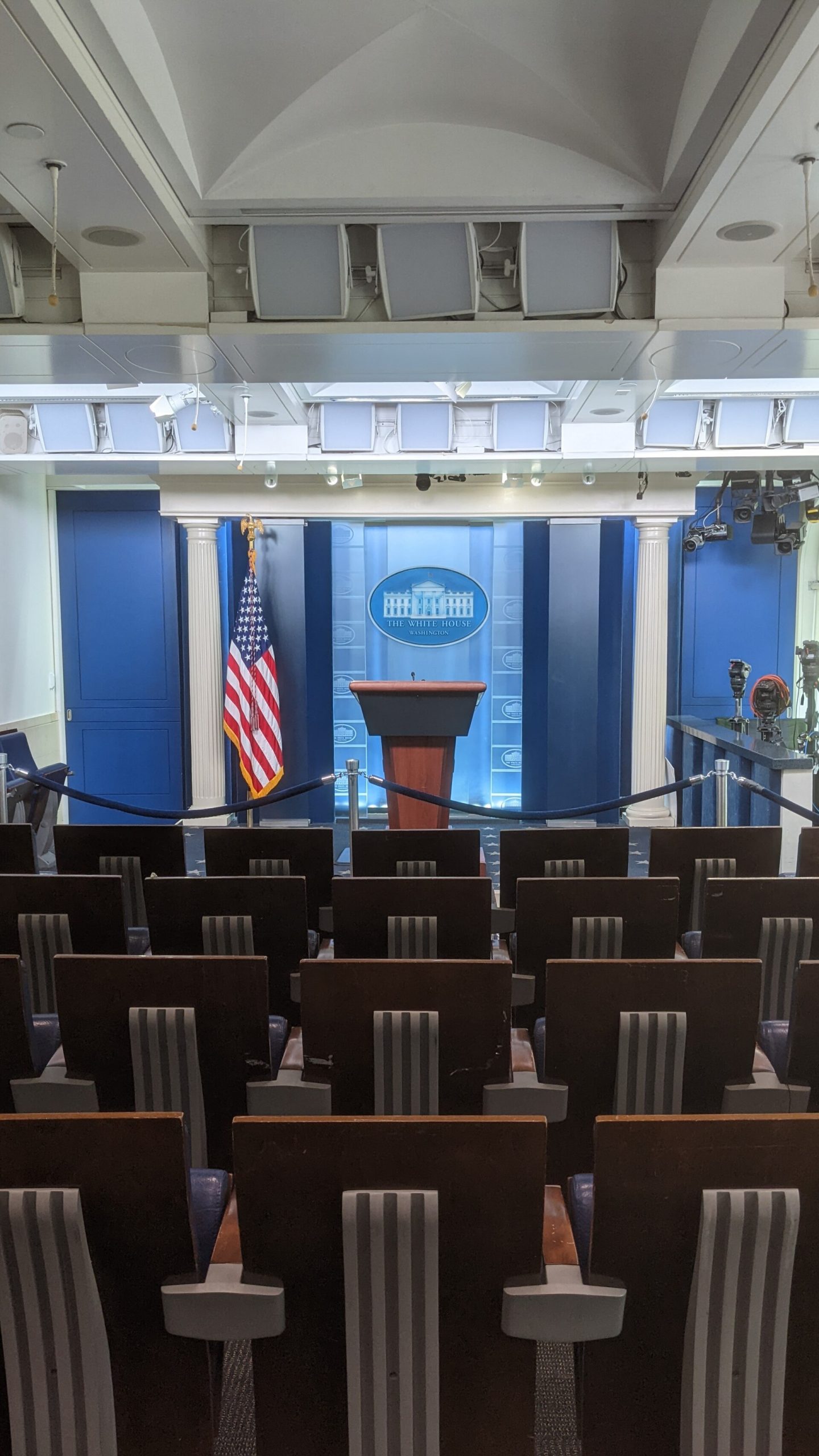
    White House briefing room empty
    Image: CabbageFuel, via Wikimedia Commons, CC BY-SA 4.0.

    Leavitt later described the decision as bittersweet. She said that after returning from maternity leave, she concluded she could not give both her two young children and the press secretary role the constant attention each required.

    Her explanation puts a personal dimension on a job often defined by political combat. White House press secretaries work through rapid news cycles, travel, televised briefings and the expectation that they can speak quickly for the president on almost any subject.

    Why the press secretary job matters

    The press secretary serves as a key bridge, and sometimes a barrier, between a president and the journalists covering the White House. The office coordinates official responses, manages press access and helps turn policy decisions into the administration’s public message.

    That makes a replacement consequential even when the broad political direction of an administration does not change. A new spokesperson may bring a different tone, different relationships with reporters and a different approach to the daily briefing.

    Leavitt’s tenure was marked by a confrontational relationship with parts of the press corps. She repeatedly criticized what she portrayed as biased coverage, while supporters praised her for forcefully defending Trump and staying aligned with his message.

    Critics saw that posture as part of a broader White House effort to challenge established media practices. Supporters viewed it as a correction to a press culture they believe has treated Trump unfairly. Whoever follows Leavitt will inherit that tension as well as the title.

    A historic rise at 28

    Leavitt took the job last year and became the youngest person to serve as White House press secretary. Her age made her appointment notable, but her relationship with Trump had been building for years before she took the podium.

    During Trump’s first term, she worked as an assistant press secretary and speechwriter. She later served as communications director for New York Republican Rep. Elise Stefanik and ran unsuccessfully for Congress in New Hampshire in 2022.

    Leavitt subsequently worked as a spokesperson for MAGA Inc., a pro-Trump fundraising group, before becoming national press secretary for Trump’s 2024 campaign. That background gave her deep familiarity with Trump’s political operation before she entered the White House role.

    Her relatively short time as press secretary still placed her among the longer-serving chief spokespeople across Trump’s two administrations, according to the BBC. The position has historically had a high turnover rate, reflecting the intensity and visibility of the work.

    Her leave highlighted the bench

    Leavitt gave birth to a daughter in May and returned from maternity leave last month. She also has a two-year-old son with her husband, Nicholas Riccio.

    During roughly seven weeks away from the White House, other senior administration figures appeared at the briefing-room podium, including Vice President JD Vance, Secretary of State Marco Rubio and Interior Secretary Doug Burgum. Their appearances showed that the administration can spread communications duties among senior officials, at least temporarily.

    But a permanent press secretary does more than deliver occasional remarks. The person is expected to be a reliable daily representative of the president, negotiate practical issues with the press corps and make fast judgments about when an answer should come from the podium, another agency or the president himself.

    That combination of political trust, media experience and willingness to operate under constant scrutiny narrows the field. It also explains why Trump’s decision on a successor will draw attention beyond the usual staffing announcement.

    The successor question remains open

    No replacement or selection timetable was immediately announced. The White House was contacted for comment by the BBC on potential choices and the timing of a decision.

    Trump’s statement suggests Leavitt is leaving the formal job, not ending her connection to his political orbit. Outside advisers can remain influential, especially when they have a direct line to the president and a public profile among party supporters, though their responsibilities are different from holding an official White House post.

    Stephen Miller, the White House deputy chief of staff, described Leavitt as a close friend and role model in a Fox News interview. He said they would continue working together, reinforcing the message that her departure is being presented as a personal choice rather than a split with the administration.

    The next question is whether Trump chooses an experienced communications official, a familiar campaign voice or another senior figure already trusted inside the West Wing. Until a name is announced, the administration’s day-to-day press strategy will remain a visible unanswered piece of the transition.

    A changing face, not necessarily a break

    Leavitt’s exit will change who stands behind the White House lectern, but it does not by itself signal a change in the administration’s policies or its combative approach toward many journalists. Trump’s praise and his plan to keep her as an outside adviser point instead to continuity in the broader political relationship.

    Still, personnel matters in a White House where message discipline is central to governing and campaigning. The successor’s first briefings will offer the clearest indication of whether the tone, access practices and relationship with reporters will follow Leavitt’s model or take a different turn.

    For now, the confirmed points are narrow: Leavitt plans to step down at month’s end, her stated reason is to devote more time to her family, and Trump has said she will remain part of his wider circle. The unresolved issue is who will take on one of Washington’s most demanding public-facing jobs next.

  • Fetterman Pledges Not to Campaign Against McCormick in 2030

    Fetterman Pledges Not to Campaign Against McCormick in 2030

    John Fetterman’s pledge not to oppose Dave McCormick is a striking show of bipartisan loyalty from two senators who still sit on opposite sides of major political fights. Their relationship has already moved beyond friendly words into joint public appearances, legislation and fundraising.

    John Fetterman said he will not campaign against Dave McCormick in a potential 2030 Senate race, saying the two Pennsylvania senators are friends. The Democratic senator said he would not “move against” McCormick, a Republican, if McCormick seeks a second term — an unusually personal pledge in a state where national parties routinely treat Senate contests as high-stakes fights.

    The remark does not mean a 2030 campaign is underway. It does show that Fetterman and McCormick are making their cross-party working relationship unusually visible, with joint appearances, shared legislation and a fundraising vehicle that asks donors to back both men.

    Fetterman framed it as friendship

    Fetterman made the comment when asked by the Washington Examiner whether he would support or oppose a future McCormick reelection bid, according to reporting by The Hill. McCormick has not announced a 2030 campaign.

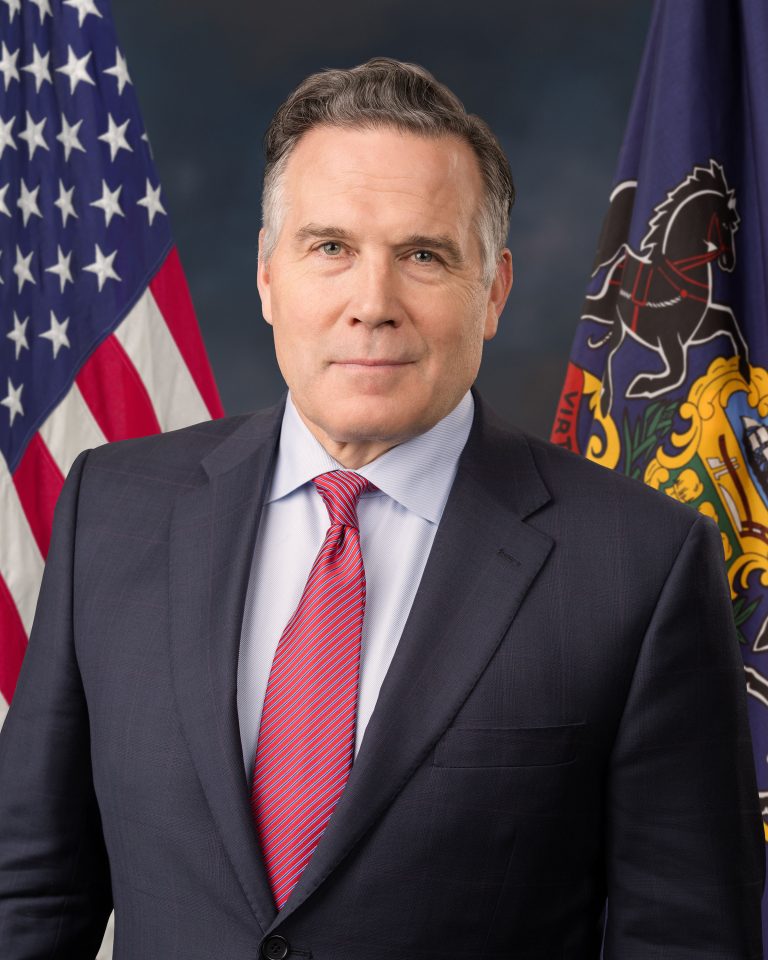
    McCormick Portrait
    Image: United States Senate, via Wikimedia Commons, Public domain.

    Fetterman’s answer was direct: he said he would never move against “my friend,” and called McCormick a “great guy.” That is a notable formulation from a senator who remains a Democrat while describing a Republican colleague in personal, rather than merely institutional, terms.

    There is an important limit to what Fetterman said. He did not endorse McCormick, announce a joint campaign operation or say he would actively assist a reelection effort. His statement was a commitment not to campaign against McCormick if the Republican runs.

    An uncommon pairing in Pennsylvania

    Pennsylvania’s Senate delegation is split between the parties, a setup shared by only a small number of states. Split delegations can cooperate on state priorities, but Fetterman and McCormick have made their partnership more public than most.

    The Hill reported that the two have appeared together in the media and co-sponsored legislation. In July, they also launched a joint fundraising effort, Common Ground PA, which accepts donations intended to support both senators.

    A spokesperson for the group told The Center Square that its donors value the senators’ collaboration on behalf of Pennsylvania. That pitch is politically unusual because fundraising organizations are commonly built to help one party gain ground against the other.

    For supporters, the arrangement can look like a practical response to the job voters elected both men to do: compete nationally, but work together when Pennsylvania’s interests overlap. Critics in either party may see a different risk — that conspicuous comity can blur the contrasts voters expect from political opponents.

    McCormick has praised Fetterman, too

    The goodwill is not one-sided. McCormick recently praised Fetterman in an appearance on “The Cats Roundtable,” saying he was fortunate to have a good partner in Pennsylvania, The Hill reported.

    McCormick also said Fetterman had been willing to challenge what the Republican called “craziness” within the Democratic Party. He pointed to progressive victories in Democratic primaries during the 2026 midterms and argued that Fetterman’s positions had made him unpopular with some Democrats.

    That praise carries political weight because it is aimed at Fetterman’s differences with his own party, not simply at a shared Pennsylvania project. McCormick said people had tried to discourage him from praising his relationship with Fetterman, suggesting both senators know their alliance can be hard to explain to partisan audiences.

    Shared rapport, real differences

    The senators’ cordial relationship should not be mistaken for ideological agreement. Fetterman has criticized democratic socialism and parts of the progressive movement, and he has made support for Israel a central dividing line.

    At The Hill Nation Summit, Fetterman said he had no plans to leave the Democratic Party. He also said he would consider leaving if the party formally became anti-Israel, describing the issue as one of moral clarity.

    That posture has prompted public encouragement from Republicans. Senate Majority Leader John Thune said in late July that Republicans would welcome Fetterman if he chose to switch parties, according to The Hill.

    But Fetterman’s stated position remains that he plans to stay a Democrat. His friendship with McCormick, therefore, is not evidence of a party switch or proof that the two will agree on future votes. It is evidence that political alliances can be narrower and more personal than party labels suggest.

    Why the 2030 pledge stands out

    A Senate election is still years away, and the field, issues and political climate are unknown. McCormick’s plans are also unsettled. Fetterman’s comment matters now because it establishes a public boundary well before those variables come into focus.

    For Pennsylvania Democrats, the unanswered question is whether Fetterman would remain neutral if McCormick faces a serious Democratic challenger. A pledge not to campaign against an incumbent can matter in a statewide race even without an endorsement, particularly when it comes from the state’s other senator.

    For Republicans, Fetterman’s words offer a rare validation from across the aisle, but they do not erase the policy and electoral differences that would shape any future contest. Party organizations, candidates and voters would still decide how aggressively to contest the seat.

    The immediate takeaway is simpler: Fetterman is publicly choosing his relationship with McCormick over the usual expectation that senators work to defeat the other party’s incumbents. Whether that choice remains intact through a future campaign season is a question for a race that, at this point, has not been announced.

  • Mike Huckabee Calls Qusra Settler Siege a ‘Horrific Act of Terror’

    Mike Huckabee Calls Qusra Settler Siege a ‘Horrific Act of Terror’

    The unusually blunt language from a U.S. ambassador highlights the mounting pressure around settler violence in the occupied West Bank. For families in Qusra, the immediate question is whether military intervention will lead to lasting protection.

    Israeli settlers besieged Palestinian homes in the West Bank town of Qusra for five nights, according to residents, blocking families from leaving and disrupting water and electricity. U.S. Ambassador Mike Huckabee called the siege a “horrific act of terror,” an unusually sharp public rebuke from a diplomat closely associated with support for Israeli settlements.

    The immediate crisis remains unsettled. Israeli troops intervened, declared Qusra a closed military zone and said they dismantled illegal outposts, but residents said settlers returned and that families still faced uncertainty over supplies, access and the security of their homes.

    Five nights around three homes

    The confrontation centered on three homes on the outskirts of Qusra, a Palestinian town in the northern occupied West Bank. Dozens of Israeli settlers arrived on a Sunday, residents told The Associated Press, then surrounded the homes, blocked doors and erected tents nearby.

    Qusai Abu Rida said he was inside one of the homes with his teenage son when water and electricity were cut. The family relied on well water while his brother, an Ohio resident who owns the house, followed events through security-camera footage and tried to get updates from afar.

    For residents, the word “siege” describes more than a threatening presence outside. It means being unable to leave safely, obtain food and water normally, or know when basic utilities could be cut again. That is why the dispute has drawn attention beyond a single village confrontation.

    Huckabee’s language broke the pattern

    Huckabee said the actions were intended to “intimidate and harass” the family and described them as disgusting. His decision to call those responsible “terrorists” stood out because U.S. officials have generally used that term for Palestinian militant groups rather than Israeli settlers accused of violence.

    The ambassador said the U.S. Embassy had been coordinating with Israeli military and police authorities. The statement did not announce a specific U.S. policy change or sanction, but it publicly placed the episode in a category of conduct Washington says it finds intolerable.

    That matters because Huckabee has long supported Israeli settlements, and President Donald Trump’s administration has taken positions viewed as strongly favorable to the settlement movement. During Trump’s first term, the administration signaled broad acceptance of settlements. At the start of his second term, it lifted Biden-era sanctions on settlers accused of violence.

    The rebuke therefore creates a clear distinction: support for settlements does not amount to public acceptance of violence or intimidation against Palestinian civilians. How firmly that distinction is enforced on the ground remains the larger test.

    Israeli military action has not ended fears

    Israel’s military condemned the Qusra siege as “illegal, reprehensible, and unacceptable” on Tuesday and declared the area a closed military zone. The following day, village video showed settlers returning, attempting to block a road with rocks and clashing with Israeli soldiers, according to the AP report.

    On Thursday, the military said it had dismantled two illegal outposts in Qusra and a nearby village, detained one Israeli and sent additional soldiers for defensive missions and patrols. It also said it had checked on the families and found they had basic food and water supplies on Wednesday.

    Residents offered a more troubling account. Loui Ridi, the Ohio-based homeowner, said settlers repeatedly came back after military interventions. He said that even after water and electricity were reconnected, settlers cut the lines again.

    Qusra Mayor Abdel Azim Wadi said Israeli forces had evacuated more than a dozen homes so troops could take positions in the village. Abu Rida said families were told they had 30 minutes to leave their homes and gather in one of the besieged houses. The military said soldiers had been instructed to allow families to remain at home, but residents said they had not yet returned.

    Qusra reflects a wider West Bank crisis

    The episode comes amid a broader rise in settler violence and settlement expansion in the West Bank, territory Israel captured in the 1967 war and which Palestinians seek as the core of a future state. Most of the international community considers Israeli settlements there illegal, while Israel disputes that position.

    The United Nations humanitarian office said in April that it had recorded more settler attacks in Qusra than in any other West Bank community in 2026. The town has seen repeated violence: a 25-year-old resident was shot and killed by an off-duty Israeli reservist in March, according to the U.N., and eight other people were wounded in attacks.

    Last month, violence in a nearby northern West Bank village killed two Israelis and four Palestinians. In the aftermath, a mosque in Qusra was set on fire and the Hebrew word for “revenge” was painted on its wall, the AP reported.

    Israeli officials and Palestinian authorities sharply differ over the wider conflict and how deaths should be categorized. The Palestinian Authority Health Ministry said 87 Palestinians had been killed by Israeli settlers and soldiers this year. Israel says some people killed were involved in terrorism, a term it applies broadly, including to militant attacks and rock-throwing.

    Political pressure is building

    Prime Minister Benjamin Netanyahu’s government has promoted settlement construction and includes ultranationalist partners who support a stronger Israeli claim to the West Bank. On the same day as Huckabee’s remarks, Cabinet members attended a ceremony celebrating the rebuilding of a settlement dismantled in 2005.

    Defense Minister Israel Katz said at that event that “the era of withdrawals and expulsions has ended” and that an era of construction and Zionism was beginning. The contrast with the events in Qusra illustrates the political fault line: Israeli leaders may champion settlement growth while the military and U.S. officials condemn particular acts by settlers.

    For Netanyahu, sharper criticism from Washington could complicate a relationship with Israel’s closest ally as he seeks support from ultranationalist voters ahead of an October election. Yet a diplomatic rebuke alone does not resolve the question facing Qusra’s residents: whether authorities can keep settlers away long enough for families to live normally and safely.

    What remains unresolved in Qusra

    The principal unanswered issue is whether the military presence will produce durable protection. Residents say removing settlers from one spot has not prevented them from regrouping nearby and returning once troops move away.

    There is also no clear public timetable for families to resume secure access to all of their homes, roads, water and electricity. The accounts from residents and the military agree that troops have intervened; they diverge over whether those steps have actually restored normal conditions.

    Huckabee’s condemnation is significant because it gives the Qusra siege unusual visibility in U.S.-Israel relations. Its practical weight will be measured not by the force of the wording, but by whether the families who endured the five-night standoff can remain in their homes without another return of the siege.

  • Trump’s viral facial-droop scare was tied to Pentagon clip, not Fox News

    Trump’s viral facial-droop scare was tied to Pentagon clip, not Fox News

    A brief visual moment can ignite a wave of health speculation, especially around a president. But video clips are not medical evidence, and the available reporting complicates the claim that the apparent facial change happened on Fox News.

    Donald Trump’s face was said by some online viewers to appear to droop during a live Fox News broadcast, prompting Trump health fears and speculation about his condition. But available reporting does not establish a medical problem — and it places the clip that triggered the strongest reaction at a September 11 observance at the Pentagon, not during Trump’s later Fox News appearance.

    The distinction matters. A momentary expression, camera angle or low-resolution video can prompt intense scrutiny of a public figure, but it cannot confirm a stroke, facial palsy or any other diagnosis. Trump later appeared on Fox & Friends and spoke at length without an obvious facial issue, according to Newsweek’s account.

    The claim spread faster than context

    Posts circulating online focused on footage of Trump seated during a September 11 remembrance ceremony at the Pentagon. Some users interpreted one side of his face as appearing lower than the other and used that interpretation to suggest he had suffered a stroke or was experiencing a serious undisclosed health problem.

    Those posts created a familiar social-media cycle: a short clip is isolated, a physical conclusion is drawn from it, and the conclusion travels further than the original context. The initial visual observation — that his face appeared different in a particular moment — is not the same thing as proof of a medical event.

    The available source material does not include a diagnosis from Trump’s doctors, a White House statement addressing that specific clip, or independent medical evidence tying the footage to a health condition.

    What the Fox News appearance showed

    Reporting cited in the research says Trump appeared on Fox & Friends the following morning, where he discussed the apprehension of the person accused of killing conservative activist Charlie Kirk. He spoke for an extended period, and Newsweek reported that no physical issue with his face was apparent during the interview.

    That does not settle every question about anyone’s health. It does, however, undercut the more sweeping assertion that a facial droop was visibly present during the Fox News appearance itself.

    It is also a useful reminder that video can be misleading in both directions. A person may look unusual in a single frame for mundane reasons, while an apparently normal television appearance cannot serve as a comprehensive health examination.

    Why a video cannot diagnose stroke

    Facial asymmetry can be associated with several medical conditions, including stroke and facial nerve disorders. It can also reflect a temporary expression, posture, lighting, lens distortion, fatigue, dental issues, prior anatomy or the way a person is caught between words on camera.

    Clinicians do not diagnose a stroke by reviewing a social-media clip alone. Emergency assessment typically considers the timing of symptoms, speech, arm weakness, balance, vision, medical history and an in-person neurological examination. Imaging may also be needed.

    The urgency around stroke is real: sudden facial weakness, trouble speaking, weakness or numbness in an arm, confusion, severe balance problems or abrupt vision changes warrant immediate emergency help. But that public-health guidance should not be turned into a remote diagnosis of a specific person from a few seconds of footage.

    Trump’s health has drawn attention before

    Questions about Trump’s health have remained a recurring political issue, in part because he is 79 and because presidential fitness is inherently a matter of public interest. Public attention intensified after the White House disclosed in July that Trump had chronic venous insufficiency, a condition involving reduced efficiency in leg veins returning blood to the heart.

    According to the reporting reviewed here, the White House said there was no evidence of more serious related conditions such as deep vein thrombosis or arterial disease. That disclosed vein condition concerns circulation in the legs; it should not be treated as an explanation for a perceived facial change without medical evidence.

    The White House also published a memorandum from its physician in April 2025. Yet neither that memorandum’s listing nor the reporting supplied for this story verifies a link between Trump’s established medical disclosures and the Pentagon footage.

    The unanswered questions are narrow

    The central unanswered question is not whether online viewers noticed something unusual. They did. It is whether the footage reflected a genuine, persistent symptom — and the available evidence does not answer that question.

    There are fair reasons for the public to expect timely, credible information about a president’s health when a significant issue arises. There are equally strong reasons to reject internet certainty built on a single image or a compressed video clip.

    For now, the responsible conclusion is limited: footage from the Pentagon fueled speculation that Trump’s face appeared to droop, while his subsequent Fox News appearance did not visibly show the same concern. No reliable medical confirmation in the material reviewed supports claims that the video proves a stroke or another specific condition.

    What to take from the episode

    This episode shows how quickly a health narrative can form around visual fragments, particularly when the subject is a high-profile political figure. The impulse to scrutinize is understandable; the leap from appearance to diagnosis is not.

    When viral health claims emerge, the most useful checks are straightforward: identify when and where the clip was recorded, look for full-length footage, separate firsthand statements from online commentary, and wait for medically qualified evidence before accepting a diagnosis as fact.

  • Trump’s USS Doris Miller Order Could Cost Billions, Require More Sailors

    Trump’s USS Doris Miller Order Could Cost Billions, Require More Sailors

    Trump’s order to replace the USS Doris Miller’s electromagnetic launch system with steam catapults puts staffing, construction schedules and a potentially multibillion-dollar redesign at the center of the Navy’s next carrier decision.

    President Donald Trump has directed the Pentagon and Navy to develop plans to remove EMALS from the USS Doris Miller and replace it with older steam catapults. The mandate, issued August 13, 2026, would likely cost billions of dollars and could require more sailors to operate the carrier’s launch system.

    The Navy now has two months to present Trump with plans. Those plans must address not only the practical work of changing an unfinished Ford-class carrier, but also the staffing, maintenance and scheduling tradeoffs tied to returning to steam.

    Staffing is central to the decision

    The order arrives as the Navy tries to fill positions across its fleet. The Associated Press reported that the service had about 20,000 unfilled jobs on its ships at the beginning of 2026, even after recruiting improved.

    Steam catapults require more sailors to operate and are more difficult to maintain than the electromagnetic system, according to AP. EMALS reduced the catapult operating crew on the USS Gerald R. Ford from roughly a dozen sailors to two, AP reported.

    That makes the launch-system decision more than a debate over familiar technology. A return to steam could add personnel demands for a service already balancing staffing needs throughout the fleet.

    Other carrier programs are continuing to use electromagnetic launch technology. According to AP, China’s newest carriers use electromagnetic catapults, while France has said it plans to use the technology on its next carrier. Those choices do not resolve questions about EMALS reliability, but they show the technology remains central to other carrier programs.

    An unfinished carrier faces a costly redesign

    AP reported that the directive would likely cost billions, though no public price estimate or implementation timeline was provided. General Atomics, the company that makes EMALS, told AP that removing the system from the Doris Miller deserves “careful reconsideration.”

    The company said work on the ship’s catapults and arresting gear was already about halfway complete. It warned of integration, schedule and cost risks.

    Changing the launch system would involve more than swapping equipment on the flight deck. Steam catapults need different support infrastructure, potentially requiring changes to construction plans, maintenance arrangements, training and supply chains.

    The White House memo also calls for replacing the Ford-class carrier’s electromagnetic weapons elevators. Together, the changes could require substantial work on interconnected systems already included in the ship’s design.

    What EMALS was designed to do

    EMALS, short for Electromagnetic Aircraft Launch System, is the Navy’s newest carrier-based launch system, designed for the USS Gerald R. Ford and future Ford-class carriers. It uses stored kinetic energy and solid-state electrical power conversion rather than steam pressure.

    NAVAIR says the technology permits a high degree of computer control, monitoring and automation. The Navy has also cited increased reliability and efficiency, smoother acceleration, more precise end-speed control, reduced manning and maintenance requirements, and the ability to launch aircraft ranging from lightweight unmanned platforms to heavy strike fighters.

    Steam catapults, by contrast, have been used to launch aircraft from U.S. carriers for more than 50 years. They remain the same basic launch function, but rely on different technology and supporting machinery.

    The Navy has promoted the intended operational benefits of EMALS. In a February release cited by AP, the service said the USS Gerald R. Ford could launch and recover aircraft at a higher rate than older Nimitz-class carriers.

    A longtime Trump preference becomes an order

    Trump has criticized the magnetically powered system since at least 2017, when he said in a Time magazine interview during his first term that the new system was “not good” and did not have the power of older steam systems.

    He has raised the subject at rallies and other public events since then. The August directive turns that longstanding preference into a specific shipbuilding decision focused on the USS Doris Miller, the fourth Ford-class aircraft carrier.

    The order does not direct the same overhaul for every Ford-class carrier. AP reported that the USS Gerald R. Ford, USS John F. Kennedy and USS Enterprise would remain unchanged under the current direction.

    That leaves the Doris Miller as the first designated test of whether an older launch system can be incorporated into a carrier designed around electromagnetic technology.

    The Navy’s two-month planning test

    Trump’s directive does not provide an engineering blueprint. The Pentagon and Navy must determine whether a steam conversion can be designed, funded and scheduled for the Doris Miller within the plans due in two months.

    The decision also comes amid a broader defense-spending debate. AP reported that Congress is considering funding requested by the Trump administration for Pentagon priorities and the Iran war, with the Senate expected to act after returning in September.

    Supporters may view steam as proven technology with a long service record. Critics are likely to weigh that familiarity against the Ford class’s intended gains in space, staffing and launch performance.

    For now, the final price, construction timetable and precise operational tradeoffs remain unresolved. The Navy’s plan will show whether the conversion can deliver the reliability Trump wants without creating further cost, delay and staffing pressures.

  • Goldman Sachs’ Dallas Campus Sharpens New York’s Wall Street Fight

    Goldman Sachs’ Dallas Campus Sharpens New York’s Wall Street Fight

    A major Goldman Sachs project in Texas has sharpened political arguments about New York’s ability to retain financial-sector growth. But the available reporting leaves key claims about Florida job moves and Mamdani’s response unconfirmed.

    Goldman Sachs is expanding its presence in Dallas, Texas, with a campus planned for more than 5,000 employees, and the expansion has brought Zohran Mamdani into New York’s Wall Street debate. The argument is over whether financial-sector growth is shifting beyond New York because of costs and taxes—and what that could mean for Wall Street jobs.

    The confirmed development is Goldman Sachs’ Dallas growth. What remains unestablished is equally important: the available material does not document a specific Goldman Sachs job shift to Florida, a defined transfer of jobs from New York, or a direct public response from Mamdani.

    Dallas project drives the argument

    Goldman Sachs’ planned Dallas campus is the clearest fact behind the broader political discussion. The firm says the facility is intended to accommodate more than 5,000 employees.

    That scale makes the project notable in a city that has increasingly attracted banks, investment firms and corporate headquarters. But Dallas is not a newly created Goldman Sachs outpost. The bank has maintained a presence there for years, and the campus fits into a longer-term expansion in Texas.

    Goldman Sachs also has significant North American operations outside New York, including in Salt Lake City. That wider footprint points to a multi-city workforce strategy rather than, based on the material available, a confirmed decision to move a specified number of Manhattan jobs elsewhere.

    Expansion is not the same as exit

    Corporate announcements can quickly be framed as relocations, even when a company is adding capacity without reducing its presence in another city. For a financial institution, the distinction is particularly significant.

    Banks often divide technology, operations, compliance, trading support and other functions among several locations. A larger Dallas operation may reflect lower real-estate costs, access to workers, or a desire to spread operational risk across regions. None of those factors, by themselves, establishes that Goldman Sachs is abandoning New York.

    Goldman Sachs remains headquartered in New York. The city retains the tightly connected network of clients, markets, regulators, professional-services firms and specialized talent that gives global finance a strong reason to maintain substantial operations there.

    There is no figure in the available reporting for jobs transferred from New York to Dallas, no timetable for such transfers, and no Goldman Sachs statement saying the campus represents a withdrawal from Manhattan.

    Why Mamdani became part of it

    Mamdani, New York City’s mayor, is central to a larger dispute over affordability, public services and the tax burden borne by corporations and high-income residents. Goldman Sachs’ Texas expansion has been folded into that debate, even though the available material does not tie the company’s plans to a policy associated with him.

    Supporters of Mamdani’s approach contend that public investment and improved affordability can make New York more livable for workers and more sustainable over time. Critics argue that higher taxes or business costs could encourage employers to expand in other places.

    Texas is frequently invoked in those arguments because it has no state personal income tax and has actively promoted itself as a destination for major employers. Still, a single campus project cannot settle a larger question about New York’s economic competitiveness.

    Business location decisions can involve labor needs, office space, executive preferences, client proximity, regulation, infrastructure and the value of spreading operations across different markets. The available reporting does not quote Mamdani or identify a public statement from him about Goldman Sachs’ workforce plans.

    Florida claim lacks key details

    Florida, and Miami in particular, has long sought to attract finance companies and wealthy investors. Its tax structure, climate and expanding professional-services sector have made it a recurring comparison point in discussions about New York’s future.

    Yet a broad trend of financial activity in Florida is not evidence of a particular Goldman Sachs relocation there. The material available contains no named Goldman Sachs Florida project, employee count, announcement date or account of roles moving to the state.

    That absence matters because several very different developments are often grouped under the word “move.” Opening an office, hiring locally, relocating back-office functions, reducing a New York team and moving a headquarters would have different consequences for workers, tax revenue and city policy.

    Without supporting details, a claim that Goldman Sachs is shifting jobs to Florida should not be treated as confirmed.

    New York’s bigger competitive test

    New York faces genuine competition from Dallas, Miami, Salt Lake City and other markets. Remote and hybrid work have made it easier for large employers to distribute teams, while high rents and taxes remain persistent concerns for companies and workers.

    At the same time, Wall Street’s leading banks, exchanges, investors, law firms and institutional clients remain heavily concentrated in New York. That ecosystem is a durable advantage, even as companies build more capacity elsewhere.

    The meaningful policy question is not whether New York can prevent every corporate expansion in another state. It is whether housing, transit, public safety, workforce training, taxes and quality of life give companies enough reason to keep creating jobs in the city.

    Questions that still need answers

    Goldman Sachs could clarify whether the Dallas campus will be filled through net new hiring, transfers from other offices, or a combination of both. It could also specify whether it has announced any comparable Florida expansion.

    Mamdani’s office could clarify whether he has made a statement about Goldman Sachs’ workforce decisions. Until then, the most supportable reading is narrower than the political rhetoric: Goldman Sachs is growing in Dallas, and that growth has intensified New York’s debate over financial jobs, costs and taxes.

    It is not, on the available evidence, confirmation of a Goldman Sachs exit from New York, a documented job shift to Florida or a verified Mamdani response.