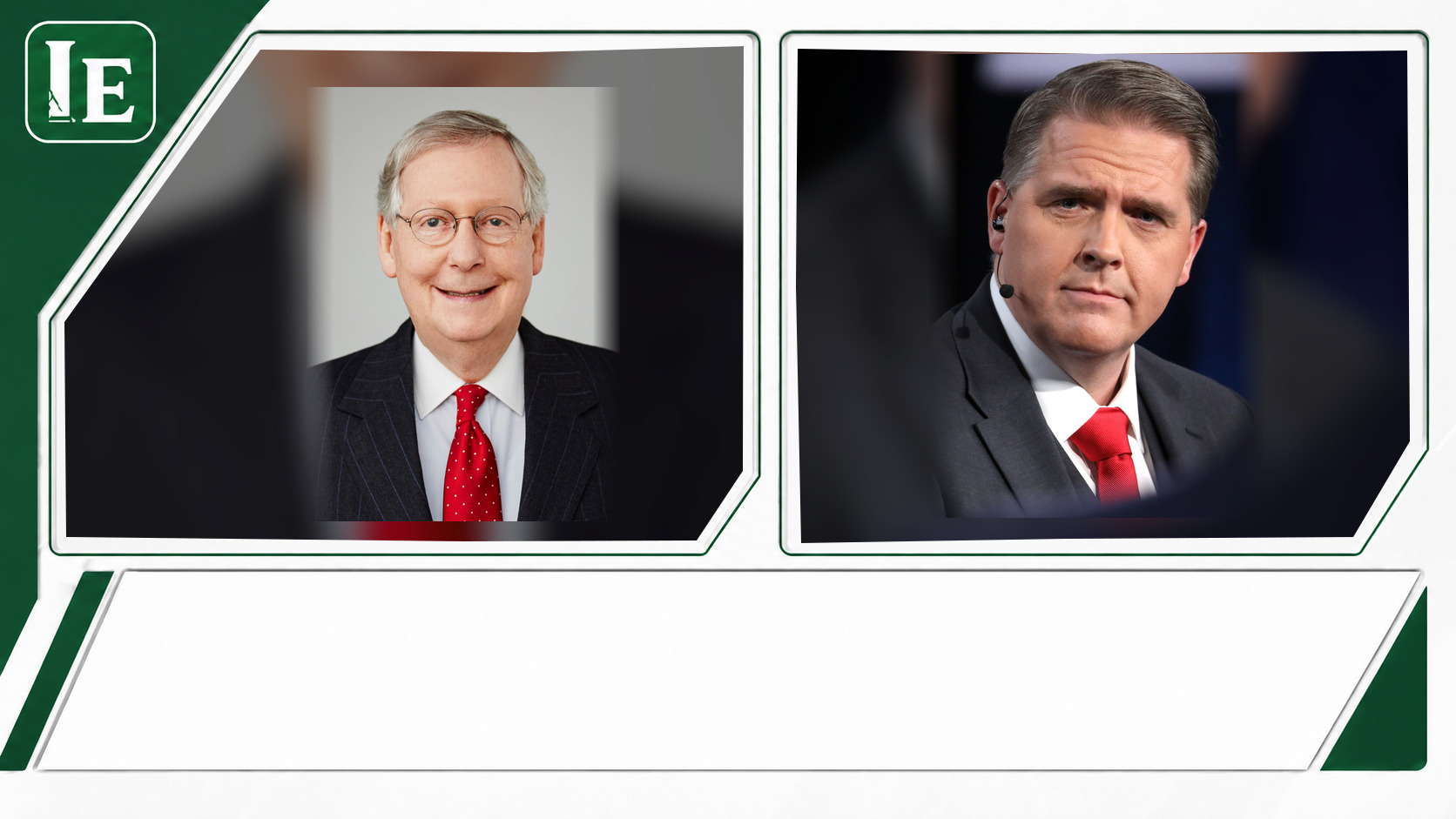
Scott Jennings said Mitch McConnell remains engaged with politics and Senate business during his recovery. His account does not establish when, or whether, McConnell will resume the full demands of serving in Washington.
As Mitch McConnell recovers away from public view, the debate over how directly he should update Kentucky voters remains unresolved. Kentucky Gov. Andy Beshear, a Democrat, has argued that McConnell should speak to the public about his recovery and ability to serve, while CNN commentator Scott Jennings has defended the senator’s limited discussion of his health.
Jennings’s recent account of a phone call with McConnell adds a narrow but notable detail to the public picture: he said the Kentucky senator was recovering at home, sounded improved and remained focused on political and legislative matters. The account was not a medical briefing, and it did not guarantee McConnell’s return to Senate duties.
A dispute over public communication
Beshear has argued that McConnell should directly address constituents. His position is not primarily that the senator must disclose private medical information; it is that Kentucky voters deserve a brief assurance about his recovery and ability to serve.
Jennings has pushed back, portraying McConnell’s limited public discussion of his health as consistent with his personality and generation. McConnell is a polio survivor, and Jennings said he has long been intensely private about health matters.
Medical privacy applies to elected officials as it does to anyone else. At the same time, McConnell remains a sitting U.S. senator, and his extended absence affects representation for Kentucky.
The question, then, is not simply about a diagnosis. It is also about the level of public communication voters can reasonably expect while an officeholder has been away from the Capitol for an extended period.
What Jennings said about the call
Speaking on CNN’s The Arena, Jennings said McConnell called him from his own phone and sounded noticeably better than he had during an earlier conversation after the senator’s hospitalization.
Jennings described McConnell as alert, informed and focused on the issues before the Senate. He said they discussed the Michigan and Maine Senate races, the wider Republican electoral map, the farm bill, the National Defense Authorization Act and the Senate filibuster.
Jennings also said McConnell has been speaking with Senate colleagues, meeting with staff and receiving visitors. His description suggests McConnell is following events and communicating with people in his political circle.
But Jennings’s remarks are an account from an ally, not a formal medical statement or an independent assessment of McConnell’s capacity to carry out Senate duties.
Recovery information remains limited
McConnell has largely stayed out of public view since a June 14 fall at his Washington, D.C., home that left him unconscious and resulted in hospitalization. His office said he was later discharged from a rehabilitation facility and continued recovering at home.
He has not publicly addressed reporters or constituents about his condition. Public information has largely come from his office and from people, including Jennings, who say they have spoken with him.
Jennings said McConnell told him that doctors had found no life-threatening issues. That characterization came through Jennings’s retelling on CNN, rather than a public statement from McConnell’s medical team.
There has been no public medical briefing on the nature of McConnell’s injuries, the course of his rehabilitation or what doctors expect in the weeks ahead. Recovery and readiness for Senate work are related but not identical questions.
September 14 remains a target
According to Jennings, McConnell hopes to return when the Senate reconvenes on September 14. Jennings presented the date as a goal, not a guarantee.
A return to the Capitol would depend on recovery, medical advice, travel and the practical demands of Senate service. Neither Jennings’s comments nor the public information available establishes a firm timetable.
McConnell has not cast Senate votes since June. Following policy discussions by phone is different from returning to voting, meetings, travel and the full pace of work on Capitol Hill.
Whether McConnell appears when the Senate reconvenes, or whether his office issues a direct update beforehand, will provide the next public marker. Until then, September 14 remains a target rather than a confirmed return date.
The remaining months of his term
McConnell is in the final stretch of a Senate career that began in 1985. He announced earlier this year that he would not seek reelection, and Kentucky voters will choose his successor in November.
Even after stepping down as Senate Republican leader, McConnell remains a central Republican voice and holds a consequential vote as the chamber confronts major policy fights.
Jennings’s description of their conversation suggests McConnell wants to remain connected to debates over the farm bill, defense legislation and the filibuster before leaving office in January. It does not establish whether he will be physically able to participate in those matters at the Capitol.
For now, Jennings’s CNN remarks offer a limited update: he said McConnell is recovering at home, communicating and staying engaged. Questions about a return date, his capacity for full Senate duties and whether he will address Kentuckians directly remain open.
Leave a Reply