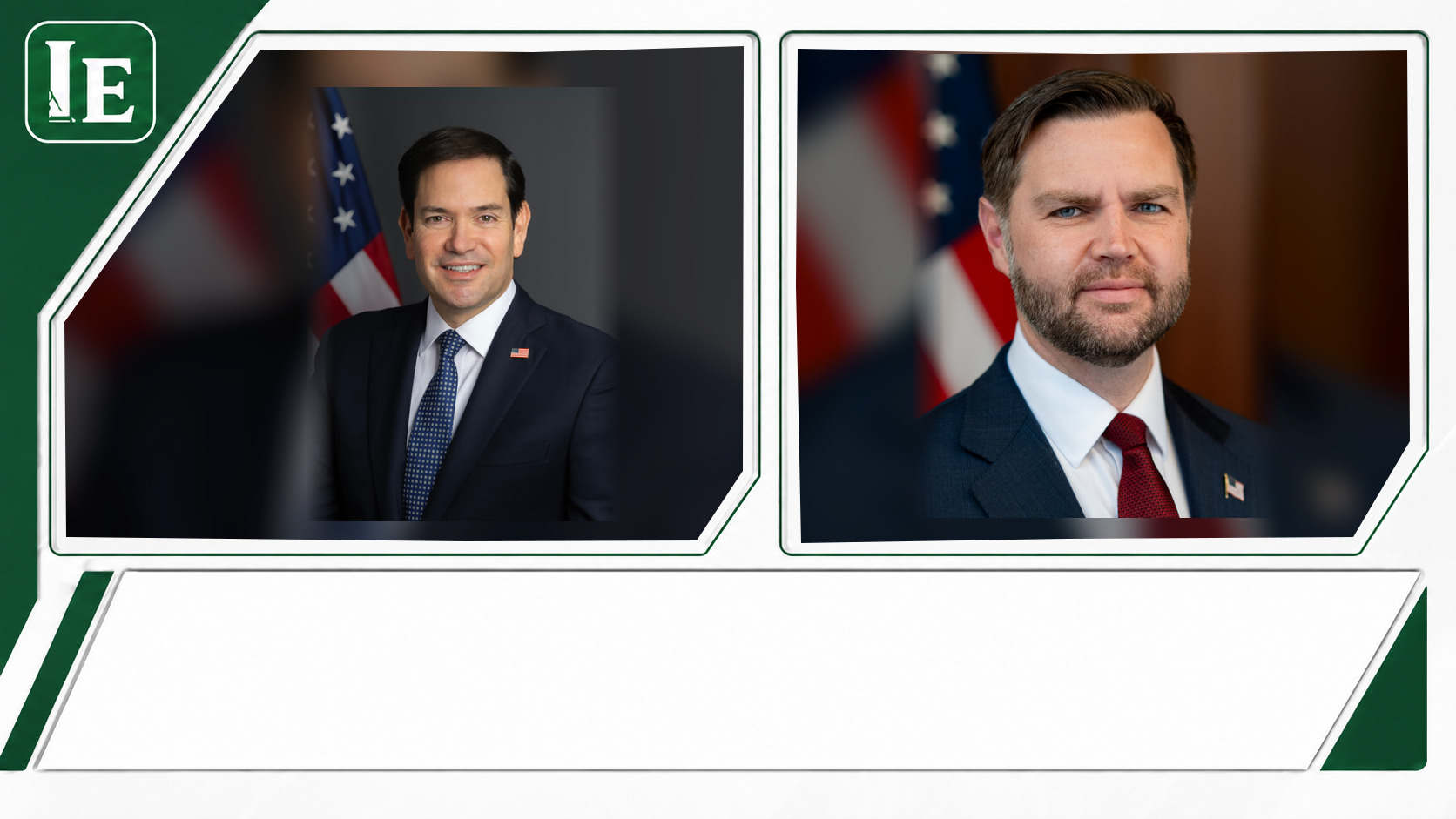
A reported 2028 comparison between two prominent Republicans has renewed attention on the party’s potential post-Trump succession contest. The bigger question is whether an early hypothetical poll reflects a durable weakness for JD Vance or a fleeting snapshot.
JD Vance has suffered a significant setback to his presidential prospects in a reported set of hypothetical 2028 Republican presidential matchups, where Marco Rubio outperformed Vance. The development that weakened Vance’s presidential hopes is an early polling comparison, not an election result, but it matters because Vance is vice president and a frequently discussed potential successor to President Donald Trump.
The phrase “Vance suffers body blow” overstates what any one early survey can settle. Still, a Rubio advantage in a hypothetical 2028 test is politically notable: it suggests the Republican contest after Trump may be less automatic than assumptions about the sitting vice president would imply.
Why this poll caught attention
Early presidential polling is often more useful as a measure of name recognition, public familiarity and party mood than as a forecast. The next Republican presidential primary is years away, and no formal 2028 field has been established.
Yet the comparison matters because Vance and Rubio represent recognizable, if overlapping, lanes within the Republican coalition. Both have worked closely with Trump’s political movement, but each carries a different public profile, governing record and style of appeal.
For Vance, the risk is not that a single hypothetical matchup ends a future campaign before it begins. It is that a result favoring Rubio challenges a common presumption: that proximity to the presidency will automatically make Vance the clear front-runner when Republicans begin looking ahead.
Vance enters with an unusual platform
Vance has a national perch few possible 2028 contenders can match. The White House identifies him as vice president, after his 2024 selection as Trump’s Republican running mate. Before that, he represented Ohio in the Senate after winning election in 2022.
That trajectory gives Vance powerful advantages. Vice presidents receive constant visibility, build relationships across party networks and can make a governing record part of a future presidential argument.
But the job also brings exposure. A vice president is closely associated with the administration’s successes, setbacks and unpopular decisions. Voters who approve of the White House may see that association as an asset; voters looking for a new direction may view it differently.
Vance’s political identity has also been shaped by his appeal to working-class voters and his role as a prominent advocate for Trump’s populist agenda. That can be a strong foundation in a Republican primary, though it does not eliminate competition from other leaders seeking to define what Trump-era conservatism looks like after Trump.
Rubio offers a different case
Rubio has spent years building national recognition, first as a Florida senator and then as a presidential candidate in the 2016 Republican primary. He brings a longer record on the national stage and is familiar to voters who followed the party’s internal fights before and during Trump’s rise.
A hypothetical Rubio lead over Vance could reflect several things at once: familiarity with Rubio’s name, views about experience, the appeal of his public-facing role, or simply the fact that voters answer speculative questions differently from the way they vote once candidates begin campaigning.
It does not establish that Rubio would defeat Vance in a primary. It also does not show whether either man would run, what Trump would say about a successor contest, or who else would enter a potentially crowded field.
The more immediate takeaway is that Republicans could face a genuine choice among competing versions of continuity. One candidate may argue for carrying forward the administration’s populist project from inside it; another may emphasize a broader résumé, a different coalition or a different presentation of the same broad agenda.
Early numbers need careful reading
The available material describing the reported setback does not provide the underlying pollster, sample, field dates, methodology, question wording or margin of error. Those details are essential before treating a hypothetical matchup as a reliable measure of party preference.
Without them, the result should be read as a reported political signal rather than a settled finding. A poll of registered voters can tell a different story from one of likely Republican primary voters. A national survey can also miss the state-by-state dynamics that ultimately decide nomination contests.
Hypothetical questions have another limitation: they force respondents to choose from a short list before campaigns have introduced rivals, tested messages or clarified differences. At this stage, an answer may reflect who is most familiar rather than who would build the strongest organization or coalition.
- What is known: Vance is vice president, and a reported hypothetical 2028 comparison placed Rubio ahead.
- What is not clear: The underlying survey details needed to assess the result’s strength.
- What cannot yet be known: The candidates, endorsements, issues and electoral map that will shape a 2028 Republican primary.
The succession question is already forming
Trump remains the central figure in Republican politics, so talk of a successor is necessarily premature. Still, presidential parties regularly begin sorting out their next generation well before a nominating campaign officially starts.
Vance’s supporters can reasonably argue that he has time, access to a national audience and the most direct route to consolidate the administration’s base. They may also argue that early surveys are especially unstable before voters have seen a candidate make a sustained case.
Critics or skeptics may see the Rubio result as evidence that Vance’s future appeal should not be assumed. They could point to the challenge of converting visibility into broad support, especially if Republicans debate whether their next nominee should closely mirror the current administration or broaden the party’s reach.
What would make the signal stronger
The next meaningful evidence will not be one more isolated hypothetical matchup. It will be whether a consistent series of transparent polls shows the same pattern among Republican primary voters, and whether that pattern survives changes in candidate lists and campaign conditions.
Fundraising networks, endorsements, donor confidence, state-level organization and the administration’s record will matter at least as much as a national head-to-head question. So will the issues dominating the country closer to 2028.
For now, the reported Rubio edge gives Vance an early reminder rather than a final judgment. His presidential prospects may have taken a rhetorical hit, but the actual contest for Republican voters has not begun.
Leave a Reply