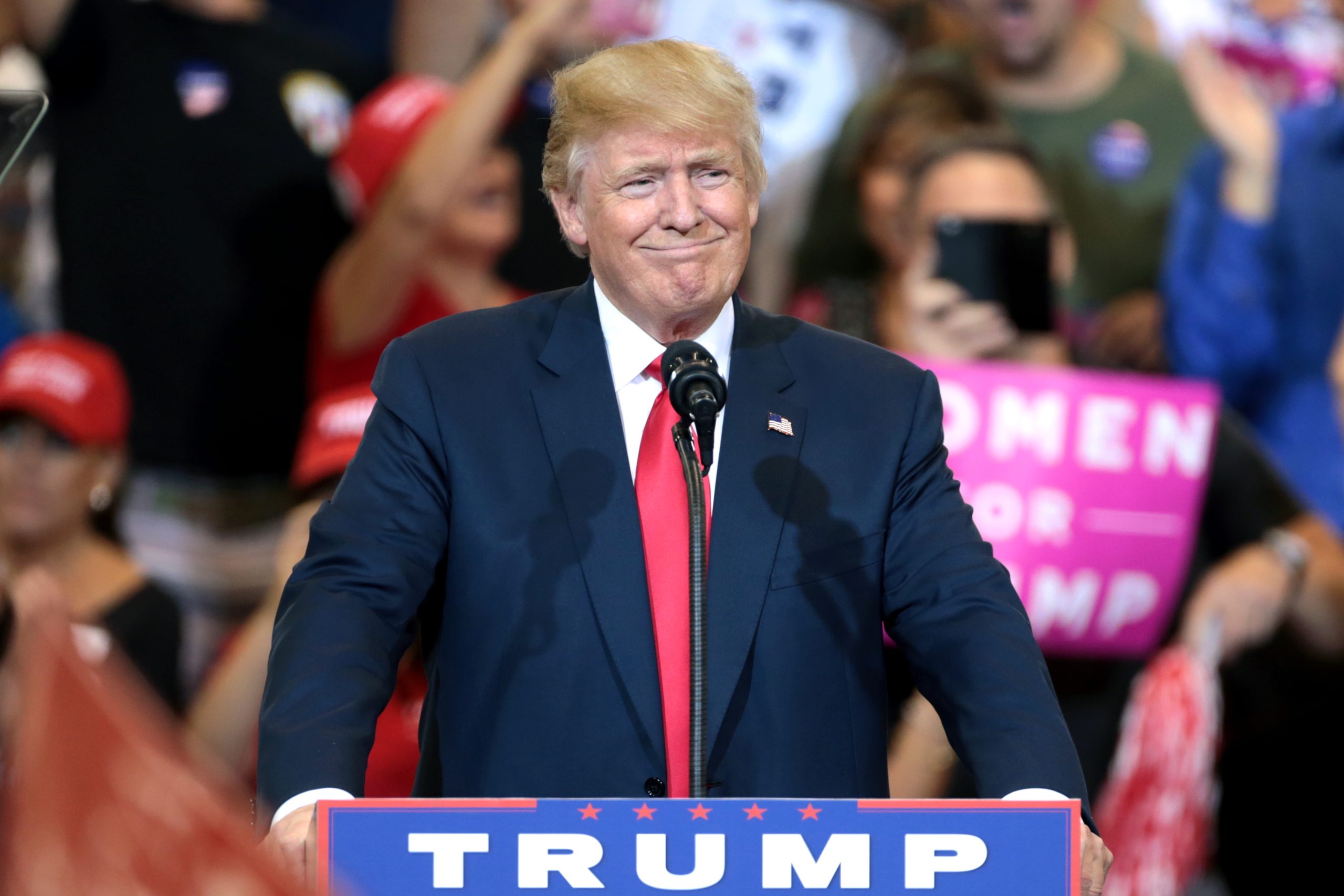
According to CNN’s reporting, recent disputes around Donald Trump have turned on written concessions, court records, fuel prices, voting deadlines and weak public approval — not just his public anger.
President Donald Trump’s latest clashes are being shaped by practical limits: documents senators want in writing, court filings that undercut a public claim, gasoline prices he cannot command, and vote counts that do not yet favor his agenda.
CNN reported that Trump reacted angrily in the Oval Office on Monday, criticizing oil companies, singling out Chevron over gasoline prices and faulting Jeanine Pirro, his U.S. attorney for Washington, D.C. But the broader picture also includes a DOJ settlement fund, stalled voting legislation, federal grant rules and weak approval numbers.
The Blanche deal came with a written concession
One of Trump’s clearer gains still carried a cost. CNN reported that Todd Blanche, Trump’s former personal attorney and acting attorney general, had enough support to be confirmed as attorney general.

The condition attached to that progress was significant: Blanche had to permanently abandon a $1.8 billion fund tied to a settlement between Trump and his own Justice Department.
Trump and his allies viewed the money as a way to compensate people they say were wronged. Critics argued the arrangement created a serious ethical hazard because taxpayer money could go to Trump supporters, including people he had previously pardoned.
Republican Sens. John Cornyn of Texas and Thom Tillis of North Carolina wanted the retreat put in writing, according to CNN. CNN senior legal analyst Elie Honig noted that Trump and his lawyers had not signed the clawback document, meaning Trump or his attorneys could still try to revive the agreement in court.
Pirro became the flashpoint after a court filing
The Jeanine Pirro dispute grew out of court papers, not a campaign speech. CNN reported that Trump criticized Pirro after her office acknowledged that problems at the Lincoln Memorial Reflecting Pool renovation were tied to a botched Interior Department rehabilitation effort, not vandalism.
Pirro is a longtime Trump ally and former Fox News personality whom Trump installed as U.S. attorney in Washington. CNN reported that Trump said Pirro had choked and folded after the filing changed the official position in court.
The distinction matters because it shows the gap between a public narrative and what prosecutors can put before a judge. Political allies can repeat a message; court records are subject to a different standard.
CNN reported that Trump is considering removing Pirro, but no final decision has been reported.
Gasoline prices put Trump against oil companies
Trump’s anger over gasoline prices was directed at oil companies. CNN reported that he accused oil executives of benefiting from turmoil and said they were making too much money, even as he described himself as a strong supporter of free enterprise.
Chevron drew specific criticism from the president. Trump warned that gasoline needed to get cheaper, placing him in the politically awkward position of pressuring private companies over prices while maintaining a Republican, business-friendly posture.
CNN’s analysis pointed to the economy and the Iran war as major drags, with oil market disruption sharpening the problem. Trump’s criticism of oil companies may shift blame, but voters often judge presidents by prices they encounter directly.
The SAVE America Act faces votes and the calendar
Another unresolved fight is the SAVE America Act, a voting restrictions bill that would add new proof-of-citizenship requirements on top of voter ID systems already handled by states.
Trump has argued for months that the measure is needed to stop mass voter fraud. CNN noted that its fact-checking has found no evidence of the kind of widespread fraud Trump describes.
The issue still resonates with parts of the Republican base, but Senate votes and election timing are blocking its path. Cornyn and Tillis have both argued that Republicans should move on from the bill for now, according to CNN.
Even if the legislation advanced, there would not be enough time to implement it before the midterm elections. That makes the obstacle practical as well as political.
Republican distance is selective, not sweeping
The latest episodes do not amount to a broad Republican rebellion. Most GOP officials still avoid direct breaks with Trump when they can.
But some senators have their own incentives. Tillis is not seeking reelection, and his North Carolina seat is viewed by political handicappers as a strong Democratic pickup opportunity. Cornyn lost a primary runoff to a more MAGA-aligned opponent who received Trump’s late endorsement.
Sen. Susan Collins of Maine offers another example. CNN reported that Collins inserted language into a spending bill to block, at least temporarily, a Trump Office of Management and Budget rule that would give political appointees more control over federal grants than subject-matter experts.
Collins is the only Republican running for reelection in a state Trump won in 2024. Her move suggests that some GOP lawmakers still see political or policy value in placing limits around Trump’s reach.
Low approval changes the risk calculation
The public backdrop adds pressure. A CNN poll conducted by SSRS and released last week found that about one-third of Americans approved of Trump’s job performance.
CNN described that as his lowest approval level of this presidency and comparable to the end of his first term after January 6, 2021. Low national approval does not automatically weaken Trump inside the Republican Party, where his core supporters have repeatedly stood by him.
Still, weak numbers can change how other Republicans assess risk. When Trump is under water, senators may be more willing to demand concessions, slow legislation or add limits to spending bills.
Several pieces remain unsettled: Pirro’s status, any possible attempt to revive the $1.8 billion agreement in court, the stalled SAVE America Act and the broader fight over political control of federal grant decisions. According to CNN’s reporting, the pattern is less about one outburst than about the places where Trump’s pressure is meeting records, deadlines, markets and vote counts.
Leave a Reply