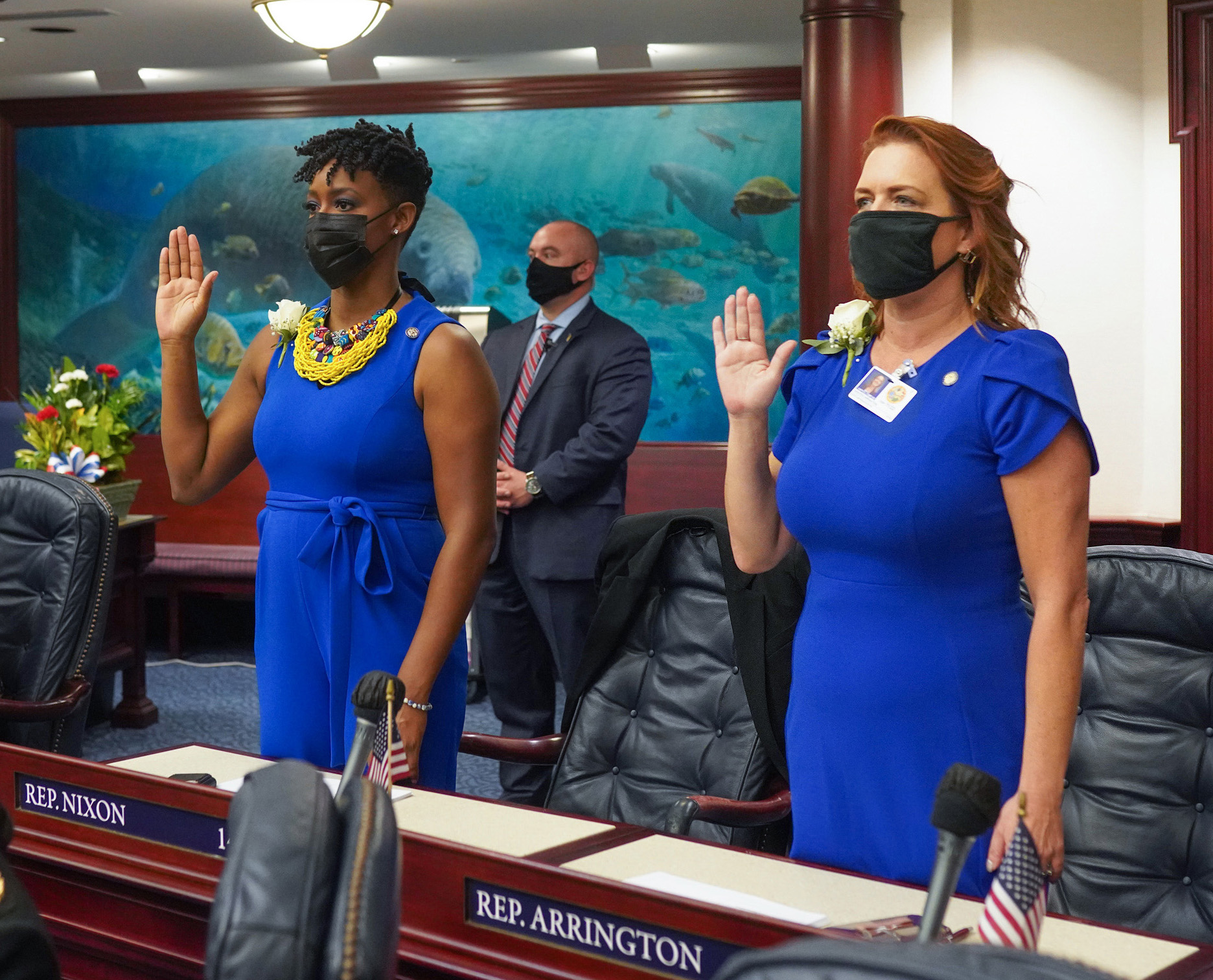
Two very different developments landed in the same news cycle: a Democratic socialist’s unexpected Florida primary victory and a mother’s first public words after a devastating loss. The facts are clear in one story and still sharply limited in the other.
Angie Nixon won the Democratic Senate primary in Florida on Tuesday, defeating Alex Vindman in an upset, while Lesley Vogel made her first public comments after Hayden Panettiere’s death. Nixon’s Florida Senate primary upset puts fresh attention on Democratic Party strategy; Vogel’s remarks, published by NBC News on Aug. 18, 2026, offer a mother’s remembrance while leaving the circumstances of her daughter’s death unresolved.
The two stories arrived in the same news cycle but require very different kinds of attention. One turns on a documented election result and a striking fundraising gap. The other concerns grief, family concerns and the limits of what public reporting can responsibly establish.
Nixon beat a better-funded rival
The New York Times reported that Nixon, a Florida state representative and democratic socialist, defeated Vindman in the Democratic Senate primary. The result was notable because Vindman had raised 16 times as much money as Nixon, according to the newspaper’s election coverage.

That difference does not make campaign resources irrelevant. Money can support advertising, staffing, voter outreach and name recognition. Nixon’s win does show, however, that a large fundraising advantage did not decide this particular contest.
Speaking to supporters in Jacksonville, Nixon described the victory as a win for ordinary people. Her success gives her a tested campaign result, not merely an ideological identity, as she moves beyond the nomination fight.
A signal, not a settled verdict
Nixon’s win has drawn attention because it touches a larger Democratic argument: whether candidates from the party’s left can convert grassroots support into wins against more financially advantaged opponents. The Times characterized the result as part of the Democratic Party’s ascendant left wing.
Supporters of that view can point to Nixon’s defeat of a better-funded rival. A different reading is also plausible: primary outcomes can reflect specific candidates, turnout, local organization, endorsements, timing and voter familiarity—factors that do not necessarily carry over to another race.
Florida also remains a difficult statewide environment for Democrats, and winning a primary does not guarantee that the coalition behind a nomination will translate into a general-election coalition. The more consequential test is whether Nixon can broaden her support in the next stage of the race.
Florida Democrats face a practical test
Nixon’s primary victory may energize volunteers and donors, but it could also intensify debate over what message works best in Florida. Democrats continue to wrestle with competing approaches to economic policy, public safety, foreign policy and campaign strategy.
The immediate question is less abstract than a debate over a party label. It is whether Nixon can build a wider campaign and whether Florida Democrats unite behind her after a closely watched nomination battle.
The same election night included primaries in Alaska and Wyoming, according to the Times. Nixon’s contest stood out because it paired a democratic socialist candidate, a well-financed opponent and an upset result—an unusual combination that invites broader political interpretation without proving a national rule.
Vogel’s first words centered Hayden
In separate reporting, NBC News said Lesley Vogel spoke publicly for the first time since the death of her daughter, actor Hayden Panettiere. Vogel remembered Panettiere as “an amazingly talented person.”
The statement put the focus on Panettiere as a daughter and person rather than on the usual machinery of celebrity coverage. It also marked a public moment from a family navigating an intensely private loss.
NBC reported that Vogel discussed the family’s longstanding concerns about Brian Hickerson, Panettiere’s on-again, off-again boyfriend. Vogel told the outlet that the family had been trying to get rid of him “for quite some time.”
Family concerns are not findings
Vogel’s comments are her account, reported in an interview. They are not a public finding about what caused Panettiere’s death or whether any person bears legal or other responsibility.
The available reporting does not establish a cause or manner of death. It also does not establish what led to Panettiere’s death. That absence matters because celebrity deaths can quickly prompt speculation linking relationships, past struggles and incomplete reports into conclusions that the known facts do not support.
A loved one’s words can provide important personal context, especially in the immediate aftermath of a death. They cannot substitute for official records, an investigation or other verified information that may or may not become public later.
What is known in each story
Nixon’s result can be measured: she won a Democratic Senate primary over Vindman despite the reported fundraising disparity. Its longer-term meaning remains open, depending on her ability to expand her coalition and on how Florida Democrats approach the next phase of the campaign.
Vogel has publicly remembered her daughter and described concerns held by the family. Beyond that, the reporting available does not establish why Panettiere died or assign responsibility to anyone.
The contrast is important. Nixon’s win is a political development that can be analyzed through votes, money and campaign strategy. Vogel’s interview is a family’s account of grief, one that deserves to be reported with care and without turning unverified implications into facts.
Leave a Reply