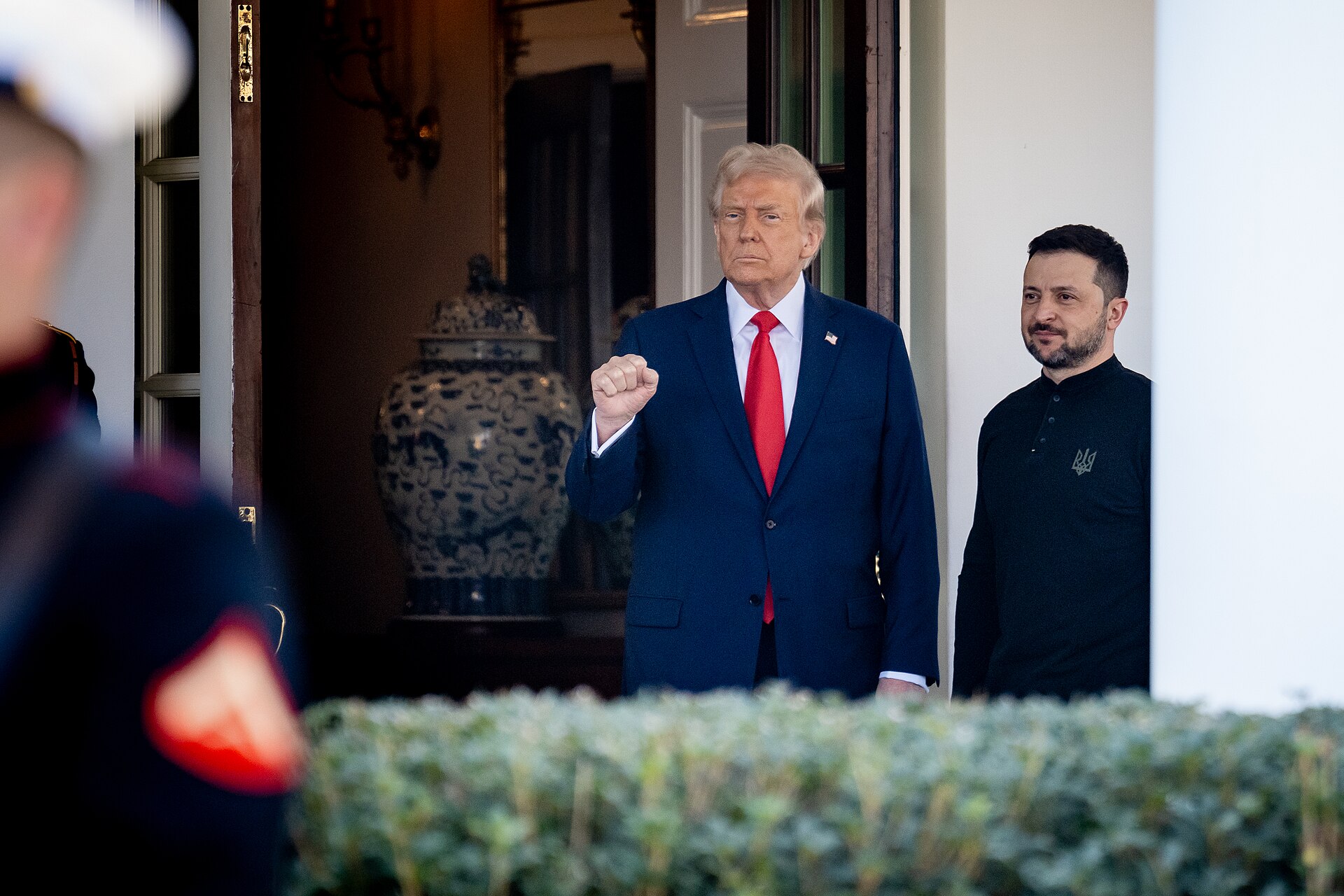
The refinery attacks put Ukraine’s long-range strike campaign back in focus at a politically sensitive moment in Washington. Kyiv is trying to prove it can hurt Russia’s war economy while asking the U.S. for more help.
Ukraine says it struck two major Russian oil refineries in Russia, hitting sites in the Perm region and Ryazan, hours after Volodymyr Zelenskyy’s meeting with Donald Trump in Washington. The claim matters because Kyiv is trying to show it can raise Moscow’s costs at the same time it asks the United States for weapons, sanctions and political backing.
The strikes, reported by Ukrainian officials and carried by The Associated Press, were not immediately independently verified. But they fit a months-long Ukrainian campaign aimed at Russian oil infrastructure, a pressure point that funds Moscow’s war and affects daily life far from the front.
Two refineries, one signal
Ukraine’s Security Service and General Staff said overnight attacks caused fires at a Lukoil refinery in Russia’s Perm region and at a refinery in Ryazan. The Perm site is more than 1,500 kilometers, or about 900 miles, from Ukraine. Ryazan is roughly 400 kilometers, or about 180 miles, from the border.
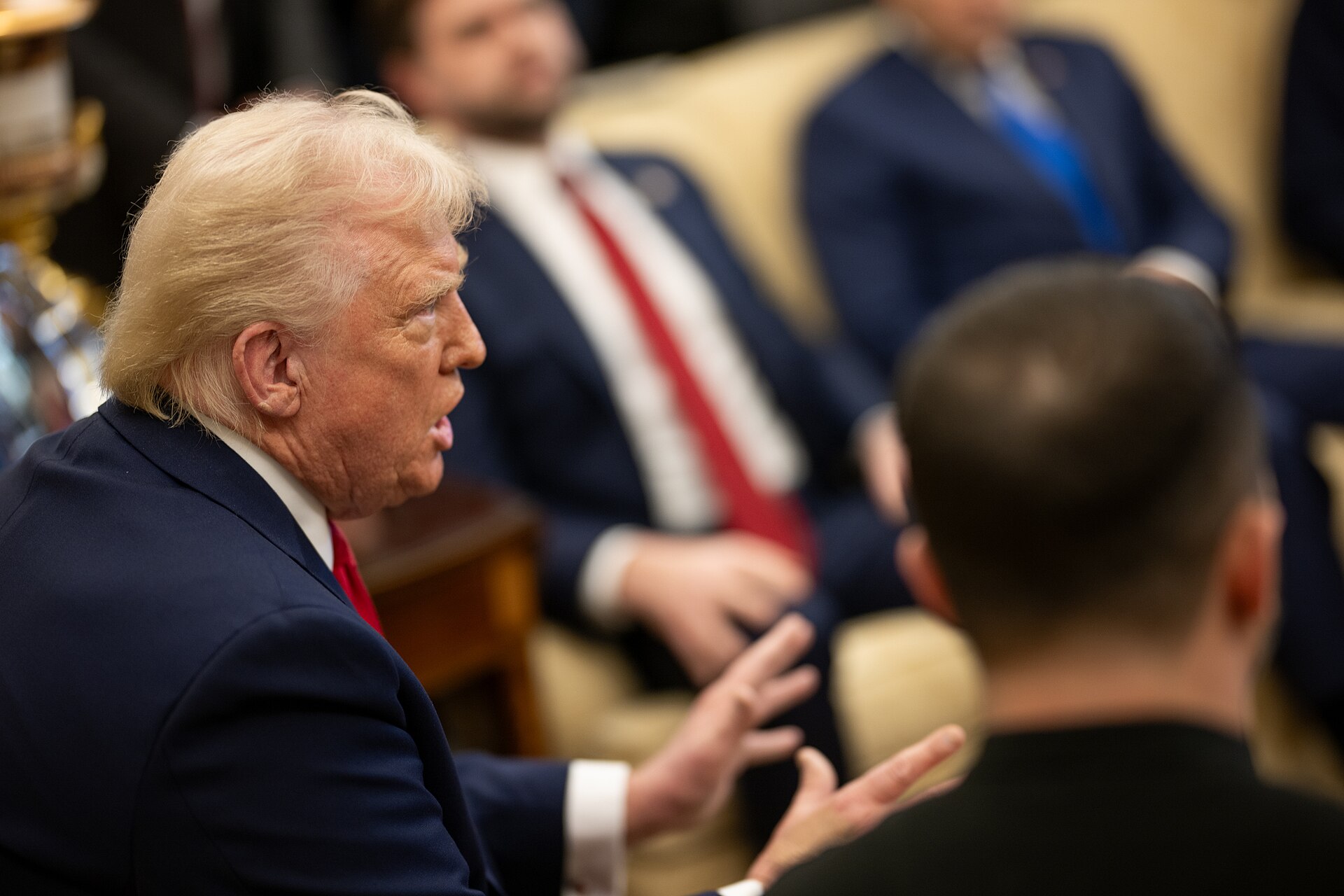
That distance is the point. Ukraine is trying to demonstrate that Russian territory, even far beyond the immediate battlefield, is not beyond reach. Long-range drones and missiles built or adapted by Ukraine have become a central part of that strategy.
According to Ukraine, the two refineries together have an annual production capacity of about 220 million barrels of oil. Kyiv says facilities like these help supply Russia’s military and support government revenue.
Those figures could not be independently confirmed in the immediate aftermath. Still, even the claim alone carries political weight: Ukraine wants Moscow, Washington and European capitals to see that Russia’s war economy has vulnerable points.
Russia offered a narrower account
Russian officials did not confirm the Ukrainian version in full. Ryazan Gov. Pavel Malkov said six people were taken to a hospital after a drone attack and said falling drone debris caused fires at unspecified industrial sites.
That language matters. Russian local officials often acknowledge damage in limited terms, while avoiding confirmation that military or energy infrastructure was successfully hit. Ukraine, by contrast, has an incentive to publicize deep strikes as evidence of momentum.
Russia’s Defense Ministry said its air defenses shot down 295 Ukrainian drones overnight over multiple Russian regions and occupied Crimea, according to the AP report. That claim, too, could not be independently verified in full.
The dueling accounts leave a familiar fog around the operation: Ukraine says it hit high-value oil targets; Russia says it intercepted large numbers of drones and describes some damage more cautiously. What is clear is that both sides now treat the air and drone war far behind the front as a major theater.
Why oil targets matter
Ukraine has battered Russian oil facilities for months with near-daily long-range attacks, using weapons developed at home as outside support remains politically uncertain. The goal is not only to ignite tanks or shut down a single plant. It is to force Russia to spend more defending its vast territory and to disrupt an industry tied to state revenue.
Oil and refined fuel are central to Russia’s ability to keep fighting. Refineries turn crude into diesel, gasoline and other products used by the military and civilian economy. Damage at key sites can complicate logistics, raise repair costs and create domestic fuel pressure.
For Ukraine, the campaign also has a morale and messaging function. Russia has repeatedly struck Ukrainian cities, power grids and civilian infrastructure. Hitting Russian energy assets lets Kyiv argue that the costs of war will be felt inside Russia as well.
There are risks. Attacks on oil infrastructure can raise concerns among allies about escalation, global fuel markets and the line between military necessity and economic targeting. Ukraine’s argument is that these sites are tied to Russia’s war effort and that striking them is a way to weaken the aggressor without relying only on trench warfare.
Washington timing raises the stakes
The refinery strikes came hours after Zelenskyy visited Washington for talks with Trump, who is again central to whether Ukraine receives the scale of American support it wants. Zelenskyy described the meeting as good, while Trump said on Truth Social that the meeting went very well and called it a great honor.
Behind the polite public descriptions is a harder reality. Ukraine is trying to secure weapons, air defenses, industrial cooperation and tougher sanctions on Russia. Zelenskyy also met with more than 60 U.S. senators from both parties, according to the AP report, as Kyiv pushes to keep support bipartisan.
Ukraine’s recent battlefield and long-range strike successes have helped rebuild goodwill in Washington after earlier uncertainty over Trump’s willingness to continue backing Kyiv. At the start of his second term, Trump’s reluctance to maintain support raised fears in Ukraine and Europe that they might have to carry more of the burden alone.
The timing of the refinery attacks gives Kyiv a sharper pitch: Ukraine is not only asking for help, it is showing how help can translate into pressure on Russia. That is especially relevant as Ukraine seeks sophisticated systems and production partnerships, including around Patriot air defense technology.
Drones are reshaping the war
The refinery attacks sit inside a broader Ukrainian effort to stretch Russian defenses across land, sea and air. A senior Ukrainian military official using the call sign Magyar said Ukrainian units had struck 201 Russian vessels over the previous three weeks in the Black Sea and Sea of Azov. The tally did not include strikes by Ukraine’s Security Service and other groups.
Ukraine’s General Staff also reported strikes on a naval base used by Russia’s Black Sea forces, a radar station in Russia’s Bryansk region, a drone launch site and a road bridge in occupied Donetsk. The pattern is clear: Kyiv is trying to hit command, logistics, surveillance, naval and energy targets in parallel.
That approach reflects Ukraine’s strengths and constraints. Russia has a larger army and more manpower. Ukraine has leaned heavily into unmanned systems, precision strikes and rapid battlefield innovation to offset that imbalance.
Matthew Whitaker, the U.S. ambassador to NATO, said during a visit to Ukraine that unmanned systems have shown how smaller forces can gain an edge in reconnaissance, logistics and precision strikes. That assessment is now part of Ukraine’s diplomatic case for deeper technology exchange with allies.
The unanswered questions
Several key points remain unclear: the full extent of refinery damage, whether production was meaningfully disrupted, how many drones or missiles reached their targets, and how Russia will respond. Energy infrastructure can be repaired quickly in some cases and slowly in others, depending on what was hit.
There is also uncertainty around diplomacy. AP reported that U.S. officials agreed Steve Witkoff and Jared Kushner, Trump’s main envoys, would visit Kyiv at some point, citing a person familiar with the closed-door talks. No date was set.
Prospects for ending the war still appear dim. Russia continues to strike Ukrainian cities and regions, including Kharkiv, where regional officials said Russian glide bomb attacks wounded 11 people over the previous 24 hours. Ukraine, meanwhile, is expanding its own long-range campaign.
The immediate takeaway is not that the refinery strikes decide the war. They do show how Ukraine is trying to fight on two fronts at once: damaging Russia’s war machine at home while persuading Washington that more support can produce visible results.
Leave a Reply