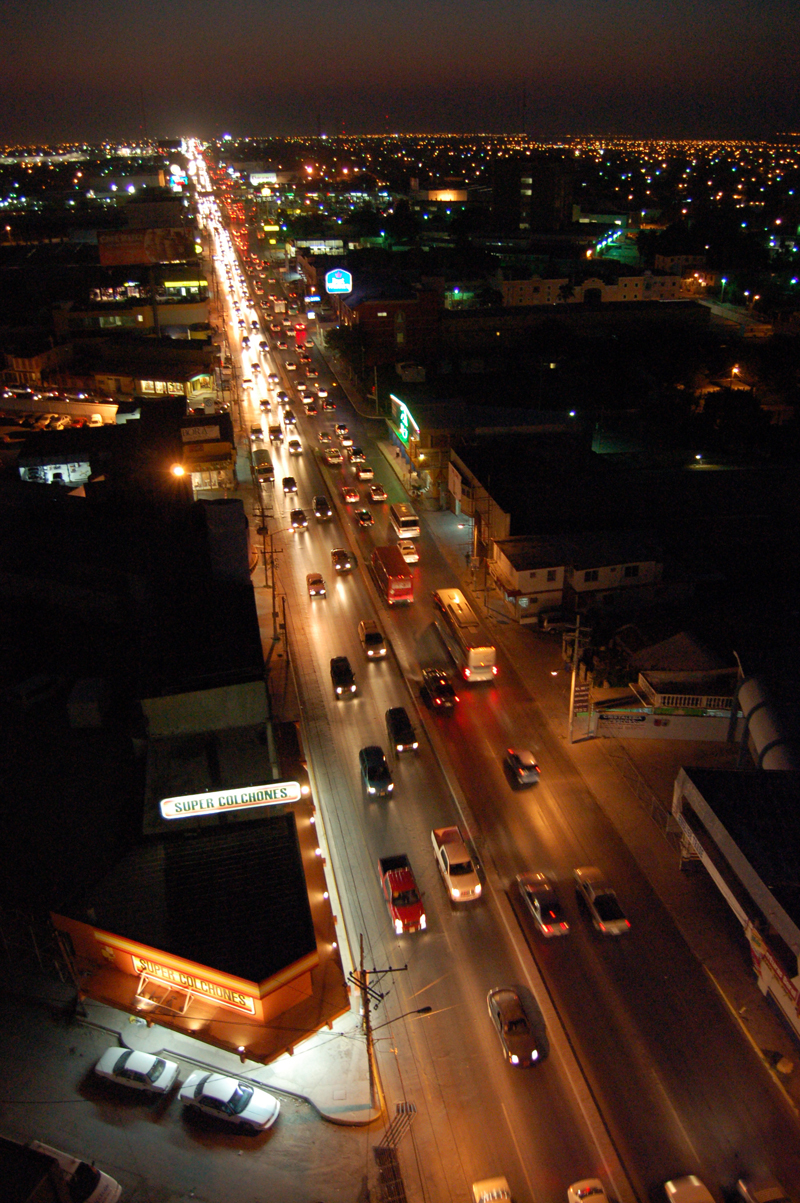
The directive is aimed at a major Mexican border city with deep daily connections to Texas. It signals an immediate change in U.S. officials’ security posture, while leaving key details about the reported incidents unclear.
The U.S. Embassy in Mexico ordered government employees to avoid the greater Reynosa area on Monday after reports of violent criminal activity and roadblocks in Reynosa, a Mexican city near the Texas border. The warning is a focused response to reported conditions in and around the city, rather than a declaration that the entire U.S.-Mexico border faces the same level of danger.
Reynosa sits across the Rio Grande from McAllen, Texas, making disruptions there consequential for people and commerce that move through one of northern Mexico’s busiest cross-border regions. The embassy’s action offers a clear signal that officials changed their immediate security posture, even as important specifics about the reports remain unavailable.
A focused warning for Reynosa
The embassy said its consulate in Matamoros received reports of violent criminal activity, including roadblocks, in Reynosa. On that basis, it directed U.S. government personnel to stay away from the greater Reynosa area.
That order applies to government employees; it is not automatically a travel ban for private U.S. citizens. Still, a decision to limit official travel shows that U.S. authorities considered the reports serious enough to alter staff movement in the area.
The warning is also geographically specific. It concerns Reynosa rather than every Mexican border city, every crossing into Texas or all of Mexico. That distinction matters because local conditions, including road access, can shift quickly and may not be uniform across a large border region.
Roadblocks can disrupt more than travel
In a city linked directly to Texas, a roadblock can affect far more than a single drive. Restricted routes may interfere with access to international bridges, major roads, workplaces, schools, medical care and other essential services.
Reynosa is the largest city in Tamaulipas, with a population of more than 700,000 as of 2020. It is in northeastern Mexico, roughly nine miles from McAllen International Airport, and is connected to Texas by the McAllen-Hidalgo International Bridge.
Those connections place the city within a daily cross-border network of families, workers, shoppers, freight traffic and travelers moving between Tamaulipas and the Rio Grande Valley. A localized security problem can therefore interrupt routines with little warning, even if it is concentrated in particular neighborhoods or routes.
What officials have not said
The available description of the embassy alert does not identify who was responsible for the reported criminal activity. It does not specify the number of incidents, say how long the conditions could last or provide a timetable for normal government travel to resume.
The embassy also did not announce a new border closure in the information available. That absence is important: reports of roadblocks and violent activity are serious, but they do not by themselves establish the status of every route, bridge or community along the border.
Uncertainty is part of the practical concern. The embassy urged people in the area to remain vigilant and follow local authorities’ instructions while consular officials continue to receive information about conditions.
Tamaulipas already has a warning
The Reynosa notice arrives against a broader State Department advisory for Tamaulipas. The department advises U.S. citizens not to travel to the state because of concerns including crime, kidnapping and terrorism.
According to the State Department, organized-crime activity is common along the northern border and in Ciudad Victoria, the Tamaulipas capital. Its advisory lists potential risks including gun battles, homicide, armed robbery, carjacking, kidnapping, forced disappearances, extortion and sexual assault.
There are two different assessments at work. The statewide advisory reflects longer-term risks across Tamaulipas, while the embassy’s Reynosa alert responds to reports of specific, current conditions. Neither should be stretched beyond what it says: the broader advisory does not predict an incident at every location, and the localized alert is not a complete assessment of all of Mexico or the entire border.
Guidance for people near the city
For people already in or near Reynosa, the embassy advised keeping a low profile, monitoring local media and staying aware of their surroundings. It also recommended notifying friends or family of one’s safety, reviewing personal security plans and following directions from local authorities.
- Avoid assuming a familiar route is open: Road conditions can change quickly when blockages or law-enforcement activity are reported.
- Check credible local information: Official notices and reliable local reporting are more useful than unconfirmed social-media claims.
- Share travel plans carefully: A trusted contact should know where someone is going and when they expect to arrive.
- Follow local emergency directions: Embassy alerts provide guidance, while authorities on the ground direct emergency responses.
In an emergency, the embassy said people should call 911. U.S. citizens in Mexico can also use State Department resources for guidance and consular information.
Why the staff order matters
Restrictions on U.S. government employees are not the same as instructions to every traveler, but they can be a useful measure of how officials view immediate risk. In Reynosa, proximity to McAllen means an abrupt change in local conditions can have consequences beyond the city.
The warning also comes during heightened attention to U.S.-Mexico security cooperation. Earlier in the month, two U.S. officials and two Mexican counterparts died in a vehicle crash in Chihuahua, according to reporting cited by The Hill. Multiple outlets reported that the U.S. officials were CIA personnel returning from a counternarcotics operation.
Chihuahua is far from Tamaulipas, on the other side of northern Mexico, and the crash does not establish a connection to the Reynosa alert. The immediate takeaway remains narrower: the U.S. Embassy in Mexico has responded to reports of violent criminal activity and roadblocks by telling its employees to avoid the greater Reynosa area. Anyone planning travel involving Reynosa should consult current official guidance rather than rely on older information.
Leave a Reply