
The Maine Republican’s break with Trump turns an already sensitive Justice Department nomination into a test of party loyalty, DOJ independence and abortion policy.
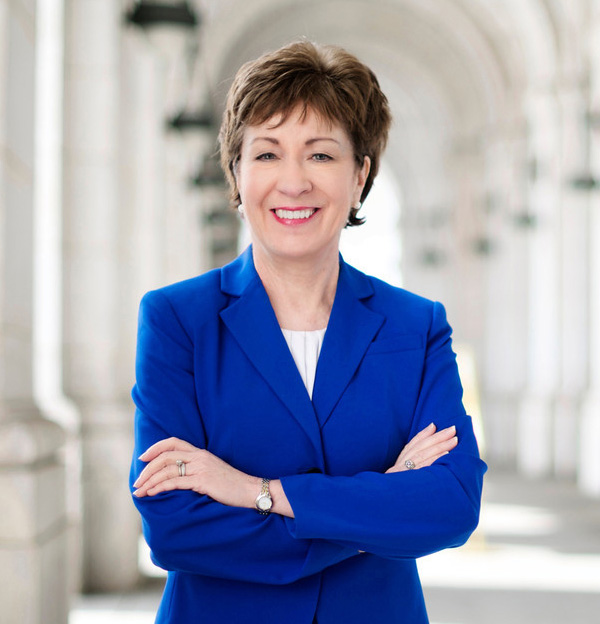
Sen. Susan Collins will oppose Todd Blanche’s confirmation to lead the Justice Department, saying Tuesday she cannot back Donald Trump’s nominee for attorney general. Todd Blanche needs one more Republican vote, making Collins’s decision an immediate threat to his path through the Senate confirmation fight.
The Maine Republican’s no vote does more than narrow the math. It puts Senate Republicans on the spot over whether loyalty to Trump should outweigh concerns about the Justice Department’s independence, abortion medication enforcement and Blanche’s record.
One vote now looms large
Collins’s announcement changes the nomination from a difficult confirmation fight into a much tighter test of Republican unity. According to Politico, two other Republicans — Bill Cassidy of Louisiana and Lisa Murkowski of Alaska — are still known to be undecided.
Politico reported that Blanche needs one of their votes to be confirmed. That makes Collins’s opposition more than a symbolic protest from a moderate Republican. It means the next public move by Cassidy or Murkowski could determine whether Blanche survives.
For Trump’s allies, the problem is not only the raw vote count. It is the possibility that Collins has made it easier for another Republican to say no, especially if that senator was already uncomfortable with the nomination but reluctant to be first.
For Blanche, the room for error has nearly disappeared. A nominee with a comfortable majority can absorb doubts, criticism or unresolved questions. A nominee depending on one more GOP vote cannot assume those concerns will stay private.
Why Collins is opposing Blanche
Collins’s stated reason centers on the Justice Department itself. According to Politico, she said in a statement that she would oppose Blanche because of “several actions that have further eroded the Department’s independence.”
That is a serious charge in the context of an attorney general nomination. The Justice Department sits inside the executive branch, but its public legitimacy depends on the belief that law enforcement decisions are not simply made to reward allies or punish opponents.
Collins specifically cited Blanche’s role in a controversial IRS settlement involving Trump, Politico reported. She also objected to Blanche having promised an anti-abortion organization that he would seek to prohibit the mailing of abortion medication to women nationwide.
Those objections give her opposition two tracks: concern about institutional independence and concern about how federal power might be used on abortion medication. That makes her no vote harder to dismiss as ordinary partisan positioning, because Collins is a Republican opposing a Republican president’s pick.
The DOJ job raises the stakes
The attorney general is not just another Cabinet secretary. The person leading the Justice Department is expected to pursue an administration’s broad law enforcement priorities while preserving the department’s credibility and its ability to act apart from direct political pressure.
Every president wants an attorney general who understands the administration’s agenda. The harder question is whether that person would resist if politics, personal loyalty or pressure from the White House conflicted with the law, the facts or department norms.
That is the terrain Collins is emphasizing. Her statement suggests she sees Blanche’s past actions as raising questions about whether he would protect the Justice Department’s independence while serving under Trump.
Blanche’s supporters are likely to see the issue differently. They can argue that a president is entitled to choose a nominee aligned with his policy goals, and that agreement with Trump’s agenda does not automatically amount to politicizing federal law enforcement.
Abortion medication sharpens the divide
The abortion medication issue gives the nomination fight a second flashpoint. Politico reported that Collins objected to Blanche having promised an anti-abortion organization that he would seek to prohibit the mailing of abortion medication to women nationwide.
That matters because a nationwide mail prohibition would not be limited to states with tighter abortion restrictions. It would reach places where abortion remains legal, turning the issue into a federal enforcement question with national effects.
For abortion opponents, using federal authority to restrict mailed abortion medication may be viewed as a valid enforcement priority. For abortion-rights supporters, and for those worried about the Justice Department’s independence, the concern is that prosecutorial power could become a tool for sweeping policy change.
Collins has often held a more moderate position on abortion than many Republicans. By naming abortion medication as one of her concerns, she is signaling that Blanche’s nomination is exposed not only on questions of independence but also on how aggressive a Trump Justice Department might be in abortion-related enforcement.
Collins’s own politics matter
Collins’s decision also lands inside her own political reality. Politico noted that she is facing a difficult race for reelection. That does not mean her concerns are insincere, but it does make the calculation impossible to separate from the broader politics.
In Maine, Collins has long presented herself as a Republican willing to break with national party leaders. Opposing Trump’s choice for attorney general fits that identity, especially when she grounds the decision in Justice Department independence rather than in a personal dispute with the president.
There is risk on the other side, too. Trump remains a dominant figure in the Republican Party, and voting against one of his nominees can anger loyal voters and activists. Collins is making the bet that appearing too deferential on DOJ independence would carry its own political cost.
Her no vote also gives other Senate Republicans a public example if they are weighing similar concerns. That does not mean they will follow her. But it changes the pressure around the decision.
What happens next
The immediate question is whether Cassidy or Murkowski backs Blanche, joins Collins in opposition or keeps the nomination in limbo. Their decisions will determine whether Collins’s move is an isolated break or the start of a broader Republican problem for Trump’s nominee.
It is not yet clear whether Blanche or the White House can reassure wavering senators. They may try to emphasize his qualifications, argue that Collins’s concerns are overstated or offer commitments about how he would run the Justice Department.
But the core issue is trust. Senators are being asked to decide whether Blanche would lead the department in a way that preserves its credibility while serving a president who has repeatedly made DOJ a political flashpoint.
For now, Collins has reshaped the confirmation fight. Blanche’s nomination remains alive, but it now depends on whether at least one more Republican is willing to give Trump’s Justice Department pick the vote he needs.
Leave a Reply