
Texas still leans Republican, but Sabato argues Paxton is not a typical nominee. The race may turn on whether early polling, money and GOP unity hold up under pressure.
Larry Sabato says Ken Paxton’s liabilities could give Democrats a chance to flip a Texas U.S. Senate seat, with Texas state Rep. James Talarico the Democrat who could benefit from Paxton’s weakness. The opening, Sabato argued in a CNN interview, depends on whether polling, fundraising, and Republican unity prove that the Texas race is truly competitive rather than another false start for Democrats.
The case is less about Texas suddenly turning blue than about Paxton becoming an unusually risky Republican nominee. Sabato’s warning puts a familiar Democratic dream under a harsher test: can one controversial candidate make a red-state Senate race genuinely uncertain?
Sabato’s Texas Exception
Sabato, director of the University of Virginia Center for Politics, has heard big Democratic predictions about Texas before. In the CNN interview with Erin Burnett, he recalled Texas Democrats telling him since 1994 that their statewide breakthrough was finally arriving.
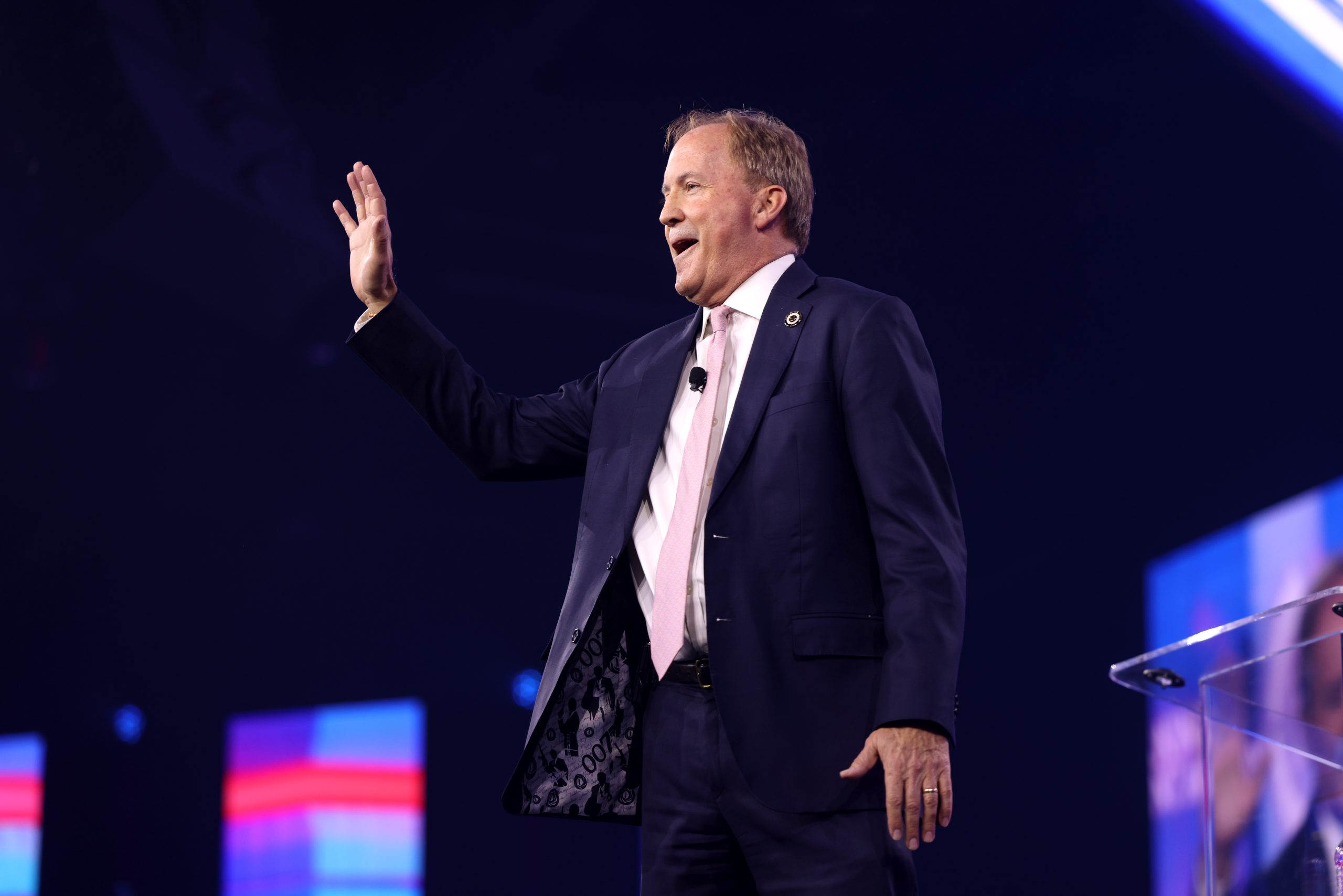
This time, he said, he is “starting to believe it’s actually possible.” That does not mean he called Texas easy territory for Democrats. It means he sees the Paxton matchup as different from the usual Republican-versus-Democrat fight in a state where Democrats have repeatedly fallen short.
According to The Hill’s account of the interview, Sabato cited a Fox News poll that showed Talarico at 51 percent and Paxton at 48 percent. One poll is not a forecast, especially in Texas. But it is enough to make strategists ask whether the race belongs on the competitive map.
Why Paxton Is The Issue
Sabato’s bluntest assessment was directed at Paxton himself: “Paxton is so awful.” The point was not simply that Sabato opposes Paxton’s politics. His argument was that Paxton’s record could weaken him with voters, donors and Republican-leaning groups that might normally align behind a GOP Senate nominee.
Paxton, Texas’s Republican attorney general, has spent years under legal and political scrutiny. He was indicted in 2015 on state securities-fraud charges, a case that shadowed much of his statewide career.
He was also impeached by the Republican-controlled Texas House in 2023 in a 121-33 vote, then acquitted by the Texas Senate. The impeachment involved allegations of misconduct in office and drew national attention to Paxton’s personal and professional conduct.
Paxton has denied wrongdoing in key matters. Politically, he has also survived challenges that might have ended another candidate’s career. That is the tension at the center of the race: his controversies may repel some voters, but his supporters may view his survival as proof that he can withstand establishment attacks.
The Money Gap Matters
Fundraising is one reason Sabato’s comments are getting attention beyond the usual Texas speculation. Federal Election Commission data listed Paxton with about $9.25 million in total receipts for the period shown in his Senate candidate overview.
The Hill reported that Talarico had raised $68 million, including $30 million in the second quarter. Those numbers do not decide the election. Texas is large, expensive and difficult to organize statewide.
Still, money affects whether Talarico can introduce himself, respond to attacks and compete outside the state’s most Democratic metro areas. It also affects whether Paxton can define the race on his own terms or must rely more heavily on outside Republican help.
Sabato suggested Paxton’s controversies may be discouraging some donors. He said some “won’t touch him,” because they do not want to be publicly associated with a candidate carrying Paxton’s record. If that remains true, it could become one of the more practical ways Paxton’s liabilities show up in the campaign.
Texas Is Still Texas
The Democratic opening should not be confused with a Democratic advantage. Texas remains Republican-leaning in federal races, and Democrats have spent decades trying to convert demographic and urban growth into a statewide win.
Paxton also has strengths that cannot be dismissed. According to The Hill, he defeated longtime incumbent Sen. John Cornyn in the Republican primary runoff with the backing of President Donald Trump. That result showed Paxton’s ability to consolidate conservative voters and run against Republican insiders.
The Republican counterargument is straightforward: Texas voters may know Paxton’s controversies and still decide party control matters more. GOP campaigns can try to make the race about national Democrats, border politics, energy policy, inflation, judicial fights and the broader stakes of Senate control.
If conservative voters treat the seat as a must-hold race, discomfort with Paxton may not translate into defections. That is why Republican unity is one of the central questions Sabato identified, even if Paxton’s vulnerabilities are the reason the race is being discussed at all.
Talarico’s Narrow Route
Talarico’s path depends on turning Paxton’s record into a permission structure for independents, uneasy Republicans and high-propensity Democratic voters. He cannot simply run up margins in Austin, Dallas, Houston and San Antonio and assume the rest of the state follows.
His fundraising gives him a chance to build a wider campaign. It also lets him spend time introducing himself to Texans who may not yet know him well, even as national Democrats begin watching the race more closely.
For Talarico, the race likely has to revolve around trust, competence and the consequences of nominating Paxton. For Paxton, the cleaner route is to nationalize the contest, tie Talarico to unpopular Democratic figures or policies, and rely on the state’s Republican habits to reassert themselves.
That creates a broader test for politics in a polarized era. If party identity dominates, Paxton may be able to survive again. If candidate quality still moves enough voters at the margins, Talarico may have an opening that Democrats rarely get in Texas.
What Still Has To Break
The most careful reading of Sabato’s comments is not that Democrats are favored to win Texas. It is that a respected analyst who has long been skeptical of Texas hype now sees a plausible opening because Paxton is not a generic Republican nominee.
Several pieces still have to be tested. More polling would show whether the Fox News result is a real signal or an outlier. Future fundraising reports would show whether Paxton can narrow the gap. Republican outside groups will also have to decide how much help to provide if the race looks closer than expected.
For now, the Texas U.S. Senate race sits in an unusual category: not a guaranteed Democratic pickup, but no longer easy to dismiss if Paxton’s liabilities continue to shape the contest. Sabato’s argument is that the state’s normal Republican edge may be challenged by an abnormal nominee.
That is why the race matters beyond Texas. In a Senate map where every competitive seat can shape control of the chamber, even a difficult Democratic path in Texas can change the conversation if polling, fundraising and Republican unity all point in the same direction.
Leave a Reply