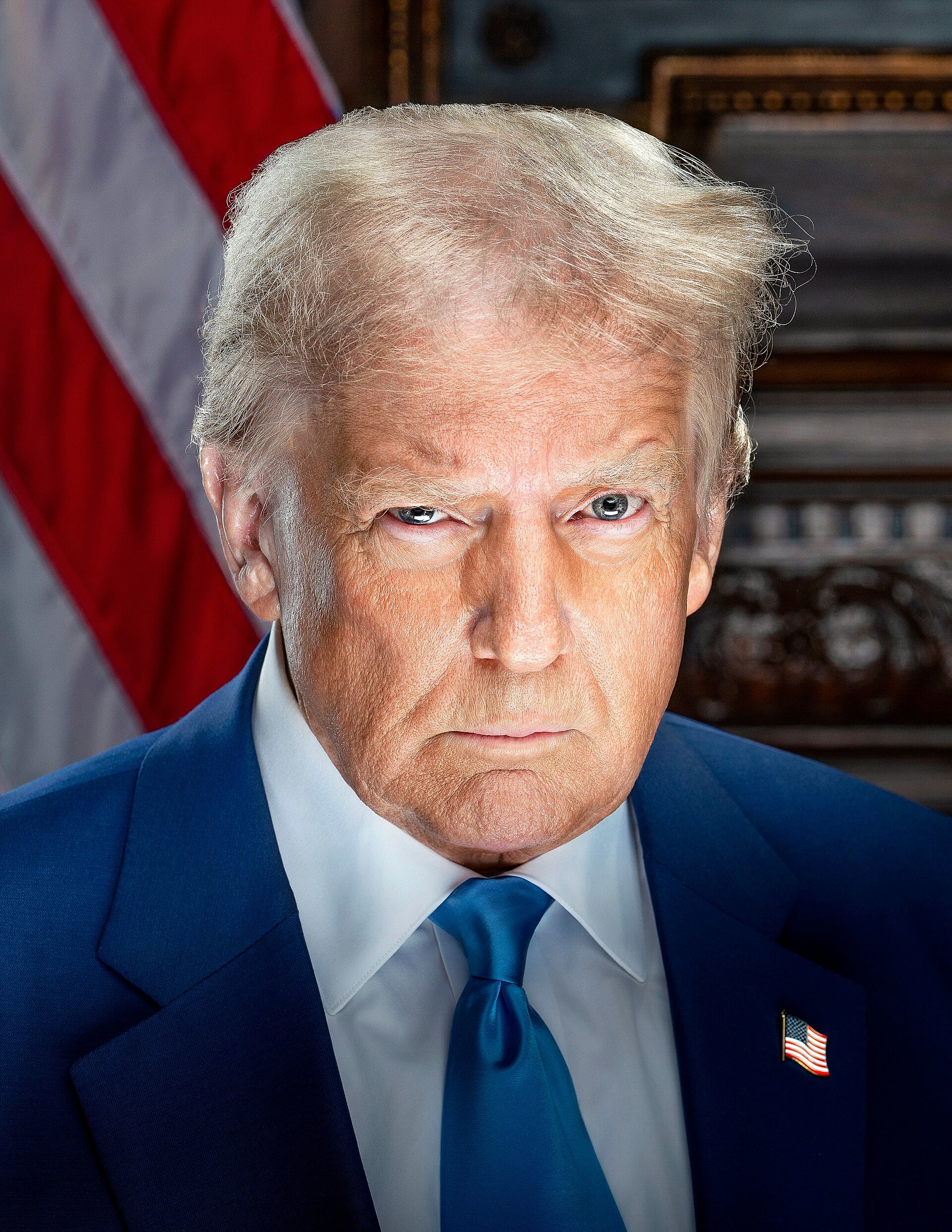
A viral phrase from Trump’s remarks became a shorthand for a larger debate over whether his freewheeling style reads as authenticity, confusion or political risk.
Donald Trump delivered a rambling “bing, bing, bing” speech moment that critics quickly held up as a bizarre example of his unscripted public behavior. This article criticizes Trump’s speaking style, explains the context of the quote or rant, and describes why the speech was seen as incoherent or bizarre rather than simply colorful.
The phrase surfaced in transcribed July 14, 2025 remarks at a White House Faith Office luncheon, where Trump moved between NATO, Vladimir Putin, tariffs, business leaders, markets and culture-war themes. The “total buffoon” label attached to it is commentary; the underlying question is whether improvisation has become a liability.
The line became the story
The “bing, bing, bing” phrase was not a policy announcement. It was a verbal sound effect, the kind Trump has used for years to dramatize action, mock bureaucracy or compress an argument into a punchline.
That is exactly why it traveled. Short, odd phrases are easier to clip than long policy passages, and Trump’s speeches often give critics the kind of fragment that can stand in for a larger complaint: that his remarks jump too quickly between subjects and sometimes leave listeners trying to reconstruct the point.
In the available transcript posted by Senate Democrats, Trump’s luncheon remarks begin with the kind of ceremony expected at a White House event, then quickly widen into foreign policy, NATO weapons, trade pressure, market reactions and personal asides. The “bing” phrasing appeared later in that broader stream of remarks, in a passage touching on transgender athletes and strength.
For critics, the issue is not that a politician used a sound effect. It is that the sound effect landed inside a larger pattern of meandering public remarks, making it easier to frame the moment as confused rather than conversational.
What the transcript shows
The transcript of the White House Faith Office luncheon does not read like a tightly scripted address. Trump thanks attendees, praises guests, comments on being late, mentions a NATO meeting, talks about supplying weapons through NATO, invokes Vladimir Putin and Russia’s attacks, then pivots into tariffs and market reactions.
At one point, he says Treasury Secretary Scott Bessent “calms the market,” while he himself can “rile the market.” It is a revealing line because it captures both Trump’s self-awareness and the risk of his style: he treats public volatility as part of the show, even when discussing matters with economic consequences.
The “bing, bing, bing” phrasing appears in a separate culture-war passage, according to the transcript excerpt, where Trump describes a weightlifting scenario and uses the repeated sound to mimic rapid physical action. The words themselves are not complicated. The complaint is about the structure around them.
Read on the page, the remarks move by association more than sequence. Supporters often call that spontaneity. Detractors call it rambling. Both descriptions point to the same fact: Trump rarely speaks like a conventional president reading a policy memo aloud.
Why critics heard incoherence
Political criticism of Trump’s speech patterns usually rests on three claims. First, his remarks often shift subjects abruptly. Second, he relies heavily on repetition, exaggeration and impressionistic phrases. Third, he can blur the line between policy argument, personal grievance and performance.
The “bing, bing, bing” line fit neatly into that critique because it sounded less like explanation than substitution. Instead of walking listeners through a clear argument, the phrase supplied noise, rhythm and attitude.
That does not mean every unscripted phrase is evidence of incapacity. Politicians of all parties stumble, riff and fall back on familiar verbal habits. The fairer critique is narrower: at high-profile events, especially when a president is discussing war, tariffs, markets or civil rights, looseness can make the message harder to follow and easier to weaponize.
The insult “total buffoon” is not a factual finding. It is a political judgment. But the reason that kind of judgment sticks with some audiences is that Trump’s public performances already sit at the center of a long-running debate about temperament, discipline and clarity.
His style has always used noise
The “bing” cadence is not new. Reuters captured Trump using a similar formulation years earlier when he complained that politicians and the media wanted a detailed “14-point plan — bing, bing, bing, bing.” In that earlier usage, the phrase worked as shorthand for excessive detail or procedural demands.
That history matters because it suggests the latest moment was not simply a sudden loss of words. It was part of Trump’s established speaking toolkit: sound effects, repetition, nicknames, quick pivots and broad-brush claims.
Supporters often see that as the appeal. They argue Trump talks more like a performer, salesman or talk-radio caller than a lawyerly politician, and that the informality makes him sound less managed. To them, the jaggedness is proof that he is not filtered through consultants.
Critics hear the same thing differently. They argue that presidential communication should clarify choices, not turn public events into improvisational monologues. The disagreement is not only about Trump’s words. It is about what voters think presidential speech is supposed to do.
The political risk is clarity
The immediate danger for Trump is not that one phrase will change many minds. His public persona is already baked in for most Americans. People inclined to support him are unlikely to abandon him over “bing, bing, bing,” and people inclined to oppose him did not need another clip to make their case.
The bigger risk is cumulative. A single odd moment becomes part of a file: a catalog of digressions, verbal loops and off-script claims that opponents use to argue he is undisciplined. In a polarized environment, clips do not persuade everyone, but they do energize existing narratives.
There is also a governance issue. When Trump discusses NATO, Russia, tariffs and markets in the same freewheeling setting, allies, investors and foreign governments may listen for signals. If the message is tangled, different audiences may hear different things.
That ambiguity can be useful for a politician who likes flexibility. It can also create confusion when policy requires precision.
What remains unclear
The available transcript gives context for the words, but it does not settle how the room heard them in real time. Delivery matters: tone, timing, laughter and audience reaction can make a line feel either playful or strange.
It is also unclear whether the viral framing will last beyond the usual social-media cycle. Trump has survived countless controversies over language, tone and factual accuracy, in part because his supporters judge him less by polish than by combativeness and results.
Still, the “bing, bing, bing” moment is useful because it strips the debate down to its core. Trump’s critics see a president whose public remarks can become fragmented and bizarre. His defenders see a familiar improviser who refuses to sound like Washington.
The clip may fade. The question behind it will not: whether Trump’s unscripted style is a political strength, a communications liability, or both at the same time.
Leave a Reply