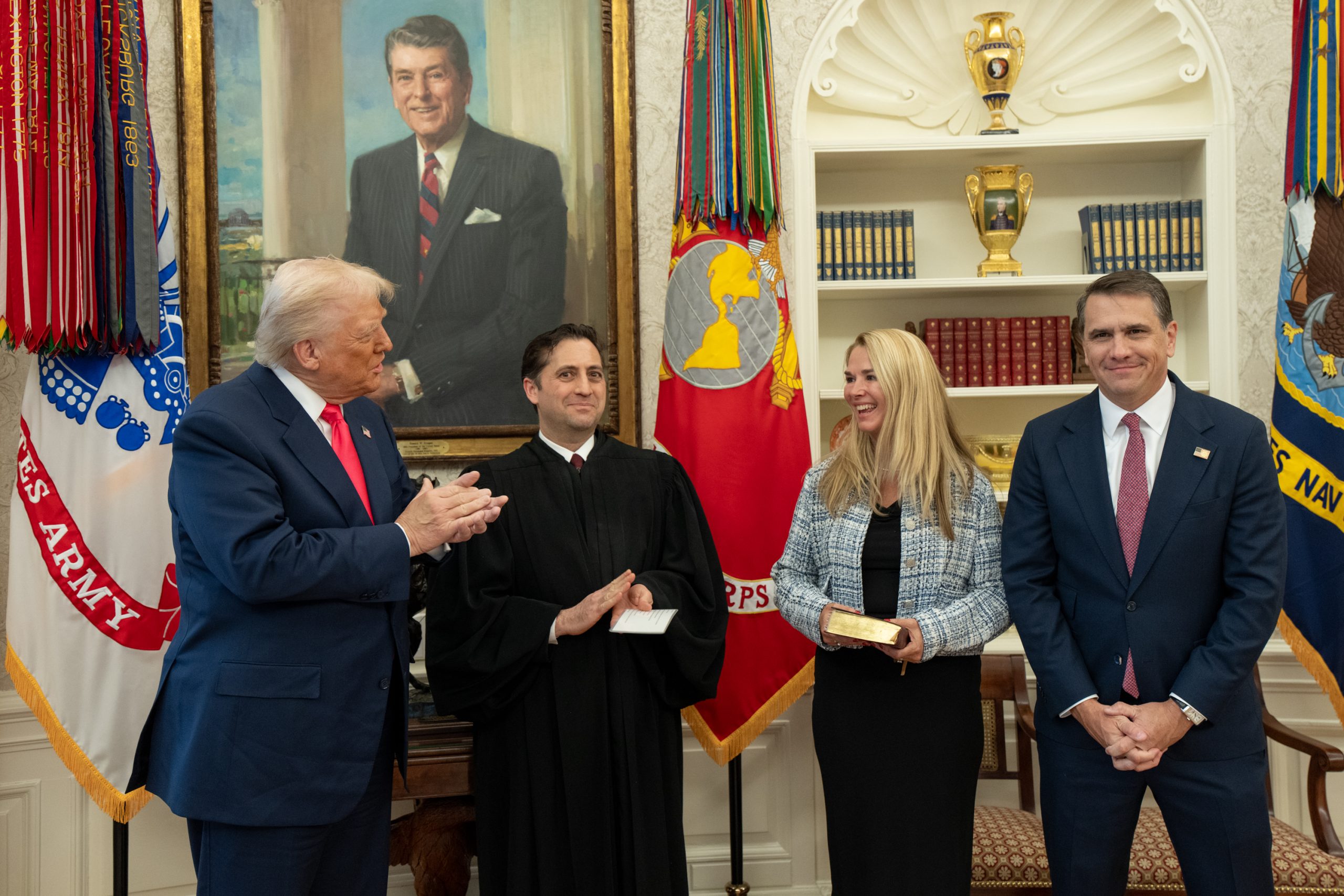
The fight is less about one accusation than about whether the Justice Department can show its ethics rules still have force when Trump’s former lawyer is nominated to lead it.
Todd Blanche’s attorney general nomination is facing a fight over recusal advice related to Donald Trump, after a former Trump White House lawyer said Blanche disqualified himself. The dispute is over whether Blanche can oversee Justice Department matters involving Trump personally, a question now following the nomination into the Senate.
Senate Democrats are pressing the Justice Department for answers as Blanche’s nomination moves forward. Their inquiry puts reported ethics guidance, Blanche’s past work as Trump’s defense lawyer and DOJ’s handling of Trump-related matters at the center of the confirmation fight.
The conflict question comes first
The core issue is not simply that Blanche once represented Trump. It is whether that relationship should limit his role inside DOJ when the department handles matters that could affect Trump in his personal capacity.

That distinction matters because not every case touching a president raises the same ethics concerns. Trump acting as president, Trump as a former private client, and Trump as someone seeking money or legal relief from the federal government can present different questions.
Critics argue Blanche’s former attorney-client relationship creates a conflict when DOJ matters could personally benefit Trump. Supporters could counter that prior representation does not automatically bar an official from every matter involving a president or former client.
For the Senate, that makes the recusal advice central. The confirmation fight is no longer only about Blanche’s qualifications. It is also about whether lawmakers and the public can understand what limits, if any, DOJ ethics officials placed on his role.
Schiff’s inquiry targets DOJ guidance
A May 2026 statement from Sen. Adam Schiff’s office said Schiff was leading an inquiry into reports that Blanche had been advised by DOJ ethics lawyers to recuse from cases involving Trump in his personal capacity.
According to Schiff’s office, the inquiry was directed to Jolene Ann Lauria, the Justice Department’s designated agency ethics official and a senior career official. The senators sought details about what advice Blanche received and whether he followed it.
The release said reports indicated Blanche, a former Trump defense lawyer, was advised early in his DOJ tenure to step aside from legal cases involving Trump personally. Schiff and other senators also asked about Blanche’s involvement with Trump lawsuits against government agencies seeking personal payouts.
The Democratic senators described the matter sharply, saying Blanche appeared to have ignored ethics and legal advice. They called the alleged misconduct extreme and linked it to Trump’s efforts to obtain personal financial compensation from taxpayer money. That remains an allegation from Democratic senators, not a final DOJ finding.
One promise now looms large
Blanche’s critics are also using his own confirmation testimony as part of their argument. Schiff’s office quoted Blanche as saying during his 2025 confirmation process: “I will follow the rules as told to me by the experts, career prosecutors in the department, if it comes to ever recusing.”
That statement is important because it gives critics a benchmark. If DOJ ethics officials told Blanche to recuse from Trump-related personal matters, they argue his earlier promise required him to follow that advice.
There is still room for dispute over the premise. DOJ could say the advice was narrower than described, that public reports leave out key context, or that internal ethics guidance is more nuanced than the political debate suggests.
Senate Judiciary Committee records also show Blanche’s nomination drew written questions for the record in 2025. That indicates senators were already focused on his obligations before the current controversy over recusal advice intensified.
The White House raised the stakes
The White House nomination notice was brief but significant. On June 8, 2026, the White House said Todd Blanche, of Florida, was being sent to the Senate to be attorney general.
That move changes the practical weight of the ethics dispute. A lower-ranking DOJ official can, at least in theory, be screened off from particular matters. An attorney general is harder to separate from the department’s most sensitive decisions because the office is the public face of DOJ independence.
For Trump’s allies, Blanche’s earlier representation of Trump may be viewed as evidence of trust, legal skill and experience under pressure. For critics, the same fact is exactly why he should not supervise matters where Trump has a personal stake.
The nomination therefore turns a reported internal ethics issue into a broader confirmation test. Senators are being asked not only whether Blanche can lead the Justice Department, but whether DOJ can credibly police boundaries involving the president’s personal interests.
What Blanche could argue
There is a possible defense for Blanche, even if critics reject it. Government ethics rules often depend on the specific matter, the parties involved, the time period, the nature of the former representation and whether the official has a personal or financial interest.
Under that view, not every Trump-related issue would necessarily be off-limits. Some matters may involve federal policy or the presidency rather than Trump as a private client.
Blanche could argue that he is able to follow ethics guidance, that reported advice has been mischaracterized, or that the matters at issue do not fall within the category critics describe. DOJ could also decline to reveal some internal ethics consultations or argue that the guidance cannot be reduced to a simple public summary.
That is why Schiff’s request for details matters. The strongest version of the ethics case depends on specifics: which matters were covered, what advice was given, who gave it, whether it was mandatory or advisory, and whether Blanche participated after receiving it.
The unanswered questions remain
The public record does not show that a court has formally removed Blanche from a case. The claim that he “disqualified himself” is best understood as a serious political and ethics allegation, not an established legal outcome.
The largest unknown is whether DOJ will provide Congress with the recusal guidance Blanche allegedly received. If the department refuses, the dispute could shift from an ethics review into another fight over oversight, transparency and executive privilege.
It is also unclear whether any court, inspector general or internal DOJ office will examine Blanche’s actions. A Senate inquiry can create pressure and produce public documents, but it does not by itself remove an official from a matter.
For now, the controversy follows Blanche because the White House has chosen him for attorney general. The unresolved question is whether DOJ can convincingly handle cases involving Trump’s personal interests when the nominee to lead the department once represented him.
Leave a Reply