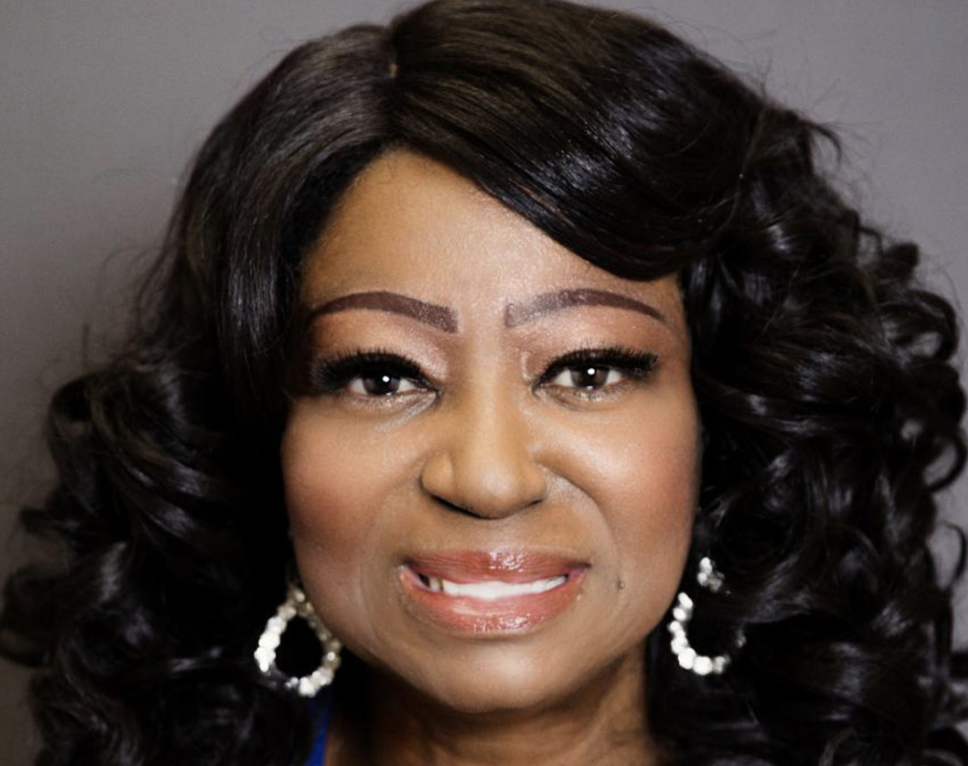
Federal prosecutors say Henderson used false statements to collect emergency jobless aid meant for workers hurt by COVID-19. Her plea adds another public-trust case to Georgia’s pandemic fraud reckoning.
Sharon Henderson pleaded guilty in federal court after prosecutors said the 67-year-old Covington, Georgia, lawmaker illegally obtained $17,811 in pandemic unemployment benefits while serving as a Georgia state representative. Henderson, a suspended member of the Georgia House of Representatives, is the third Georgia House member to plead guilty in a pandemic relief fraud case involving federal charges of making false statements to obtain U.S. Department of Labor funds.
The plea puts a local fraud case inside a larger public-trust problem: emergency aid was rushed out during COVID-19, and years later investigators are still finding false claims tied to people in office.
The false claims prosecutors described
According to the U.S. Attorney’s Office for the Northern District of Georgia, Henderson applied for federal pandemic unemployment benefits in June 2020 while she was a candidate for the Georgia House.
Prosecutors said she listed Henry County Schools as her current employer. But the government said Henderson had not worked for the school system for nearly two years and, before that, had worked only five days as a substitute teacher in 2018.
The government also said Henderson had signed an acknowledgment stating substitute teachers were not eligible to draw unemployment wages. Despite that, prosecutors said she claimed she had worked for the school system throughout 2019 and as recently as March 10, 2020.
Those details mattered because pandemic unemployment programs required applicants to connect their job loss or inability to work to COVID-19. Prosecutors said Henderson falsely claimed her workplace had closed because of the public health emergency and that she had paystubs to support her employment history.
Benefits continued after she took office
The case is not limited to a campaign-year application. Prosecutors said Henderson also submitted fraudulent weekly certifications after she had been sworn in as the state representative for District 113.
That district covers western Newton County and part of Covington, Georgia. The weekly certifications, according to prosecutors, claimed she could not reach her place of employment because of a COVID-19 quarantine.
The U.S. Attorney’s Office said eight of those certifications were filed in June 2021, after Henderson was already serving in the state House.
In total, prosecutors said the false application and weekly filings led to $17,811 in pandemic unemployment benefits. Henderson pleaded guilty to making false statements to obtain funds administered by the U.S. Department of Labor.
Why the third case matters
The number is part of why this case is drawing attention. Henderson is not the first Georgia House member to admit to similar conduct in a pandemic unemployment case; she is the third.
Federal prosecutors identified two earlier cases involving former Georgia state representatives. Karen L. Bennett, who represented District 94, pleaded guilty in January 2026 to making false statements to collect $13,940 in pandemic unemployment benefits.
Dexter L. Sharper, a former representative for District 177, pleaded guilty in March 2026 to federal charges involving $13,825 in pandemic unemployment benefits.
Taken together, the cases are not massive by federal fraud standards. But the political significance is larger than the dollar totals. Pandemic benefits were designed for people who lost work through no fault of their own. When elected officials are accused of exploiting those programs, the damage is also to confidence in public service.
Officials framed it as public trust
U.S. Attorney Theodore S. Hertzberg said Henderson was running for and holding political office while taking taxpayer money through false claims. His office described the prosecution as an accountability case for an elected official who violated public trust.
Georgia Inspector General Nigel Lange said Henderson obtained taxpayer-funded benefits that were intended for workers who lost jobs through no fault of their own. The U.S. Department of Labor’s inspector general and the FBI also framed the case around abuse of public programs and institutional trust.
The investigation was conducted by the Georgia Office of the State Inspector General, the U.S. Department of Labor Office of Inspector General and the FBI. Assistant U.S. Attorney Garrett L. Bradford is prosecuting the case.
The official statements are unusually pointed, but the underlying legal issue is straightforward: prosecutors say Henderson lied about work history and pandemic-related unemployment to receive federal money.
The pandemic program pressure point
Congress created emergency unemployment programs in 2020 as the pandemic disrupted workplaces across the country. Speed was the point. Millions of people needed fast cash assistance as businesses closed, hours disappeared and normal unemployment systems were overwhelmed.
That speed also created openings for fraud. Applicants had to provide work histories and certify that COVID-19 was the reason they were unemployed or unable to work. Weekly certifications were meant to verify continuing eligibility.
Fraud enforcement has continued long after the emergency phase ended. That creates a complicated public picture: relief programs helped many workers survive the pandemic, while weak points in the system allowed some people to obtain money they were not entitled to receive.
Henderson’s case lands in that tension. The amount alleged is less than $20,000, but prosecutors are treating the office she held as central to the harm.
What happens before sentencing
Henderson, 67, of Covington, is scheduled to be sentenced on November 3, 2026, before U.S. District Judge Michael L. Brown. The sentence has not been decided, and the court will determine the outcome after the guilty plea.
The public record cited by prosecutors does not resolve every question. It does not say what sentence the government will seek, what Henderson’s defense will argue at sentencing or whether restitution will be ordered in the exact amount prosecutors identified.
It also leaves a political question hanging for Georgia voters: how a third House-related pandemic fraud conviction affects expectations for ethics, oversight and candidate vetting in state politics.
For now, the verified outcome is clear. Henderson admitted in federal court to conduct prosecutors say brought her $17,811 in pandemic unemployment benefits through false statements, making her the third Georgia House member to plead guilty in a similar pandemic relief fraud case.
Leave a Reply