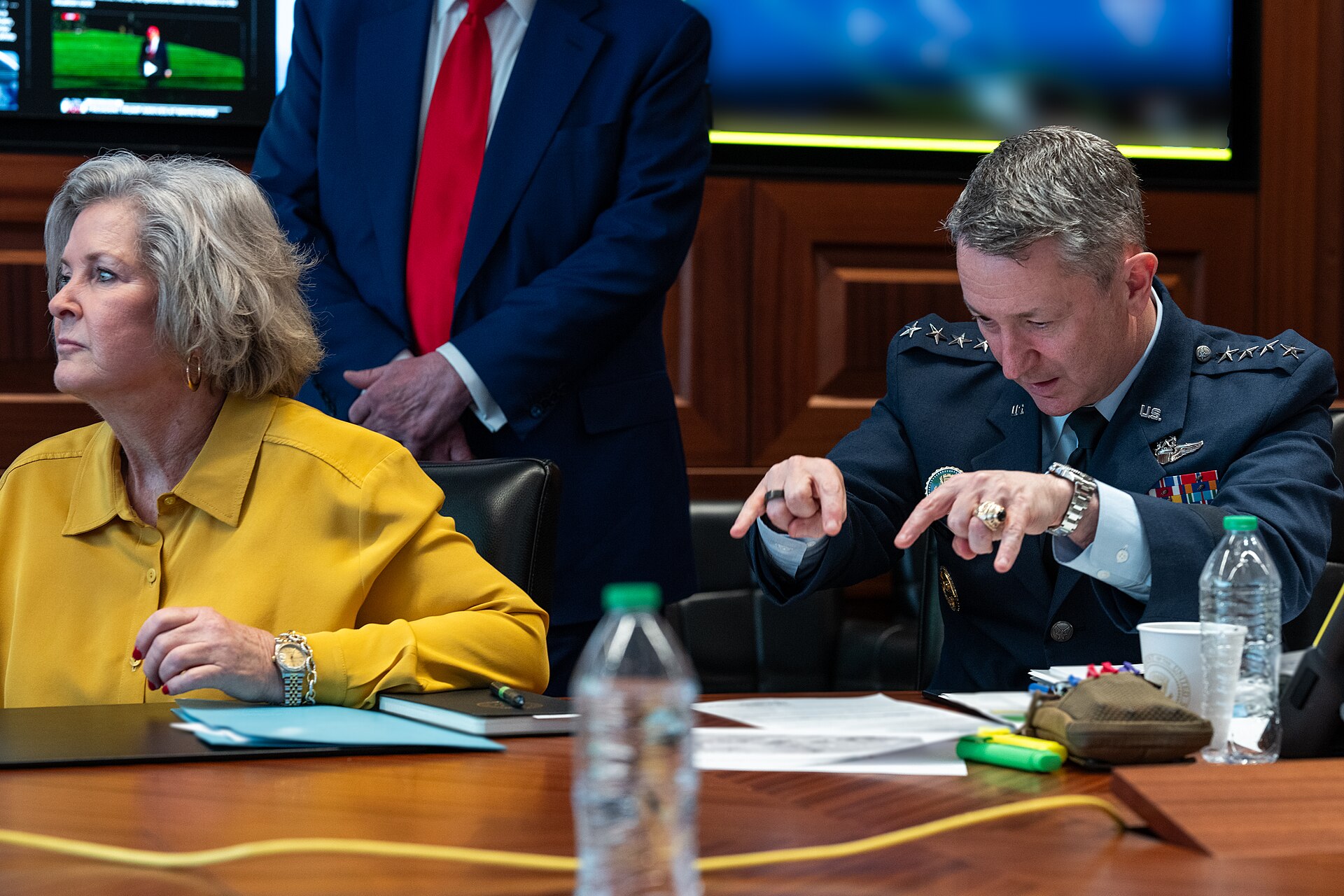
The immediate development is not a firing or resignation. It is a public effort by Trump and White House officials to defend a powerful chief of staff while disputing how her reported comments were presented.
President Donald Trump and the White House publicly stood behind Susie Wiles after a Vanity Fair profile attributed blunt remarks to the chief of staff about Trump, Vice President JD Vance and Elon Musk.
Wiles said the magazine disregarded “significant context” and created an “overwhelmingly chaotic and negative narrative” about the administration. The profile, according to BBC News, was based on nearly a dozen interviews with Wiles and quickly became a flashpoint inside Trump-aligned circles.
The White House chose defense, not distance
Trump did not publicly break with Wiles after the article drew attention. In a New York Post interview cited by the BBC, he called her “fantastic” and said she had been “deceived” by the writer.
White House press secretary Karoline Leavitt also defended Wiles. Leavitt said Wiles had helped Trump achieve what Leavitt characterized as the most successful first 11 months in office of any president in American history, and said the administration was “united fully behind her.”
Leavitt later accused Vanity Fair of “bias of omission,” arguing that the magazine left out other interviews with White House staff and took Wiles’s words “wildly out of context.” Vanity Fair’s full editorial reasoning was not available in the provided reporting, so that dispute over presentation remains unresolved.
Why Wiles’s position gives the profile weight
Wiles is not an outside commentator. She is one of Trump’s most powerful advisers and the first woman to serve as White House chief of staff.
That role matters because a chief of staff is responsible for helping run the White House, protecting the president’s agenda and managing pressure from people around an administration. Remarks attributed to someone in that position can be read differently than criticism from a casual ally or a political opponent.
Wiles also played a key part in Trump’s successful 2024 presidential campaign before taking the White House job, according to the BBC. That background makes the public dispute over her comments a test of both her standing and the administration’s message discipline.
The Trump and Vance remarks drew the sharpest attention
According to the BBC’s account of the Vanity Fair profile, Wiles described Trump as having an “alcoholic’s personality.” The reporting said Wiles connected that assessment to her experience growing up with an alcoholic father and said she was familiar with “big personalities.”
Wiles also reportedly said Trump governs with the belief that “there’s nothing he can’t do.” On the question of retribution against adversaries, she said she did not think Trump wakes up thinking about it, but added that “when there’s an opportunity, he will go for it.”
The profile also quoted Wiles describing Vance as having been a “conspiracy theorist” for a decade. Vance said he had not read the article, according to the BBC. He joked that he only believes conspiracy theories that are “true,” citing reporting about former President Joe Biden’s health as an example.
Musk turned the story into a broader administration fight
The Vanity Fair account also included Wiles’s reported comments about Musk, whose government role had already attracted scrutiny. Musk led cost-cutting efforts at the Department of Government Efficiency, known as Doge, before leaving government in May, according to the BBC. He later had a public falling-out with Trump on social media.
In the profile, Wiles called Musk an “odd, odd duck” and referred to him as an “avowed Ketamine” user who slept in a sleeping bag in the Executive Office Building.
Wiles also said she was initially “aghast” at the idea of gutting the U.S. Agency for International Development. At the same time, she acknowledged the argument for speed and disruption, saying that if someone is too incremental, “you just won’t get your rocket to the moon.”
Those reported remarks tied the controversy not only to personalities, but also to disagreements over how aggressively the administration should move against federal agencies and programs.
What remains unsettled
Musk had not commented on the Vanity Fair piece at the time of the BBC report. It also remained unclear whether the backlash was being driven mainly by senior administration officials, online MAGA voices or outside allies trying to shape the story.
The White House’s position is clear: Wiles was treated unfairly, important context was omitted and the administration supports her. The reporting about the profile has nevertheless intensified scrutiny of how Trump’s inner circle handles public disagreement.
For now, the dispute centers on whether Vanity Fair accurately represented Wiles’s comments and context. The political stakes come from who made the comments: a chief of staff whose authority depends on Trump’s confidence and the cooperation of people around him.
Leave a Reply