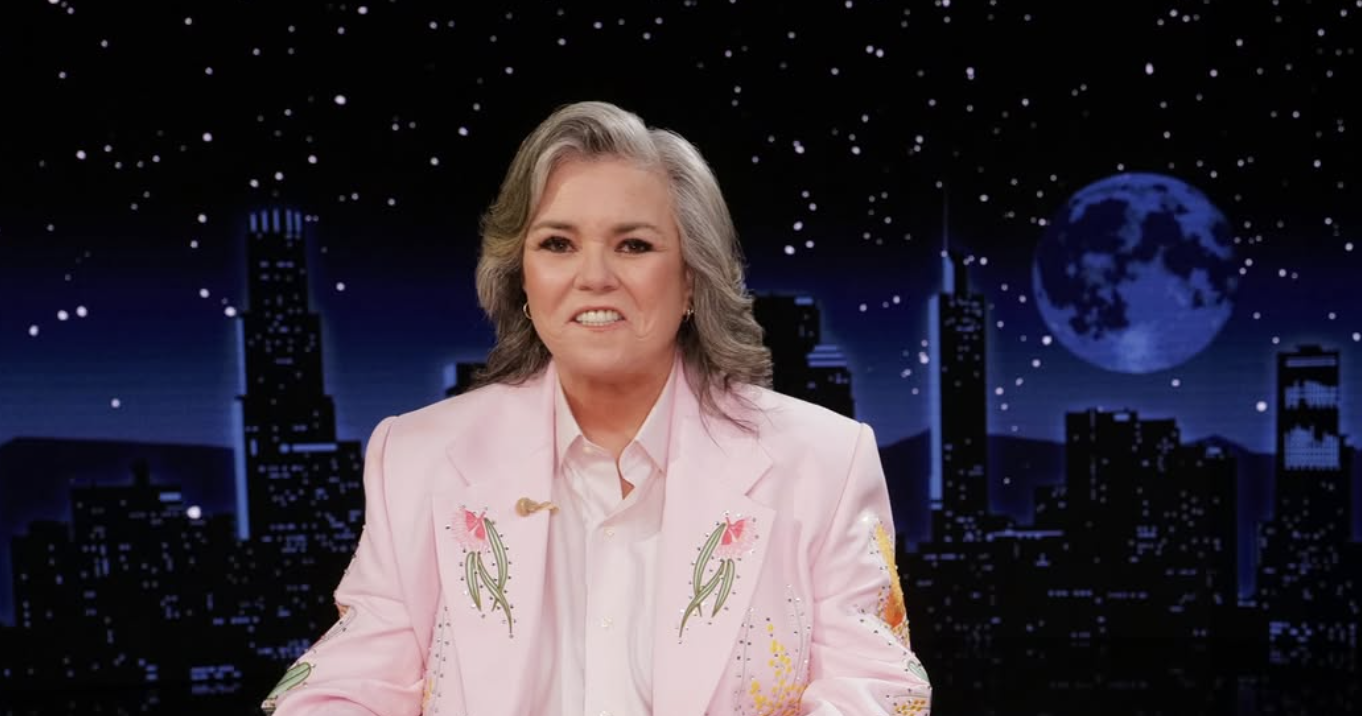
O’Donnell’s debut was more than a celebrity hosting gig: it put her decades-long conflict with Trump at the center of a late-night show already under scrutiny. The White House answered by resurfacing an earlier Trump social-media post.
Rosie O’Donnell made her debut as a guest host on Jimmy Kimmel Live! and delivered a direct warning aimed at Donald Trump during her opening monologue. Her message — “Hi, I know you’re watching” — revived the pair’s decades-long public feud and turned a temporary late-night hosting slot into a political statement.
O’Donnell’s appearance matters because it came as Trump has repeatedly attacked late-night hosts who criticize him, while Jimmy Kimmel Live! itself has faced recent pressure over political commentary. The White House responded to O’Donnell’s monologue by sharing an earlier Truth Social post from Trump.
A pointed first night
O’Donnell did not ease into the role. According to The Independent, she used her first monologue as Kimmel’s guest host to address Trump directly, looking into the camera as she spoke.
She framed the appearance as a return of sorts, opening with a joke about coming home again. Then she suggested viewers should expect Trump to be even less pleased with the program while she was in the host’s chair.
That setup gave the monologue a clear target. O’Donnell and Trump have traded public insults for decades, a history that made her booking feel less like a routine celebrity guest-host turn and more like an intentional piece of programming.
Her warning was not a policy speech, and it did not pretend to be neutral. It was late-night satire with a direct political audience in mind: the president, the show’s viewers and anyone following the continuing fight over comedians criticizing those in power.
Ireland became part of the joke
O’Donnell also addressed her life in Ireland, where she has been living with her 13-year-old child, Clay. She linked the move to Trump’s return to office, making clear that her decision carried political meaning for her.
In the monologue, she cited Project 2025 as a reason she felt compelled to leave the United States, while using jokes to describe Ireland and its drinking culture. The remarks blended personal biography with political comedy — a formula that made her criticism feel more immediate than a standard celebrity jab.
That framing is important. O’Donnell was not simply revisiting an old entertainment-world feud; she presented Trump’s presidency as a factor in her family’s choices. Supporters may see that as a candid explanation of her experience, while Trump’s supporters are likely to view it as another example of a prominent entertainer using television for partisan criticism.
The show did not resolve that divide. It put it on display, which is often exactly what late-night television is built to do.
The White House answered quickly
The response from the White House was not a new statement about O’Donnell’s appearance. Instead, it shared a link to a June post on Trump’s Truth Social account that questioned O’Donnell’s gender and accused her of being obsessed with him, according to The Independent.
The decision to recirculate an existing post underscored how familiar the conflict is to both sides. Trump and O’Donnell have been publicly antagonistic for years, and each new flare-up arrives with an archive of earlier insults, clips and social-media posts behind it.
For O’Donnell, the response also validated the premise of her monologue: that Trump was likely watching, or at minimum was likely to be drawn back into a familiar dispute. For the White House, sharing Trump’s earlier post offered a rebuttal without engaging her specific comments about Ireland or Project 2025.
Neither side appeared interested in lowering the temperature. The exchange followed the well-established logic of political celebrity conflict: a televised provocation, a rapid online response and a fresh round of public attention.
Late night is under pressure
O’Donnell’s guest-hosting turn landed amid wider questions about late-night television and political speech. Trump has repeatedly called for networks to take action against hosts whose material targets him, placing programs such as Kimmel’s in a larger cultural and regulatory argument.
The Independent noted that CBS canceled Stephen Colbert’s The Late Show last year shortly after Colbert criticized a settlement between Paramount Global, CBS’s parent company, and Trump. CBS cited financial reasons for the cancellation, not the host’s political commentary.
Kimmel’s own show has also been at the center of recent controversy. ABC briefly suspended Kimmel after Federal Communications Commission chair Brendan Carr threatened regulatory action over comments Kimmel made regarding the killing of Charlie Kirk; Kimmel returned to the air days later.
Those events do not make O’Donnell’s monologue legally or institutionally consequential on its own. But they add weight to the booking. A comedian taking direct aim at Trump from Kimmel’s stage now arrives in an environment where networks, hosts and regulators are being watched closely.
A night with two very different tones
The episode was not only about politics. Later in the program, O’Donnell paid an emotional tribute to actor Hayden Panettiere, who had appeared on The Rosie O’Donnell Show as a child and whom O’Donnell said she knew as an adult.
O’Donnell described Panettiere as brave for speaking publicly about mental health before many people were ready to hear those conversations. Her remarks shifted the show from combative satire to personal grief.
According to The Independent, Panettiere was found in cardiac arrest at a home in Greenville, South Carolina. Police said there were no signs of foul play or suspicious circumstances, while the Greenville County Coroner’s Office said the cause and manner of death remained pending further investigation and additional studies.
The juxtaposition captured the unusual demands of a guest-hosting night: O’Donnell had to move from political comedy to a personal remembrance, while carrying the legacy of her own daytime-TV career into one of late night’s most politically charged platforms.
What O’Donnell’s booking signals
Viewer comments on ABC’s YouTube uploads were largely supportive, with fans praising Kimmel for bringing O’Donnell in and welcoming her back as a host. That reaction reflects the audience appeal of seeing a familiar TV personality return with an unfiltered voice.
Still, the lasting significance of the appearance will depend on whether it remains a memorable one-night event or becomes part of a broader pattern in late-night programming. Guest hosts can provide novelty, but O’Donnell brought an existing political narrative that few substitutes could match.
Her monologue did not create the Trump-O’Donnell feud, and it will not be its final chapter. What it did show is that the dispute still has enough cultural force to shape an entire television debut — and that late-night comedy remains one of the country’s most visible stages for political confrontation.
Leave a Reply