Blog

  • Michigan’s 38 Election Referrals Yield Six Charges and 22 Open Cases

    Michigan’s 38 Election Referrals Yield Six Charges and 22 Open Cases

    Michigan prosecutors have brought six separate election-law cases, including five involving people identified as noncitizens. The review also closed 10 matters without charges, while 22 remain unresolved.

    Michigan Attorney General Dana Nessel’s office said it filed criminal charges in six of 38 matters involving suspected noncitizen voting or related election-law conduct. Ten matters were closed without charges, and 22 remained under review when the office announced the cases.

    The six defendants have not been found guilty. The cases, which include allegations tied to the November 2024 general election as well as conduct in other elections and years, are pending in district courts across Michigan, including Oakland, St. Joseph and Macomb counties.

    Michigan’s review produced charges, closures and unresolved matters

    According to the attorney general’s office, the Michigan Department of State referred about 16 suspected noncitizen-voting cases connected to the 2024 general election during 2025. In 2026, the office received 22 additional referrals involving suspected noncitizen voting or adjacent conduct in elections spanning 2009 through 2025.

    Of the 38 matters, six resulted in criminal charges, 10 were closed without charges and 22 remained under review, the office said. It also said voter registrations involved in the charged cases were canceled.

    The figures do not establish how widespread noncitizen voting is statewide. They show that referrals can lead to different results: prosecution where authorities believe charges are warranted, closure without charges, or further investigation.

    Some referrals did not establish a provable crime

    The attorney general’s office said two referrals involved people who turned out to be U.S. citizens. One concerned a complicated international adoption. The other involved a member of a federally recognized American Indian community who was born in Canada and whose documents used dual-citizenship language.

    Six additional inquiries were closed because prosecutors said they could not prove the people knew or believed they were ineligible to vote. The review therefore does not support an assumption that every referral represented a provable crime.

    In criminal election cases, the legal questions may extend beyond whether a registration or vote occurred. Prosecutors generally need evidence supporting not only ineligibility but legally culpable intent or knowledge.

    The six cases involve different allegations

    The charges do not describe one coordinated operation. Prosecutors’ allegations range from false statements on absentee-ballot paperwork to registration allegations, attempted voting, election forgery and use of a computer to commit a crime.

    • Michael Akioya, a lawful permanent resident, was charged with misdemeanor false-statement counts involving an absent-voter ballot application and ballot-return envelope in 2025.
    • Kimberley DiDonato, a U.S. citizen, was charged with election forgery and using a computer to commit a crime. Prosecutors allege she registered her lawful-permanent-resident husband online while falsely representing that he was a citizen; they said she described it as a test of the system.
    • Alondra Harker, identified by the state as a noncitizen limited-term resident, was charged with fraudulent voter registration.
    • Harumi Michael, identified as a lawful permanent resident, faces charges including election-law forgery, attempting to vote as an unqualified elector and making a false voter-registration statement.
    • Robert Piva was charged with perjury, attempting to vote as an unqualified elector and fraudulent registration. Prosecutors said he characterized his actions as an experiment related to voter fraud.
    • Basanth Sadasivian, whom prosecutors said was living in the United Kingdom, was charged with attempting to vote as an unqualified elector through a federal absentee-voting application process.

    DiDonato’s case differs from the five cases involving people prosecutors identify as noncitizens. She is accused of conduct involving her husband, who is a lawful permanent resident. The distinction is one reason the six cases should not be treated as identical allegations.

    Citizenship rules and the cases’ potential consequences

    Only U.S. citizens may vote in federal elections. States generally require people registering to vote to affirm, under penalty of law, that they are citizens and otherwise eligible.

    False citizenship claims on voting paperwork can bring criminal penalties. For a noncitizen, unlawful voting or a false citizenship claim can also carry potentially serious immigration consequences.

    Those consequences make the particular facts, records and intent alleged in each case significant. Prosecutors must prove the charges in court, and defense lawyers may challenge the evidence, a defendant’s knowledge of their eligibility, or the state’s application of election law.

    Johnson’s criticism puts the cases into a wider political dispute

    Speaker Mike Johnson criticized Democrats after the Michigan charges were announced. His response reflects a longstanding Republican argument that Democratic policies intended to expand registration and voting access can make elections more vulnerable to ineligible voting.

    Nessel, a Democrat, has taken a different position, saying her office takes election crimes seriously and will prosecute unlawful voting. Under that view, the referrals, investigations, canceled registrations and charges show enforcement mechanisms operating when suspected violations are identified.

    Neither political interpretation determines the outcome of the individual cases. The confirmed point is narrower: Michigan has filed six criminal cases, five involving people prosecutors identify as noncitizens, while 22 related matters remain under review. Whether any defendant is legally responsible remains for the courts to decide.


  • Bryan Randall’s Death at 57 Reflected Sandra Bullock’s Commitment to Privacy

    Bryan Randall’s Death at 57 Reflected Sandra Bullock’s Commitment to Privacy

    Randall’s death drew attention not only because of his relationship with Bullock, but because the family kept his ALS diagnosis and care largely out of public view. The record points to private grief and caregiving, not a lack of support.

    Bryan Randall, Sandra Bullock’s longtime partner, died at age 57 on August 5, 2023, after a private battle with ALS. Randall was Bullock’s partner for years, and his death followed a three-year struggle with amyotrophic lateral sclerosis that his family had chosen to keep largely out of public view.

    The quieter-than-usual Hollywood response prompted speculation, but the statements from Randall’s family point to a different explanation: protecting his privacy while he was ill, and keeping the focus after his death on grief, caregiving and the people who supported him.

    A family announcement, not a spectacle

    Randall’s family announced his death in a statement shared with People. They said he had spent three years living with ALS, also known as amyotrophic lateral sclerosis.

    The family explained that Randall “chose early to keep his journey with ALS private,” and those closest to him sought to respect that decision. The statement also thanked the doctors and nurses who helped care for him.

    That choice shaped how little was known publicly before his death. It also offers important context for the lack of a large public memorial cycle or a steady stream of celebrity tributes that often accompanies a high-profile loss.

    There was media coverage and public sympathy. What did not emerge was a prolonged entertainment-industry spectacle around Randall’s illness or death.

    How Bullock and Randall met

    Bullock and Randall met in 2015, when he photographed her son’s birthday party. Randall worked as a photographer, while Bullock was already one of the entertainment industry’s most recognizable actors.

    Their relationship nevertheless remained mostly private. Randall became part of the family life Bullock shared with her children, but the couple did not publicly marry and did not turn their relationship into a regular public-facing feature.

    In a 2021 appearance on Red Table Talk, Bullock offered one of her clearest public descriptions of their bond. She called Randall “the love of my life.”

    She also spoke about their blended family and described him as a positive example for her children, while acknowledging that they did not agree on everything. Because Bullock rarely discussed her personal life at length, those comments carried particular meaning after Randall’s death.

    Caregiving became the central story

    The most intimate public account after Randall’s death came from Bullock’s sister, Gesine Bullock-Prado. In an Instagram tribute reported by the BBC, she wrote, “ALS is a cruel disease.”

    Bullock-Prado praised Bullock’s care for Randall and said there was comfort in knowing he had “the best of caretakers” in her sister and in the nurses Bullock assembled to assist at home.

    The tribute placed Bullock in a role far removed from the public image of an Oscar-winning actor: a partner helping organize care during a serious, progressive illness. It also helps explain why the family’s communications remained limited.

    According to the family’s account, their attention was directed toward Randall’s daily needs and preserving as much normalcy as possible at home. That is a markedly different priority from managing public expectations around a celebrity loss.

    Why ALS changes the context

    ALS is a neurodegenerative disease that affects voluntary muscle control. It is also called motor neurone disease in some countries and Lou Gehrig’s disease in the United States.

    There is no cure for ALS. The illness can significantly affect mobility, communication and independence, making the family’s thanks to medical professionals more than a customary line in a public statement.

    Randall’s family described a three-year battle with the disease. That timeframe underscores the sustained work of care that occurred away from cameras and public discussion.

    It also makes a narrow focus on celebrity reaction incomplete. The clearest confirmed details concern Randall’s illness, the people treating and caring for him, and the family’s decision to honor his wish for privacy.

    Quiet does not mean uncared for

    The phrase that Hollywood was silent can imply indifference. The available information supports a more cautious reading: there were expressions of sympathy and extensive reporting, but not the kind of mass public response often associated with stars whose lives unfold more visibly.

    Randall was known professionally as a photographer, not as a public-facing entertainment celebrity with a major industry profile. He and Bullock had also deliberately kept their relationship outside much of the usual celebrity-news machinery.

    A limited number of prominent social-media tributes cannot reliably measure private support from friends, colleagues or people in Bullock’s professional circle. The statements carrying the strongest authority came from Randall’s family and Bullock-Prado, who were closest to the situation.

    Bullock has not turned Randall’s death into a public campaign or a series of extended interviews. That may leave some questions unanswered, but it is consistent with the family’s stated approach. The confirmed story is a personal one: Randall died at 57 after three years with ALS, and his final chapter was handled on terms centered on privacy, care and family.

  • Kenan Thompson Pays Tribute as Christy Knowings Dies at 46

    Kenan Thompson Pays Tribute as Christy Knowings Dies at 46

    Knowings’ death has brought renewed attention to the performer behind several memorable All That characters. Public reporting confirms her death, while details surrounding her final days remain limited.

    Christy Knowings has died at 46. Knowings appeared on Nickelodeon’s All That from 1997 to 2000, becoming part of the original-era ensemble behind the network’s influential sketch-comedy series.

    Her death has prompted tributes from former colleagues, including Kenan Thompson, and fresh appreciation for work that extended from fast-paced Nickelodeon sketches to later television appearances and music. Public reports have confirmed the death, though a complete official account of the circumstances has not been released.

    What has been publicly confirmed

    KCBD, citing Gray News, reported that Knowings’ manager confirmed her death in a statement to Variety. KTLA also reported that Tyleah Joseph, who identified herself as Knowings’ aunt, announced the loss in a Facebook post.

    Reports said Knowings died Aug. 11 after being hospitalized in the Los Angeles area. The available reporting confirms her death and age, but it does not provide a broad public statement from a hospital or public agency detailing every aspect of the medical emergency.

    Some accounts of the circumstances came from relatives speaking with TMZ and were subsequently repeated elsewhere. That distinction matters: reports support the news of Knowings’ death, while fuller details about her final days remain unclear.

    Her place in the All That cast

    Knowings joined All That in 1997 and appeared for three seasons, according to reporting that cites IMDb. Her period on the show fell during its original run, when Nickelodeon’s kid-centered take on sketch comedy was a defining part of the network’s programming.

    The format asked young cast members to move quickly between broad characters, recurring segments, physical comedy and live-audience performances. That made each appearance demanding: performers had little time to establish a character and make a joke land before the program shifted to the next sketch.

    Knowings played characters including Penny Lane, Lieutenant Fondue and Brenda Stone. KCBD also noted her recurring role as Jessica in the “Whateverrr!!!” sketch, which featured Amanda Bynes.

    For many viewers, those roles are tied to a particular kind of 1990s Nickelodeon comedy—rapid-fire, exaggerated and built around an ensemble rather than a single star. A performer’s impact in that setting is not always captured by the length of a résumé or the number of later credits.

    Why the show’s legacy endures

    All That introduced a wide audience to a generation of young performers, including Thompson, who later became a household name. Its influence continued through reruns, streaming-era rediscovery and a later revival.

    Knowings’ work arrived during a period when the show’s young cast was expected to carry a variety-show structure with energy, flexibility and comic timing. The performers often had to disappear into sharply drawn characters rather than build a career around one familiar persona.

    That context helps explain the response to her death. Viewers who grew up watching the series may remember the show as part of a shared television experience, while her former colleagues remember the person working beside them.

    There can be a tendency to measure performers solely by their best-known credit or by what came after it. The remembrances following Knowings’ death point to a different view: even a limited run on a widely watched program can leave a durable cultural memory.

    Kenan Thompson’s personal tribute

    Thompson, Knowings’ former All That castmate, addressed her death in an Instagram tribute. He wrote that the news “hit hard,” offered love to her family and called Knowings “one of the funniest people out here.”

    The message added a personal perspective beyond the characters familiar to audiences. It described a colleague remembered for her humor and presence, not only for a television role from decades earlier.

    Public tributes can offer a meaningful picture of professional relationships, but they do not answer every question about a person’s private life. In Knowings’ case, the clearest public record remains the confirmation of her death at 46, her family’s announcement and the condolences of people who knew her.

    Work beyond Nickelodeon sketches

    Knowings’ television work began before All That. She appeared in a 1994 episode of New York Undercover, then later appeared in three episodes of Sesame Street between 2008 and 2011, according to KTLA.

    She also pursued music. In 2020, Knowings released the folk single “To the World,” showing that her creative work continued after her years on Nickelodeon.

    A Bronx native, Knowings had a twin brother, Chris, who has also worked in entertainment. KTLA reported that he appeared in Spike Lee’s 1994 film Crooklyn, the Nickelodeon sitcom Taina and Sesame Street.

    A difficult year for former cast members

    KCBD reported that Knowings was the second All That cast member to die this year, following Kianna Underwood, who was 33. The losses have renewed attention to the original cast community, though the circumstances of each death are separate and should not be treated as one story.

    What connects the responses is the lasting attachment audiences and colleagues have to performers who helped shape a formative television memory. For viewers, Knowings may be recalled through a handful of distinctive characters. For those who worked with her, the tributes suggest a friend and fellow performer whose humor was felt well beyond the sketches.

  • Luigi Mangione Pleads Guilty to Killing UnitedHealthcare CEO Brian Thompson

    Luigi Mangione Pleads Guilty to Killing UnitedHealthcare CEO Brian Thompson

    The plea brings a major federal case closer to its final stage, but it does not end the legal process. A judge will decide Mangione’s sentence after he admitted to stalking and killing Brian Thompson.

    Luigi Mangione pleaded guilty in a federal case and admitted to shooting Brian Thompson, the UnitedHealthcare CEO killed in Midtown Manhattan in December 2024. The plea before a federal court moves the case into its sentencing phase, with Mangione scheduled to be sentenced on Dec. 18, 2026.

    Mangione, 28, pleaded guilty to two federal counts connected to Thompson’s death: interstate stalking resulting in death and cyberstalking through interstate facilities resulting in death. Each count carries a maximum potential sentence of life in prison, though the final punishment is up to the judge.

    A guilty plea changes the case

    A guilty plea is more than an acknowledgment that prosecutors have a serious case. It means Mangione has formally accepted responsibility for the conduct underlying the federal charges in court, rather than requiring prosecutors to prove those charges at a trial.

    The Southern District of New York said Mangione entered the plea before U.S. District Judge Margaret M. Garnett. The Justice Department described the plea as an admission to stalking and murdering Thompson on a Manhattan street in broad daylight.

    That is a major procedural turn in a case that generated intense public attention from the moment Thompson was killed. Still, a plea does not itself determine the exact prison term. Sentencing remains a separate stage, and the judge must make that decision.

    The federal counts carry life maximums

    The two charges to which Mangione pleaded guilty are interstate stalking resulting in death and cyberstalking through use of interstate facilities resulting in death. Federal prosecutors said each carries a maximum potential sentence of life in prison.

    A statutory maximum is not a promised sentence. It is the upper limit Congress has authorized for an offense. Judges typically weigh the specifics of the crime, the defendant’s history, federal sentencing guidelines, arguments from both sides and the information presented in court before imposing punishment.

    The Justice Department specifically cautioned that the listed maximum penalties are informational and that sentencing will be determined by the judge. The available case summary does not establish what sentence prosecutors will seek, whether a plea agreement includes a recommended range, or what arguments Mangione’s defense will make at sentencing.

    • Count one: Interstate stalking resulting in death.
    • Count two: Cyberstalking through interstate facilities resulting in death.
    • Potential maximum: Life in prison on each count.
    • Scheduled sentencing: Dec. 18, 2026.

    What prosecutors say happened

    According to the Justice Department’s account of the indictment and other public filings, Mangione developed and carried out a plan to kill Thompson because of Thompson’s role as UnitedHealthcare’s chief executive.

    Prosecutors said Mangione traveled to New York City from outside the state, arrived more than a week before the killing and watched locations Thompson frequented. Those locations included the area around the hotel where Thompson was staying and the venue for UnitedHealthcare’s investor conference.

    On the morning of Dec. 4, 2024, prosecutors said, Mangione waited near the conference venue in Midtown Manhattan. At about 6:45 a.m., he approached Thompson from behind, shot him multiple times and fled. Thompson died from the attack.

    Those details matter because the federal charges center on conduct alleged to have involved stalking and interstate communications or facilities, not merely the shooting itself. Mangione’s plea acknowledges the federal case’s core accusation, while the sentencing hearing will determine the punishment attached to those offenses.

    An arrest five days later

    Law enforcement arrested Mangione in Altoona, Pennsylvania, on Dec. 9, 2024, five days after Thompson was killed, according to the Justice Department. Authorities said he had a false driver’s license that had previously been used in New York City.

    Investigators also recovered a firearm and other evidence they said linked him to the killing. The federal investigation involved the FBI, the New York Police Department, the Altoona Police Department and the U.S. Attorney’s Office.

    Federal officials emphasized the investigative work behind the plea. NYPD Commissioner Jessica S. Tisch said detectives followed leads using both technology and traditional police work, while FBI and federal prosecutors characterized the outcome as an accountability step for Thompson’s family.

    Why the case drew such attention

    Thompson’s killing put a spotlight on anger and anxiety surrounding the U.S. health insurance industry, as well as the danger of turning political or personal grievances into violence. The case sparked broad online discussion, including some expressions of sympathy for Mangione that law-enforcement officials sharply condemned.

    U.S. Attorney Jamie McDonald said no grievance, political belief or ideological cause can justify murder. Tisch made a similarly direct point, saying violence is not a cause and a killer is not a hero.

    Those statements reflect the government’s view of the case and its public response. They do not resolve the larger debates that surfaced after Thompson’s death about insurance coverage, medical costs and corporate power. What the federal prosecution addresses is the criminal conduct alleged against Mangione, not those policy disputes.

    Sentencing is the next test

    The central unresolved issue is how Judge Garnett will sentence Mangione on Dec. 18, 2026. The court could impose a sentence below the statutory maximums, up to life imprisonment, based on the law and the facts considered during sentencing.

    The plea provides a measure of finality because it avoids a federal trial over the counts Mangione admitted. But it does not erase the harm to Thompson’s family or end the court’s responsibility to impose a sentence that reflects the seriousness of the offenses.

    For now, the federal case has moved from proving guilt to deciding consequence. That distinction is crucial: Mangione’s admission establishes a turning point, while the sentencing hearing will determine the legal outcome that follows it.

  • U.S. Gas Hits $4.08 as Hormuz Shipping Freeze Deepens

    U.S. Gas Hits $4.08 as Hormuz Shipping Freeze Deepens

    Fuel costs are rising as commercial shipping through a major oil passage approaches a standstill. The next signal for drivers and markets may be whether crude cargoes begin moving again.

    Average U.S. gasoline prices were about $4.08 a gallon on Friday, Reuters reported, citing the American Automobile Association. That was 29% higher than a year earlier as oil tanker traffic through the Strait of Hormuz had nearly stopped.

    The waterway once carried roughly one-fifth of the world’s oil. With oil flows disrupted, the conflict involving Iran is reaching American consumers through higher fuel costs, while President Donald Trump has urged people to accept the increase as the war continues.

    Prices reflect a disrupted oil route

    Benchmark Brent crude was headed for a 6% weekly gain, while West Texas Intermediate was on track to rise 5.4% for the week. The Strait of Hormuz links the Persian Gulf with the Gulf of Oman and sits between Iran and the Arabian Peninsula, making it a critical route for global energy supplies.

    Ship-tracking firm Kpler found that two vessels passed through the strait on Friday and that no crude-oil cargoes were visible. Before the conflict, more than 130 ships a day used the passage, though some vessels may travel with tracking signals switched off.

    Fewer cargoes moving through Hormuz can force buyers to compete for oil available through other routes. Because oil is traded in an interconnected global market, a Gulf disruption can increase costs for U.S. refiners and consumers despite substantial domestic crude production.

    What drivers see at the pump can take time

    Retail gasoline prices do not track every daily movement in crude oil. Taxes, refinery operations, regional supply, retail competition and the timing of fuel deliveries all help determine what drivers pay.

    But sustained crude-price gains generally move through the supply chain, especially when traders expect a transportation disruption to continue. Continued near-zero traffic through Hormuz could reinforce concerns about higher energy costs and shipping risks.

    A sustained return of crude shipments would be a more concrete sign of improving conditions than statements from either government. For now, tanker movement remains a central indicator of whether the standoff is easing or becoming a longer-running strain on global oil markets and U.S. household budgets.

    Security concerns extend beyond scheduling

    Commercial operators are considering physical risks as well as delays and fuel costs. Abu Dhabi National Oil Company said two of its ships were attacked while moving through the strait Thursday evening.

    The United Arab Emirates’ state news agency reported another vessel was attacked Friday. Separately, the United Kingdom Maritime Trade Operations Centre said a bulk carrier was struck by an unknown projectile.

    Reuters also reported renewed concerns about attacks by Iran-backed Houthi forces in Yemen, including missiles fired toward the Red Sea port of Mocha and a reported drone attack targeting an Aramco facility in Saudi Arabia. If other routes become less secure, they may offer less relief than markets expect.

    Iran and the United States remain at odds over passage

    Iran says it will decide when the Strait of Hormuz opens or closes. Iranian Deputy Foreign Minister Kazem Gharibabadi said Tehran would continue enforcing what it calls a blockade unless the United States accepts “the reality of defeat.”

    The United States describes its actions as measures against Iranian shipping, rather than using Iran’s terminology. The differing descriptions reflect how each side portrays itself as responding to the other while commercial traffic has nearly disappeared.

    Iranian Foreign Minister Abbas Araqchi said Tehran had not decided whether to resume talks with Washington. According to Reuters, he said the United States would need to meet Iranian conditions involving the strait before shipping could restart.

    A tentative June arrangement intended to end the war has broken down, and the sides remain divided over how to characterize that earlier agreement. Neither government has publicly outlined terms likely to restore normal passage quickly.

    Trump frames higher costs as part of the conflict

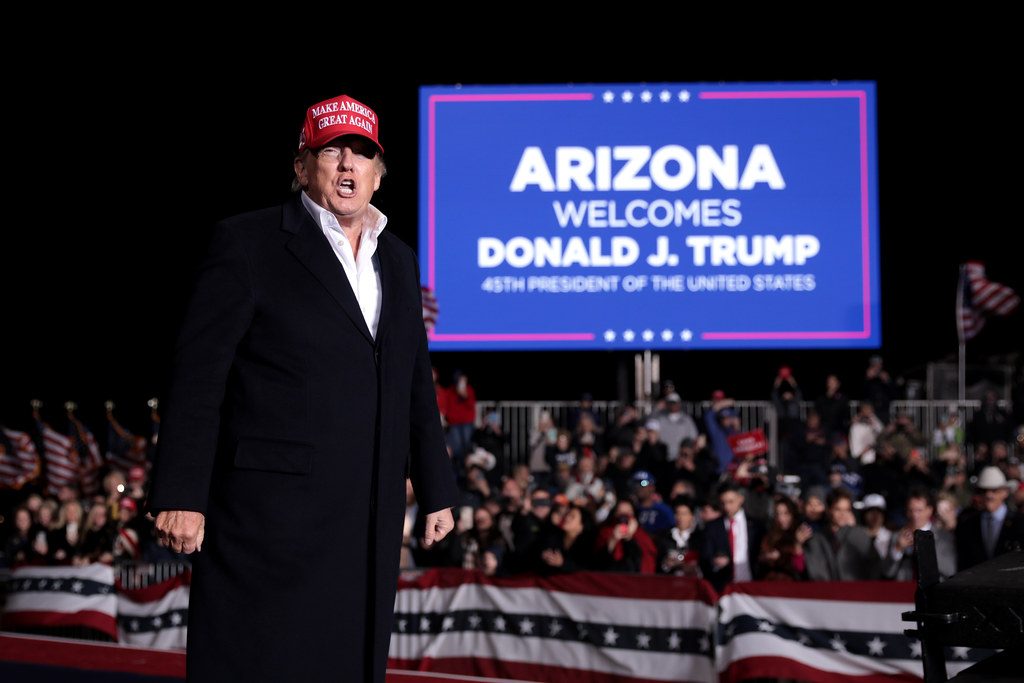
    At a rally in Garden City, New York, Trump told Americans to accept paying “a tiny little bit more” for gasoline while the conflict continues. He said the cost was justified by preventing what he called a “very evil country” from obtaining a nuclear weapon.

    Trump’s comments explicitly tied higher gasoline prices to the administration’s campaign against Iran rather than promising an immediate decline in fuel costs. The issue is politically significant because Trump campaigned for reelection on lowering energy costs, while Democrats are seeking to make gasoline prices and inflation pressure part of the November congressional election debate.

    Iran also faces economic pressure. President Masoud Pezeshkian said high inflation in Iran was being driven by a U.S. blockade of Iranian ports and sanctions on the country’s oil exports. Trump and Treasury Secretary Scott Bessent have signaled further financial pressure on Iran, with Bessent saying more measures were expected the following week.

  • ICE detains longtime father after 26 years as neighbors rally

    ICE detains longtime father after 26 years as neighbors rally

    The reported detention has become a local test of how quickly a community can respond when a longtime resident is taken into immigration custody. It also underscores how much families may not know in the first days after an arrest.

    U.S. Immigration and Customs Enforcement, or ICE, reportedly detained a father who had lived in the United States for 26 years, while his neighbors rallied in support of him and his family. The case matters now because it shows how an immigration detention can rapidly become a community crisis, even when the public does not yet know the basis for the arrest or where the legal case stands.

    The available report confirms the broad outline: a longtime U.S. resident and father was taken into ICE custody, and neighbors responded with visible support. It does not publicly identify the father, his location, his immigration history, the reason for detention, or whether he has an attorney.

    A longtime resident is detained

    Twenty-six years in the United States is central to why the reported detention has struck a nerve. For neighbors, that length of time can mean decades of work, family responsibilities, routines and relationships built in one place.

    But time spent in the country alone does not establish a person’s immigration status or determine the result of an ICE case. A long-term resident may have lawful status, a pending claim, an expired visa, an old removal order, no current status, or another immigration history that is not clear from the available information.

    That distinction is important. Public discussion often treats years in the country as if they settle the legal question, while immigration proceedings can turn on paperwork, prior court decisions, criminal history where applicable, family ties, humanitarian claims and whether a person has an available path to relief.

    Neighbors turn concern into action

    The reported neighborhood response is the story’s other defining element. When someone is detained unexpectedly, neighbors often become an immediate support network for a spouse, children or relatives who may be trying to locate the person, reach an attorney, keep up with work and manage daily family needs.

    Rallies and public support can also serve a practical purpose: drawing attention to a case before it disappears into an unfamiliar detention and court system. Community members may help circulate contact information, raise money for legal representation or connect a family with immigrant-rights groups.

    Supporters generally see that response as a statement that the detained person is more than an immigration file. They point to the disruption caused when a parent, worker or neighbor is suddenly absent from a household and community.

    Others argue that public sympathy cannot replace the legal review of an individual case. Both ideas can be true at once: neighbors may have a genuine account of a person’s life in the community, while immigration authorities and courts assess facts that are not visible in a rally or social-media post.

    Critical facts have not been released

    Several details that would shape public understanding remain unknown from the available report. There is no public confirmation of the father’s name, the place of detention, the agency’s stated reason for taking him into custody, or the specific stage of any immigration proceeding.

    There is also no indication of whether ICE has alleged a prior removal order, a status violation, a criminal matter, a missed immigration hearing or another basis. Without that information, broad claims about why he was detained should be treated cautiously.

    ICE detention does not by itself establish that removal will occur. A person can be held while the government pursues removal proceedings, while a prior order is reviewed, or while legal claims and requests for release are considered. The options available depend heavily on the individual record.

    Why the first days are difficult

    The NPR reporting on another recent ICE detention in Southern California illustrates a challenge that families commonly describe: locating a loved one and learning why they were taken can take time. In that case, a daughter searched for information after her father was detained during his delivery route and said she initially could not find him through ICE’s online detainee locator.

    That separate case should not be treated as evidence about this father’s circumstances. Still, it helps explain the uncertainty that can follow an arrest. Families may be relying on bystander video, secondhand accounts or incomplete information while they seek legal advice and wait for an agency response.

    Communication gaps can be especially destabilizing for families with children, limited savings, language barriers or little familiarity with immigration courts. The disappearance of a household’s primary earner, even briefly, can create immediate pressure around rent, food, transportation and child care.

    Community support has real limits

    Neighbor support can ease the family’s immediate burden and elevate public scrutiny, but it does not decide an immigration case. The most consequential developments will be whether the father has access to counsel, whether ICE releases information about his case, and what relief, if any, he may be eligible to seek.

    Advocates often urge families to preserve documents, identify any immigration case numbers, confirm where a person is being held and seek qualified legal advice rather than relying on rumors. Immigration law is highly fact-specific, and a small detail in a person’s history can substantially change the available options.

    For now, the clearest verified picture is narrow but consequential: ICE reportedly detained a father after 26 years in the United States, and his neighbors organized in support. The unanswered questions around the arrest are not a side issue; they are the information that will determine what comes next for him and his family.

  • Courteney Jacobazzi’s Tampa Bay Forecast Draws 3.5 Million Views

    Courteney Jacobazzi’s Tampa Bay Forecast Draws 3.5 Million Views

    A routine on-air segment became a major social-media moment after viewers fixated on Courteney Jacobazzi’s dress and animated delivery. The response highlights the uneasy gap between a meteorologist’s work and the way viral clips are often consumed.

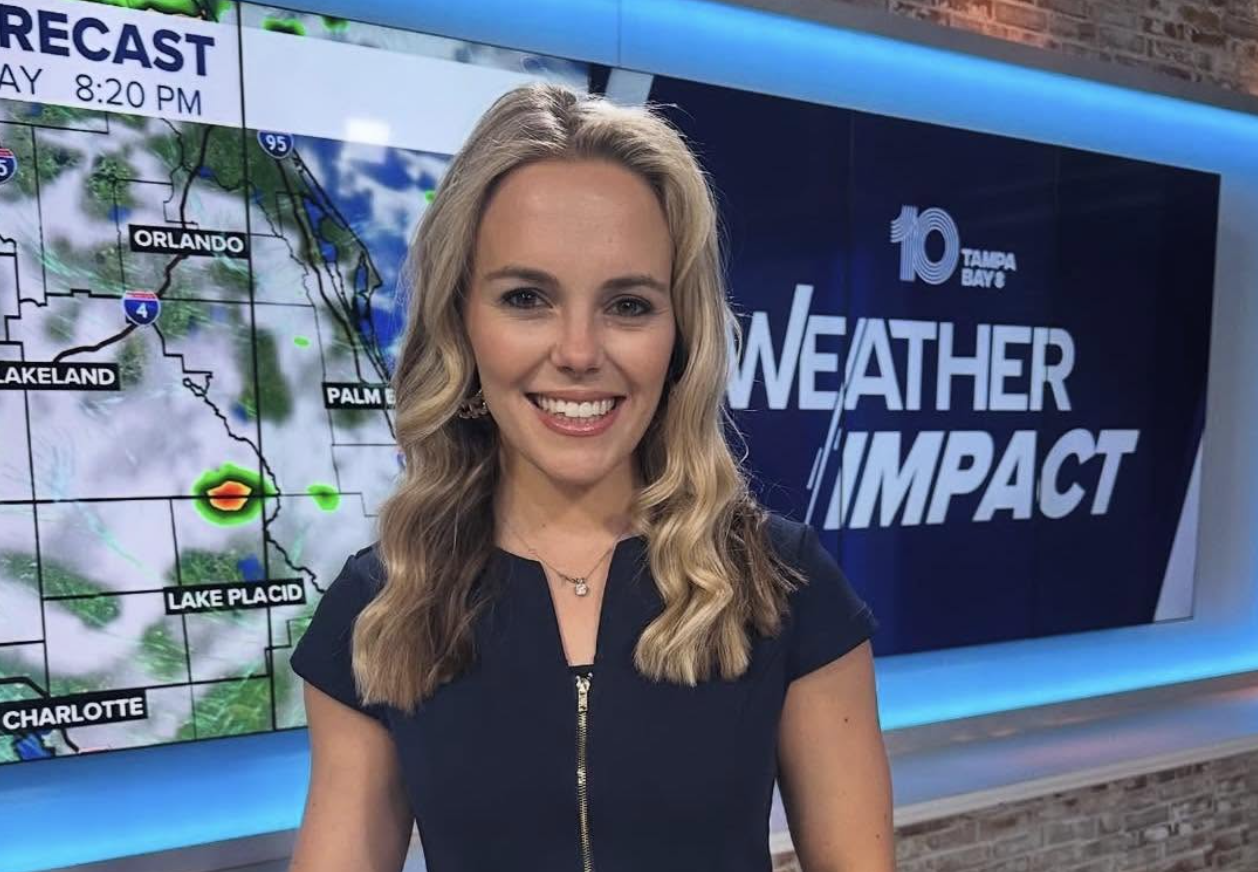
    A Tampa meteorologist’s weather segment drew millions of views after X users reacted to the meteorologist’s appearance. The meteorologist, Courteney Jacobazzi of 10 Tampa Bay, was wearing a form-fitting cream dress in the widely shared clip, and the online attention quickly moved beyond the forecast itself.

    According to reporting by Hip Hop Vibe, a 39-second video of Jacobazzi attracted more than 3.5 million views on X after it was posted by @DailyLoud. The moment shows how quickly a local TV segment can become national entertainment — and how easily the substance of an on-air report can be eclipsed by comments about the person delivering it.

    A routine segment found a huge audience

    Jacobazzi’s clip was not built as a viral production. She was in a Tampa Bay studio, using weather graphics and a handheld remote while delivering a local update in an animated, conversational style.

    Her expressions and phrases, including “yikes” and “whew,” became part of what viewers circulated. But the post’s comment section concentrated most heavily on her clothes, looks and body rather than the conditions or local information being discussed.

    The source report described the segment as covering local conditions and a serious accident. That contrast is central to why the clip has drawn notice: a broadcast item with public-service value was recast online primarily as a reaction video.

    View counts do not equal weather interest

    The reported 3.5 million-plus views are a striking number for a short local-TV clip. Still, viral reach does not necessarily mean millions of people were seeking a Tampa Bay forecast or engaging with the underlying news.

    On X, short video posts often travel because they can be understood without context, sound or location-specific knowledge. A presenter’s delivery, appearance or a provocative caption may prove more shareable than a detailed explanation of weather patterns, traffic disruptions or safety concerns.

    That dynamic can make the original purpose of a segment nearly invisible. A local audience may tune in for practical information, while a much broader social audience encounters the clip as a visual moment detached from the station, city and report.

    Jacobazzi’s work extends beyond one clip

    Jacobazzi is a broadcast meteorologist at 10 Tampa Bay, also known as WTSP. The source report says she holds a National Weather Association Seal of Approval and studied broadcast journalism at the University of Central Florida as well as broadcast meteorology at Mississippi State University.

    Her career has included work in Georgia and Florida, and she has publicly discussed tracking severe weather and tropical systems. That role carries particular weight in the Tampa Bay area, where hurricane season, intense heat and frequent thunderstorms can make clear local forecasting consequential.

    For meteorologists in Florida, on-camera work is not simply performance. It can include translating fast-changing weather data, communicating risk and helping audiences decide how to respond when conditions become dangerous.

    The familiar problem with viral weather clips

    There is nothing unusual about broadcasters bringing personality to a forecast. Clear gestures, memorable phrasing and a confident presence can help viewers follow a fast-moving report.

    The more complicated issue is the way female meteorologists are routinely reduced online to their appearance. The phrase “weather girl,” often used casually in viral posts, can flatten professional roles that require scientific training, newsroom experience and public-facing judgment.

    Some viewers may see the attention as harmless admiration or a boost to a presenter’s visibility. Others argue that comment threads centered on clothes and bodies create a narrower and more demeaning standard for women working on television, especially when their actual reporting receives little notice.

    Both realities can exist at once: a broadcaster may gain exposure from a viral clip, while the conversation around that exposure fails to reflect the work that put her on screen.

    Local stations face a changing audience

    For local stations, social platforms offer an obvious opportunity. A short clip can introduce on-air talent to viewers well outside a traditional broadcast market and bring attention to a station’s reporting.

    But the incentives are not always aligned with public-service journalism. The fastest-moving posts are often those that encourage instant reaction, while the most important parts of local coverage may require attention, context and follow-through.

    There is no indication that Jacobazzi or 10 Tampa Bay created this particular wave of attention around her outfit. The available reporting identifies a third-party X post as the main driver of its spread.

    The takeaway from the episode is straightforward: Courteney Jacobazzi’s Tampa Bay segment reached a huge audience, but much of that audience was responding to an image rather than a forecast. In an era when any local broadcast can be clipped and recirculated, the line between useful reporting and viral spectacle is increasingly thin.

  • DOJ loses 22 voter-roll cases as Blanche weighs Supreme Court appeal

    DOJ loses 22 voter-roll cases as Blanche weighs Supreme Court appeal

    The Justice Department’s dispute with states over voter-registration data is moving toward a possible Supreme Court test. The fight reaches beyond election administration, raising questions about federal power, personal data and who controls the mechanics of voting.

    Attorney General Todd Blanche said the Justice Department may ask the Supreme Court to intervene in litigation over federal access to state voter rolls ahead of the November midterm elections. The DOJ has lost 22 cases so far in its broader push for voter-roll data, a campaign involving dozens of disputes with state governments and a potentially consequential test of federal authority over elections.

    Blanche’s comments do not mean an appeal is already before the court. They do signal that the administration is considering its next move after federal judges in multiple states sided with officials seeking to block the government’s access to detailed registration information.

    The DOJ’s possible Supreme Court move

    Asked on NBC News’ Meet the Press whether the Justice Department could take the cases it has lost to the Supreme Court, Blanche said that was “absolutely” a possibility.

    The immediate legal picture is fragmented. Individual cases have been decided in lower federal courts, rather than through one nationwide ruling. A Supreme Court appeal could give the administration an opportunity to seek a broader answer to the central question: how much voter-roll information may the federal government demand from states?

    For now, it remains unclear which case, if any, the Justice Department would choose as the vehicle for a Supreme Court appeal, when it might file, or whether appellate courts will first weigh in. The Supreme Court generally takes only a small share of the cases presented to it, and it is not required to step in simply because the federal government asks.

    What data the government wants

    The dispute grew out of an executive order signed by President Donald Trump asking states to provide voter rolls to the federal government. According to NBC News, the requested material includes names, dates of birth, residential addresses, state driver’s license information and the last four digits of Social Security numbers.

    The administration says the data is needed to investigate possible election-related “deficiencies” or “anomalies,” including whether noncitizens may be registered to vote. Blanche framed the effort as part of an obligation to ensure elections are fair and conducted properly.

    That framing matters because voter rolls are not a single uniform national list. States and local election authorities maintain them, applying their own procedures within a web of federal and state election laws. The federal government does not typically run the voter-registration systems that determine who is on those lists.

    Why states are resisting disclosure

    Some states have voluntarily provided data, but the Justice Department has sued 30 states and Washington, D.C., over refusals to comply, NBC News reported. At least 22 states have prevailed in efforts to prevent federal access, including in cases decided by judges in Oregon and Michigan.

    States challenging the requests argue, in effect, that election administration has traditionally been their responsibility and that sensitive voter information deserves careful protection. The state coalition is not neatly partisan: Republican-led states including Idaho, Nevada, Utah, Georgia and Vermont are among those fighting the administration in court.

    Vermont Gov. Phil Scott, a Republican, said last month that state officials are better positioned than the federal government to run elections. That position captures a core tension in the litigation. Even officials who support secure and accurate voter rolls may disagree sharply over whether Washington should hold this volume of personal registration data.

    Courts have rejected the request

    The administration’s potential Supreme Court strategy comes after a string of lower-court setbacks. Federal judges have agreed with states that sought to keep their voter rolls from being turned over to the Justice Department.

    Those rulings do not necessarily settle every version of the dispute. Court decisions can turn on the wording of a specific demand, the legal authority cited by the government, privacy protections, procedural requirements and the particular state involved.

    Still, 22 losses give the Justice Department a strong reason to look for a higher-court ruling that could bring consistency to the cases. They also give states reason to argue that the administration’s approach has repeatedly failed judicial scrutiny.

    A Supreme Court case would put the justices at the intersection of election oversight, executive power, state sovereignty and data privacy. It would not decide an election result. It could, however, shape what information federal officials may obtain while investigating election practices.

    The election-integrity argument divides

    Blanche said election integrity was a central issue for Trump’s campaign and that the Justice Department should investigate concerns about whether elections are fair. Supporters of the data push may see broad federal access as a way to identify registration problems and enforce election laws consistently across states.

    Critics see a different risk: a federal data-gathering effort that could intrude on state authority, expose sensitive personal information or create pressure around voter registration close to an election. They also note that assertions about voter-roll irregularities require evidence and that voter-roll maintenance is already governed by state processes and federal rules.

    The legal fight is therefore about more than whether lists are accurate. It is also about who gets to define the problem, inspect the records and decide what remedy is permitted. Those questions are especially politically charged with November’s midterm elections approaching.

    What remains unresolved before November

    No Supreme Court appeal has been announced, and Blanche described such a move as a possibility rather than a settled decision. The DOJ could continue pursuing appeals in lower courts, narrow or revise particular requests, or select a case it believes offers the best path to the justices.

    States, meanwhile, will continue administering elections under their existing systems unless a court order changes their obligations. The current rulings mean the administration has not yet secured the broad voter-roll access it sought in the cases where states prevailed.

    Blanche’s remarks also arrive soon after his Senate confirmation, following several months as acting attorney general. Democrats have raised concerns about his prior personal legal work for Trump and his independence; Blanche has said he and DOJ prosecutors will act with integrity and without fear or favor.

    The voter-roll litigation will test those competing views in a concrete setting. The next major development is likely to be less about rhetoric than legal procedure: whether the Justice Department files an appeal capable of putting this state-versus-federal election dispute before the Supreme Court.

  • 15-Minute Burbank Airport Stop Turns MAGA Couple Against Trump

    15-Minute Burbank Airport Stop Turns MAGA Couple Against Trump

    A California couple’s experience puts a personal face on the reach of immigration enforcement at airports. It also shows how support for a hard-line policy can change when it lands inside a supporter’s own family.

    A MAGA-supporting couple, Brent Jindra and Galina Bobreneva, say they turned against or sharply reconsidered Donald Trump after immigration authorities stopped Bobreneva at Burbank Airport in California. The couple says a roughly 15-minute airport encounter ended with Bobreneva in handcuffs, and Jindra said, “We are living in fear” as she fights to remain in the United States.

    The episode matters because Jindra voted for Trump three times and supported his aggressive immigration agenda. Their experience, reported by The New York Times, offers a close look at how airport arrests involving people with active immigration cases can reshape assumptions about whom a national enforcement campaign will reach.

    A stop after their flight

    According to the couple’s account to the Times, Bobreneva and Jindra had just gotten off a flight in Burbank last month when a man approached her and said she had been selected for secondary screening.

    The man was a federal agent, the newspaper reported. After questioning Bobreneva for about 15 minutes, he led her away in handcuffs to an unmarked vehicle.

    That brief screening became the beginning of a 16-day detention ordeal, according to the report. Bobreneva spent one night on the floor of a basement holding cell in downtown Los Angeles, then about two weeks at a detention center in the Mojave Desert.

    For Jindra, the speed of the encounter appears central to the shock. A routine post-flight moment became a separation from his wife and a legal crisis neither of them expected.

    Why Trump support gave way

    Jindra, a tech salesman, had backed Trump because of the president’s tough approach to immigration, according to the Times. He told the newspaper that the appeal of the MAGA campaign, in his view, was stopping people who entered the country illegally and committed crimes.

    What changed was not an abstract disagreement over border policy. It was seeing his wife taken into custody even though the report described her as having an active immigration case and no criminal history.

    That distinction matters in a political debate often framed in broad categories. Supporters of tougher enforcement may see it as necessary to apply immigration law consistently. Critics argue that detention of people pursuing legal avenues to stay in the country can produce sweeping, frightening consequences for families with deep ties to their communities.

    Jindra’s comments do not settle that larger argument. They do show how a policy position can be tested when enforcement touches someone close to home.

    Bobreneva’s immigration case continues

    Bobreneva was released on a $35,000 bond, the Times reported. She is wearing an electronic monitor and is fighting federal allegations that she overstayed her visa.

    An allegation of a visa overstay is not the same as a final immigration-court outcome. The available reporting does not establish when her case will be resolved or whether she will ultimately be allowed to remain in the country.

    Her release also does not erase the consequences of detention. The couple now faces legal costs, uncertainty and the daily strain of monitoring and court proceedings. Jindra’s statement that they are “living in fear” reflects that unresolved status rather than a completed case.

    The account is based largely on the couple’s recollection of the airport stop and the reported facts of Bobreneva’s detention and release. Publicly available details in the source material do not explain why she was selected at that specific moment or describe any individualized public safety concern.

    Airports become an enforcement front

    The Times characterized the case as part of a newer front in Trump’s mass-deportation drive: arrests at airports of people with active immigration matters who do not have criminal records.

    Airports can be particularly unsettling places for people with unresolved immigration status. Travelers may assume a domestic itinerary carries fewer risks than crossing an international border, but encounters with federal authorities can still have serious consequences.

    That does not mean every traveler with an immigration case will be detained, nor does it establish that every airport enforcement action is improper. Immigration enforcement involves statutes, agency discretion, administrative proceedings and facts that vary widely from case to case.

    Still, the episode highlights a practical reality: pending status and the absence of a criminal record may not prevent detention. People facing immigration questions often need individualized legal advice before making travel decisions, because broad political messaging cannot answer the details of a particular case.

    The political lesson is personal

    The story has resonance beyond one California household because Trump’s immigration agenda has long been a defining issue for his coalition. For many supporters, the promise is direct enforcement against unlawful immigration and criminal activity.

    Jindra’s account suggests that the boundaries of that promise can look different in practice. His wife’s case put him face-to-face with a system that can detain someone who is neither a stranger to him nor, according to the report, someone with a criminal history.

    There are competing political interpretations. Trump’s allies may argue that immigration law cannot depend on whether a person is married to a voter or is viewed sympathetically by the public. Opponents may say Bobreneva’s detention illustrates the human cost of an enforcement-first approach that reaches people with ongoing cases.

    For Bobreneva and Jindra, the immediate question is not campaign strategy but the outcome of her immigration fight. Their experience is a reminder that policy debates become far less theoretical when a 15-minute airport stop changes a family’s life.

  • Trump’s Renewed Wall Street Journal Defamation Case Faces Possible Dismissal

    Trump’s Renewed Wall Street Journal Defamation Case Faces Possible Dismissal

    The dispute returns to a demanding legal test that protects news organizations reporting on public figures. The latest signal is not a final ruling, but it puts Trump’s amended case under renewed pressure.

    A judge has signaled that Donald Trump’s defamation lawsuit against The Wall Street Journal may be dismissed again. The renewed case follows an earlier federal dismissal of Trump’s claim over the newspaper’s reporting about a letter bearing his name that was included in a birthday book for Jeffrey Epstein.

    That matters because Trump is trying to clear one of the highest hurdles in American media law: showing that a news outlet published a false statement while knowing it was false or recklessly disregarding whether it was true. A judicial signal is not a final order, but it suggests the amended complaint may still fall short.

    The earlier dismissal set the bar

    In April, U.S. District Judge Darrin Gayles dismissed Trump’s defamation lawsuit against the publisher of The Wall Street Journal. Reuters, CNN, the BBC and the Journal each reported on that ruling.

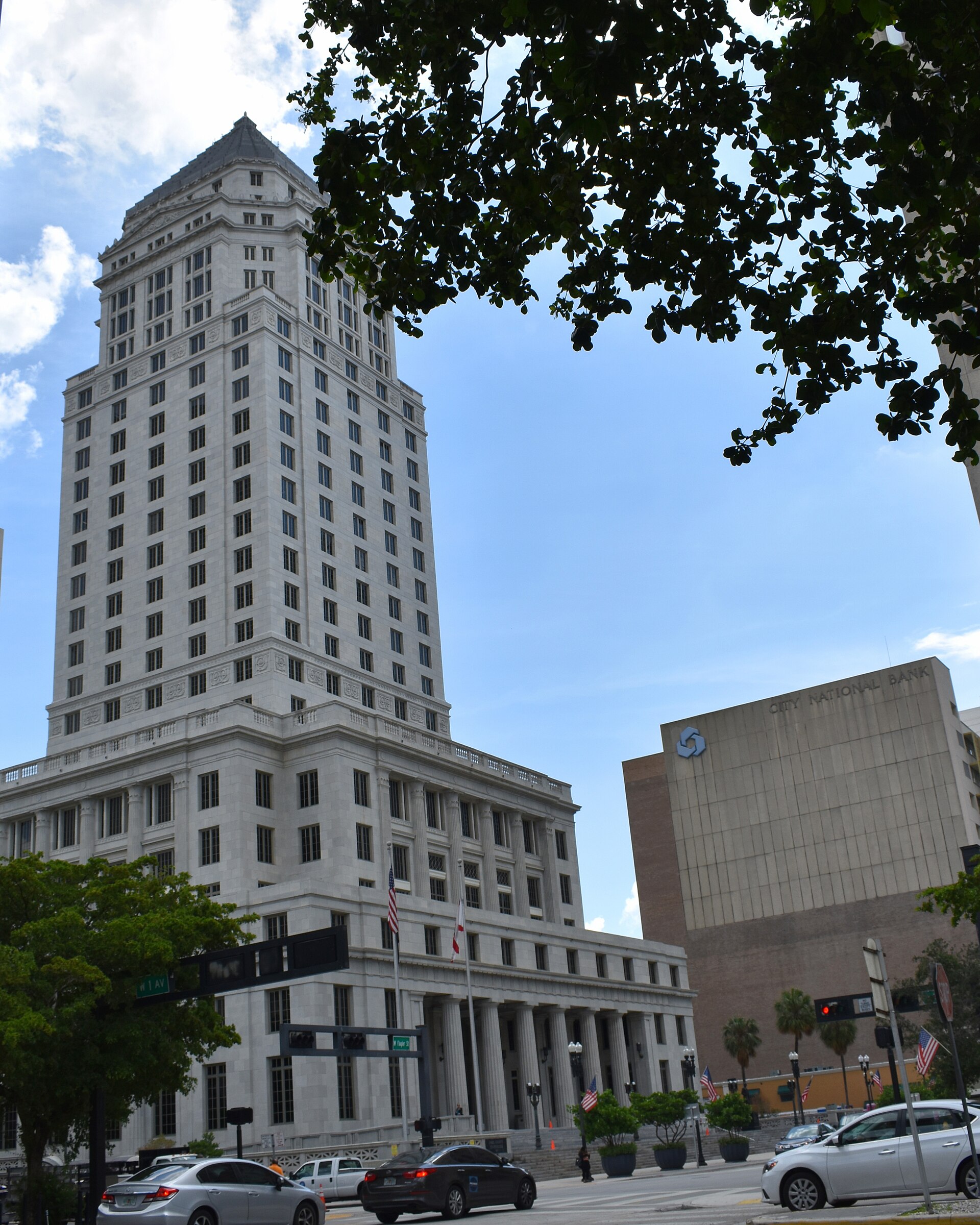
    Dade County Courthouse (Miami, Florida)
    Image: Tamanoeconomico, via Wikimedia Commons, CC BY-SA 4.0.

    Trump had sued the newspaper, its publisher Dow Jones and others after the Journal reported in July that his name appeared in Epstein’s 2003 birthday book. The report described a note attributed to Trump that included a drawing of a woman’s body.

    Trump denied writing the letter and sought at least $10 billion in damages, according to the BBC. His lawsuit argued that the reporting was false and damaging.

    Gayles ruled that the initial complaint did not state a legally valid defamation claim. The Journal’s account of the decision said Trump had not made a valid claim that he was defamed by the article.

    Why actual malice dominates

    Defamation law does not require public figures merely to show that a report was wrong. Under the constitutional standard established by the Supreme Court, they generally must show actual malice.

    That phrase does not mean dislike, harsh language or political hostility. It means the publisher knew a statement was false or acted with reckless disregard for whether it was false.

    The distinction is central here. A plaintiff can strongly dispute an article’s account and still lose if the complaint does not plausibly show that journalists or publishers had the required state of mind when they published it.

    According to the BBC’s report on the earlier ruling, Gayles said Trump had “not plausibly alleged” that the defendants published the article with actual malice. The judge said the complaint came “nowhere close” to meeting that standard.

    A second complaint needs more

    The first case was dismissed without prejudice, meaning Trump was permitted to file an amended lawsuit rather than being permanently barred from trying again. The BBC reported that he had until April 27 to submit a new complaint.

    That procedural detail explains why the dispute is back before a judge. A renewed filing is not a reset of the legal standard; it is an opportunity to supply more specific allegations addressing the deficiencies the court identified.

    For Trump, the task is to connect the Journal’s reporting to facts that could support an inference of actual malice. General denials of the underlying account, broad attacks on the press, or claims of reputational harm would not by themselves resolve the issue identified in the first ruling.

    For the Journal and its publisher, the argument is likely straightforward: the amended case still does not allege facts showing that the defendants knowingly published false information or recklessly ignored serious doubts about its accuracy.

    The case tests press protections

    The lawsuit has drawn attention not only because Trump is the president, but because it concerns the boundaries of legal protection for reporting about powerful public figures. The actual-malice rule is designed to give journalists room to investigate and publish matters of public concern without facing liability for every disputed allegation.

    Critics of that protection argue that the standard can make it exceptionally difficult for people harmed by inaccurate reporting to obtain a remedy. Supporters say weakening it would encourage costly litigation and make publishers more reluctant to report aggressively on public officials, wealthy individuals and contentious subjects.

    Neither view determines this case. The immediate question is narrower: whether Trump’s revised pleading includes enough factual detail to meet the standard required of a public-figure plaintiff.

    The dispute also shows why early court rulings matter in defamation cases. Before a jury ever evaluates the truth of an article, a judge can decide whether the plaintiff has alleged a claim that may proceed at all.

    What the latest signal does not decide

    A judge signaling skepticism about a complaint is not the same as issuing a final dismissal. Courts can give parties an opportunity to clarify arguments, and a written decision can rest on grounds different from comments made during a hearing.

    The available reporting establishes that the first complaint was dismissed and that Trump could amend it. The latest headline indicates the judge sees a potential basis for another dismissal, but the source material available here does not include a new written ruling or a full hearing transcript.

    If the renewed lawsuit is dismissed, the order will determine whether Trump can amend again, appeal, or whether the dismissal ends this version of the case. If it survives, the litigation could move into discovery, where the sides seek evidence relevant to the Journal’s reporting process and state of mind.

    For now, the biggest takeaway is the same legal obstacle that defined the first round: Trump’s lawsuit against The Wall Street Journal must do more than contest the article. It must plausibly establish actual malice, and the judge’s latest signal suggests that remains an unresolved — and difficult — challenge.