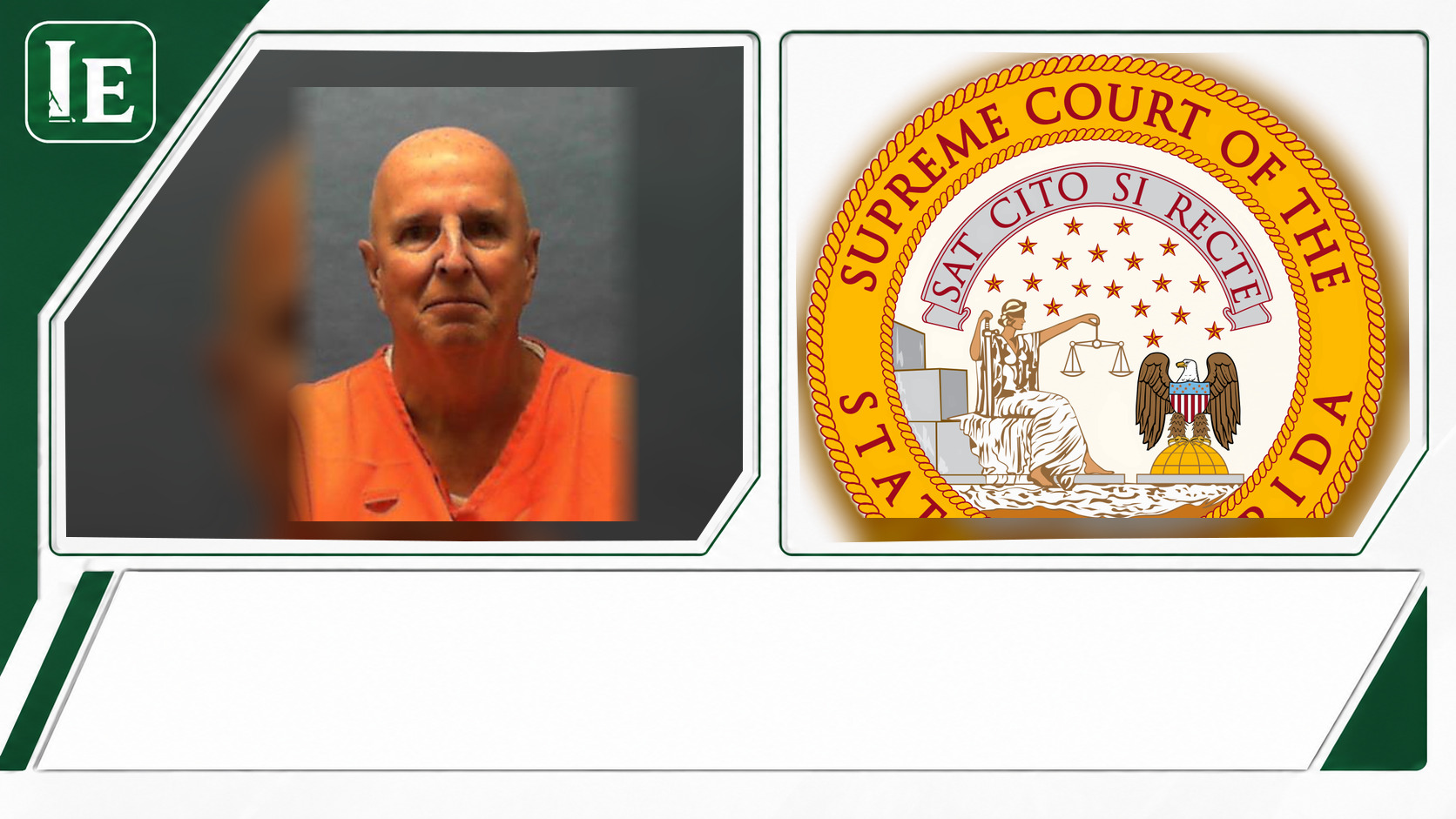
Duckett was due to be executed at Florida State Prison near Starke on March 31, 2026. The stay puts new focus on what pending DNA testing can—and cannot—settle in a decades-old capital case.
James Aren Duckett’s Florida execution was halted after the Florida Supreme Court issued a stay while DNA testing remains pending. Duckett, 68, had been scheduled for a 6:00 p.m. lethal injection on Tuesday, March 31, 2026, at Florida State Prison near Starke, Florida; the court paused the execution to allow the testing to be completed.
The immediate result is a delay, not an exoneration or a reversal of Duckett’s conviction. But because the case involves a death sentence, the unresolved testing now sits at the center of whether Florida can move ahead with the execution and, if so, when.
A stay stops the March 31 execution
The Florida Supreme Court’s order temporarily blocks the state from carrying out Duckett’s execution. Under Florida’s lethal-injection protocol, he had been scheduled to receive a three-drug injection at the prison near Starke.

A stay of execution does not erase a death warrant or settle every appeal. It suspends the state’s authority to carry out the sentence while the court addresses a specific legal issue—in this case, the status of DNA testing that a lower court had allowed.
The state supreme court also directed the state to report on the testing’s status by 5 p.m. Friday, according to reporting by The Associated Press. That deadline signals that the court wants a clear record of where the forensic review stands before deciding whether the stay should remain in place.
What the pending DNA testing means
Duckett sought DNA testing during his appeals, arguing that results could exonerate him. A circuit court granted the request, but the testing had not been completed when the execution date approached.
That does not mean the testing will necessarily produce a result favorable to Duckett, or any result that changes the legal case. DNA evidence can confirm prior evidence, exclude a person from a particular sample, prove inconclusive because of age or degradation, or raise questions that require further litigation.
Still, the timing matters. Once an execution is carried out, a court cannot revisit an unresolved forensic question in any meaningful way. The stay preserves time for the testing process and for the parties and courts to assess what the results show.
The conviction remains in force
Duckett was sentenced to death in 1988 after being convicted of first-degree murder and sexual battery in the killing of 11-year-old Teresa McAbee. Court records cited by AP say Duckett was a Mascotte police officer at the time; Mascotte is west of Orlando.
McAbee disappeared on May 11, 1987, after she was seen getting into Duckett’s patrol car at a convenience store, according to the records. Her body was found in a lake the following morning, less than a mile from the store.
Prosecutors’ evidence included blood and hair evidence said to link McAbee to Duckett, tire tracks at the lake that matched tires on Mascotte patrol cars, and both Duckett’s and McAbee’s fingerprints on the hood of Duckett’s car. Three teenage girls also testified at trial that Duckett had previously given them rides and made sexual advances, AP reported.
Those facts explain why the state secured a conviction and death sentence. The pending DNA request reflects a separate legal question: whether additional testing of available evidence could materially affect the case.
Why the court’s pause matters
Capital cases bring a finality that other criminal sentences do not. Supporters of the stay argue that courts should resolve potentially relevant forensic testing before an execution, particularly when a lower court has already found that testing appropriate.
Others may point to the age of the case, the trial evidence and the years of post-conviction litigation as reasons to avoid repeated delays. The stay does not resolve that broader debate. It addresses the narrower question of whether Florida should execute Duckett before the authorized DNA work is finished.
For victims’ families, lengthy proceedings can prolong an already painful process. For defendants, defense lawyers and death-penalty critics, the possibility of unexamined biological evidence is precisely why courts must move cautiously. Both realities shape the stakes of a temporary halt.
Florida’s execution pace adds pressure
The Duckett case arrives after a year in which Florida carried out 19 executions, a state record since the death penalty was reinstated in 1976. Gov. Ron DeSantis oversaw more executions in 2025 than any Florida governor had in a single year during that period, AP reported.
Florida’s previous annual record was eight executions in 2014. Nationwide, 47 people were executed in 2025, with Florida leading the country, according to AP’s tally.
That context makes the court’s intervention notable. Florida has been moving rapidly through a substantial number of death warrants, yet the state supreme court found reason to pause this case while the DNA issue remains unresolved.
What remains unresolved for Duckett
The key unanswered question is when the testing will be completed and what, if anything, it will show. The public record summarized by AP does not establish that the results are expected to be exculpatory; it establishes that Duckett sought the testing and that a circuit court approved it.
It is also unclear whether the Florida Supreme Court will lift the stay before March 31, extend it until results are available, or require additional briefing after the state’s status report. If the stay remains in effect through the scheduled date, the timing of any future execution is uncertain.
For now, Duckett’s death sentence remains intact, but the execution cannot proceed on the planned timetable. The case has shifted from a scheduled lethal injection to a closely watched question about whether pending DNA evidence must be resolved first.
Leave a Reply