
Ocasio-Cortez’s rise reflects a shifting early Democratic picture, but prediction-market odds are not the same as votes or conventional polling. With no declared field, the numbers say more about attention and expectations than a settled frontrunner.
Alexandria Ocasio-Cortez has become the leading Democratic prospect for the 2028 presidential nomination on Kalshi, where the New York representative is listed at 19 percent. The surprise Democrat’s 2028 presidential lead puts her ahead of Georgia Sen. Jon Ossoff at 17 percent and California Gov. Gavin Newsom at 13 percent.
The shift is striking because Newsom stood at 36.7 percent in December. But Kalshi’s market is an early measure of expectations, not a primary vote forecast, and Ocasio-Cortez has not said she is running for president.
Ocasio-Cortez moves ahead on Kalshi
Kalshi allows people to buy and sell contracts tied to future outcomes, including who will win a party’s presidential nomination. Its numbers change as traders react to news coverage, campaign moves, political chatter and their own sense of where a race is heading.
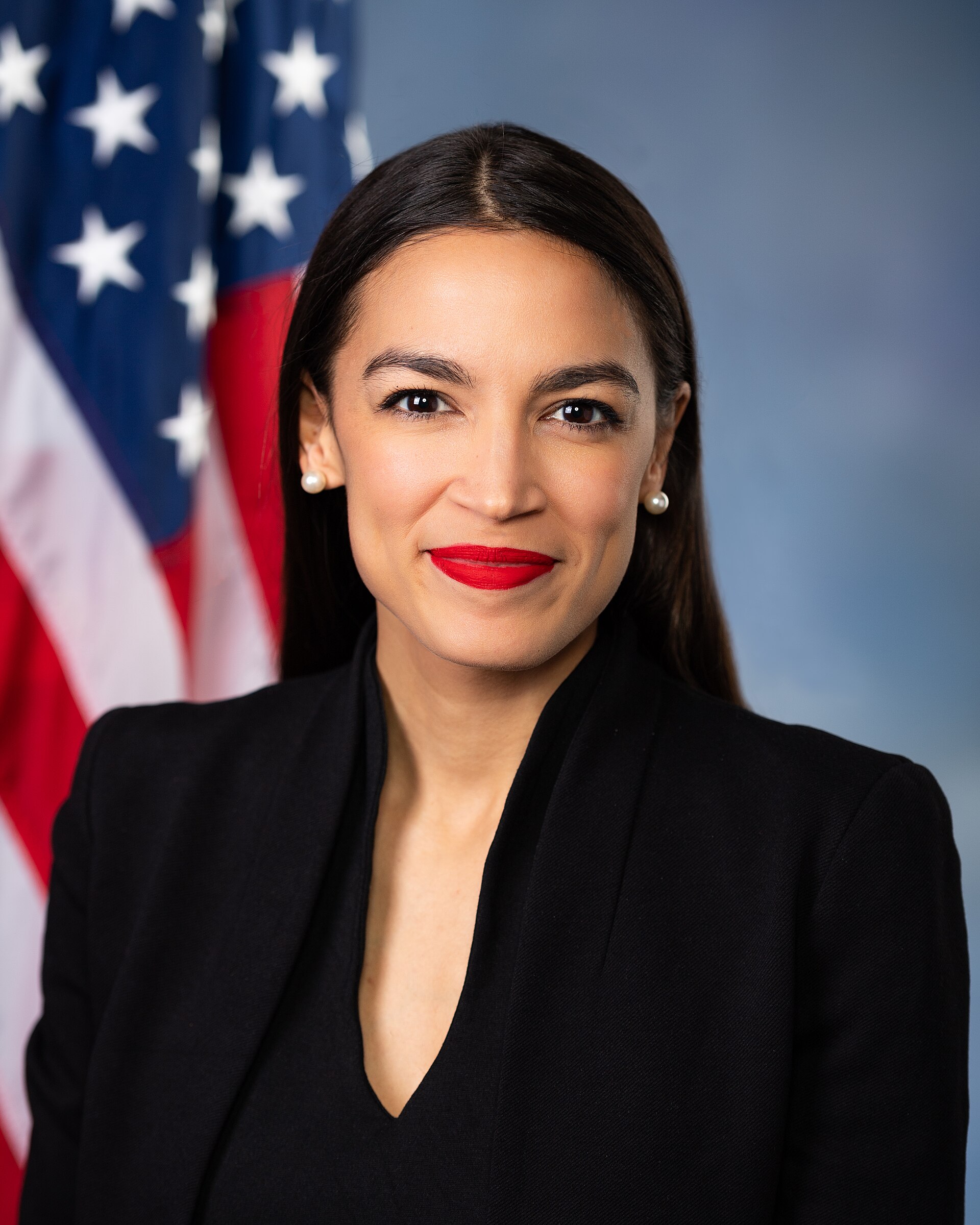
In the current Democratic nomination market cited by The Daily Beast, Ocasio-Cortez holds a 19 percent chance, narrowly ahead of Ossoff’s 17 percent. Newsom, long treated as one of the party’s most visible potential national candidates, is at 13 percent.
That is not a declaration of a Democratic front-runner by voters, party officials or delegates. It is a snapshot of a market in which traders are assigning probabilities to an election still years away.
Still, markets matter as a political signal. They can capture the speed with which attention has moved toward candidates who look capable of assembling a coalition, attracting media attention and representing a generational change within the party.
Newsom’s drop shows the volatility
Newsom’s decline from 36.7 percent in December to 13 percent underscores the limits of treating early odds as a durable ranking. A candidate’s standing can change quickly before anyone launches a campaign, hires staff in early-voting states or faces sustained scrutiny from primary voters.
The California governor has national name recognition, a large platform and a well-developed political network. Those assets have helped make him a recurring name in 2028 speculation, even though the eventual field remains unsettled.
Ocasio-Cortez and Ossoff, meanwhile, have gained ground during the summer, according to the report. At 36, Ocasio-Cortez and, at 39, Ossoff represent a younger cohort than several Democrats regularly discussed as national contenders.
That contrast is part of the appeal and the uncertainty. Democratic voters may eventually favor a new generation, but they may also prioritize executive experience, geographic reach, ideological flexibility or perceived general-election strength. Those questions have not been tested in an actual nomination contest.
She has not announced a campaign
Ocasio-Cortez has left the door open without committing herself to a presidential bid. When ABC’s Jonathan Karl asked her directly on August 9 about a possible run, she said she was focused on the midterms and her congressional campaign.
Pressed on whether she could run for president, Ocasio-Cortez said she had not ruled it out. That is a notably different position from launching a presidential campaign, and it leaves substantial room for political calculation between now and 2028.
There is another possible route for the New York Democrat: a 2028 primary challenge to Senate Democratic leader Chuck Schumer. Asked about a Senate run this month, Ocasio-Cortez said, “Anything is possible at this juncture,” according to The Daily Beast.
Her eventual choice could reshape the Democratic map. A White House bid would place her in a broad national competition; a Senate challenge would concentrate her political energy in New York while creating a major intraparty contest.
The wider Democratic bench remains open
Behind the top three, the Kalshi market cited by The Daily Beast places former Democratic nominee Kamala Harris at 9 percent. Arizona Sen. Mark Kelly is at 5 percent, while former Transportation Secretary Pete Buttigieg is at 4.7 percent and Pennsylvania Gov. Josh Shapiro at 4.6 percent.
Kentucky Gov. Andy Beshear and former Chicago Mayor Rahm Emanuel are each listed at 3.5 percent. The range of names illustrates why any firm 2028 hierarchy should be treated cautiously: senators, governors, former Cabinet officials and past nominees are all still in the mix.
Conventional polling offers a different kind of snapshot. The New York Times’ tracker of national Democratic primary polling has emphasized that early surveys largely reflect name recognition while the potential candidate list is still developing.
Its historical warning is useful. Barack Obama trailed Hillary Clinton in nearly every poll before the 2008 primary season and did not take a decisive lead until after Super Tuesday. Early preferences can identify recognizable figures, but they rarely settle the final contest.
Markets are not polls or endorsements
Kalshi odds should not be read as a poll of Democratic voters. A poll samples people and reports a stated preference at a moment in time; a prediction market reflects the prices set by participants willing to risk money on an outcome.
That can make markets responsive and revealing, but also sensitive to publicity, relatively thin trading, assumptions about whether a candidate will run and sudden news cycles. A market price is a probability estimate, not proof that a candidate would win an election held today.
- What the 19 percent figure means: traders currently see Ocasio-Cortez as the single most likely Democratic nominee among the listed options.
- What it does not mean: that 19 percent of Democratic primary voters support her, or that she has entered the race.
- What could change it: candidate announcements, midterm results, fundraising, polling, endorsements and decisions by high-profile Democrats not to run.
The distinction matters especially this early. The 2028 Democratic nomination will be determined through primaries, caucuses and delegates, not through the market’s current board.
The first real tests are still ahead
The immediate political focus remains the midterm elections, where Ocasio-Cortez is seeking reelection to the House. Those results, along with the performance of Democrats nationally, may influence which politicians see an opening for a presidential run.
For Ocasio-Cortez, a sustained lead in market odds could reinforce the case that she belongs in the party’s top tier of possible candidates. It may also intensify scrutiny of her positions, electoral record and ability to appeal beyond her New York base.
For Ossoff and Newsom, the narrow margins leave plenty of room for movement. Neither trails by an amount that would make the market remotely settled, and both have obvious paths to becoming more central figures as 2028 approaches.
The clearest takeaway is not that Democrats have chosen a nominee. It is that Ocasio-Cortez’s rise has made the party’s next-generation question harder to ignore—and that the apparent leader is still operating in a race with no declared field and no votes cast.
Leave a Reply