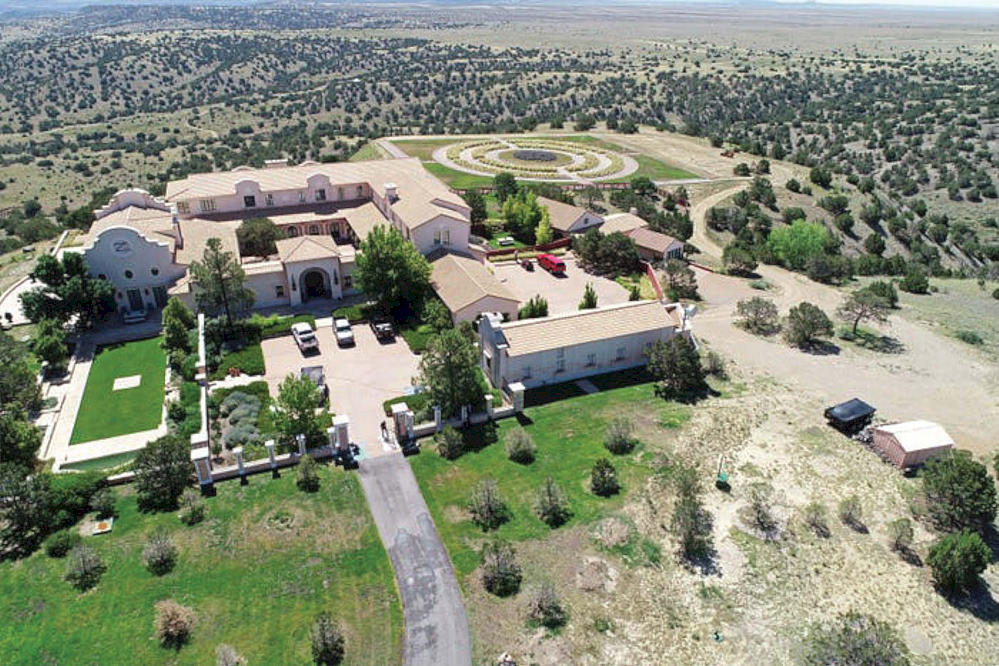
New Mexico’s renewed inquiry is not simply a look back at Jeffrey Epstein’s former property. It is becoming a test of how much material federal authorities will provide to state investigators examining allegations tied to Zorro Ranch.
Investigations are examining Jeffrey Epstein’s former ranch in New Mexico, and the renewed scrutiny is adding pressure on the Justice Department to provide records connected to alleged crimes at Zorro Ranch. New Mexico Attorney General Raúl Torrez says his office has reopened its criminal investigation after reviewing information recently released by the Justice Department.
The immediate issue is access: New Mexico investigators want the complete, unredacted federal case file. That request puts the focus not only on what may have happened at the ranch, but also on why the state’s earlier inquiry ended and whether newly available federal material changes the picture.
New Mexico reopens the ranch case
The New Mexico Department of Justice said Torrez ordered the investigation reopened following the release of information by the U.S. Department of Justice. The state described the matter as an inquiry into allegations of illegal activity at Epstein’s Zorro Ranch.
That wording is important. A reopened investigation is not a finding that a crime occurred at the ranch, and the state has not announced charges tied to the renewed inquiry. Its statement says agents and prosecutors will follow the facts, assess jurisdiction and preserve evidence that is still available.
The ranch, located in New Mexico, has long carried public significance because of Epstein’s connections to it. The new development shifts attention from broad public interest in Epstein-related records to a specific question for state authorities: whether federal files contain actionable leads about conduct within New Mexico.
Why unredacted files are central
New Mexico says it will seek immediate access to the full federal case file without redactions. That is the core source of pressure on the Justice Department.
Federal investigative files can contain interview summaries, reports, leads, evidence inventories and other material that may help state officials determine what should be independently investigated. But access does not automatically mean every record can be released publicly or even shared in full with another investigative agency.
Records may involve victim privacy, grand-jury secrecy, investigative methods, uncharged individuals or evidence related to other jurisdictions. Those limits create a difficult balance: state investigators say they need a complete record to assess allegations, while federal officials must manage legal and privacy restrictions around sensitive materials.
The New Mexico statement does not say what specific newly released information prompted the reopening. It says only that revelations in previously sealed FBI files warrant further examination.
The unresolved 2019 closure
State officials say New Mexico’s prior investigation was closed in 2019 at the request of the U.S. Attorney’s Office for the Southern District of New York. That detail has become a key part of the current scrutiny.
A request to close or pause a state inquiry can arise when federal prosecutors are pursuing a related matter and want to avoid conflicts, duplicated steps or interference with a larger case. Still, the sequence raises understandable questions about what information was available at the time, what New Mexico knew and whether the state was later given enough material to revisit its decision.
A court filing from the New Mexico Department of Justice points to earlier exchanges with federal authorities about the ranch. The filing underscores that the current dispute is not only about newly disclosed records; it also involves the history of cooperation and communication between New Mexico and federal prosecutors.
The state’s position is that fresh information merits a new review. The Justice Department’s public position on exactly what it will provide to New Mexico was not detailed in the state announcement.
A state inquiry with federal stakes
Torrez said New Mexico intends to work with law-enforcement partners and the Epstein Truth Commission established by the New Mexico Legislature. The commission’s existence adds a public-accountability layer alongside the criminal investigation.
Congressional Record materials from March include language calling for the Justice Department to provide Epstein files to New Mexico authorities and the Legislature’s truth commission. Such language reflects the political pressure for disclosure, though it does not by itself establish what files have been turned over or what legal obligations have been completed.
For the Justice Department, the stakes go beyond one document request. A thorough response could help state investigators evaluate allegations that have not been fully examined locally. A limited response, delays or extensive redactions could intensify questions about transparency and about the federal government’s earlier role in the matter.
What investigators still need to establish
The reopened case begins with substantial unknowns. Investigators must determine what evidence remains, whether witnesses are available, which allegations fall under New Mexico jurisdiction and whether any potential offenses can still be pursued under applicable law.
They will also need to separate verified evidence from claims that may be incomplete, uncorroborated or outside the state’s authority. That is especially consequential in a case that has generated years of intense public attention and speculation.
New Mexico has said it will move quickly but deliberately, and it has promised updates when appropriate. The next meaningful signals will be whether the state receives the unredacted federal material it seeks, what its review reveals and whether the inquiry produces any public findings or legal action.
The disclosure fight is the near-term test
For now, the most concrete outcome is the reopening itself. New Mexico has formally put Zorro Ranch back under criminal scrutiny and tied that decision to information that emerged from federal files.
That makes the Justice Department’s cooperation the immediate test. The question is not whether every Epstein-related record can be released without limits; it is whether New Mexico investigators receive enough reliable, complete information to assess allegations at the ranch on their merits.
Leave a Reply