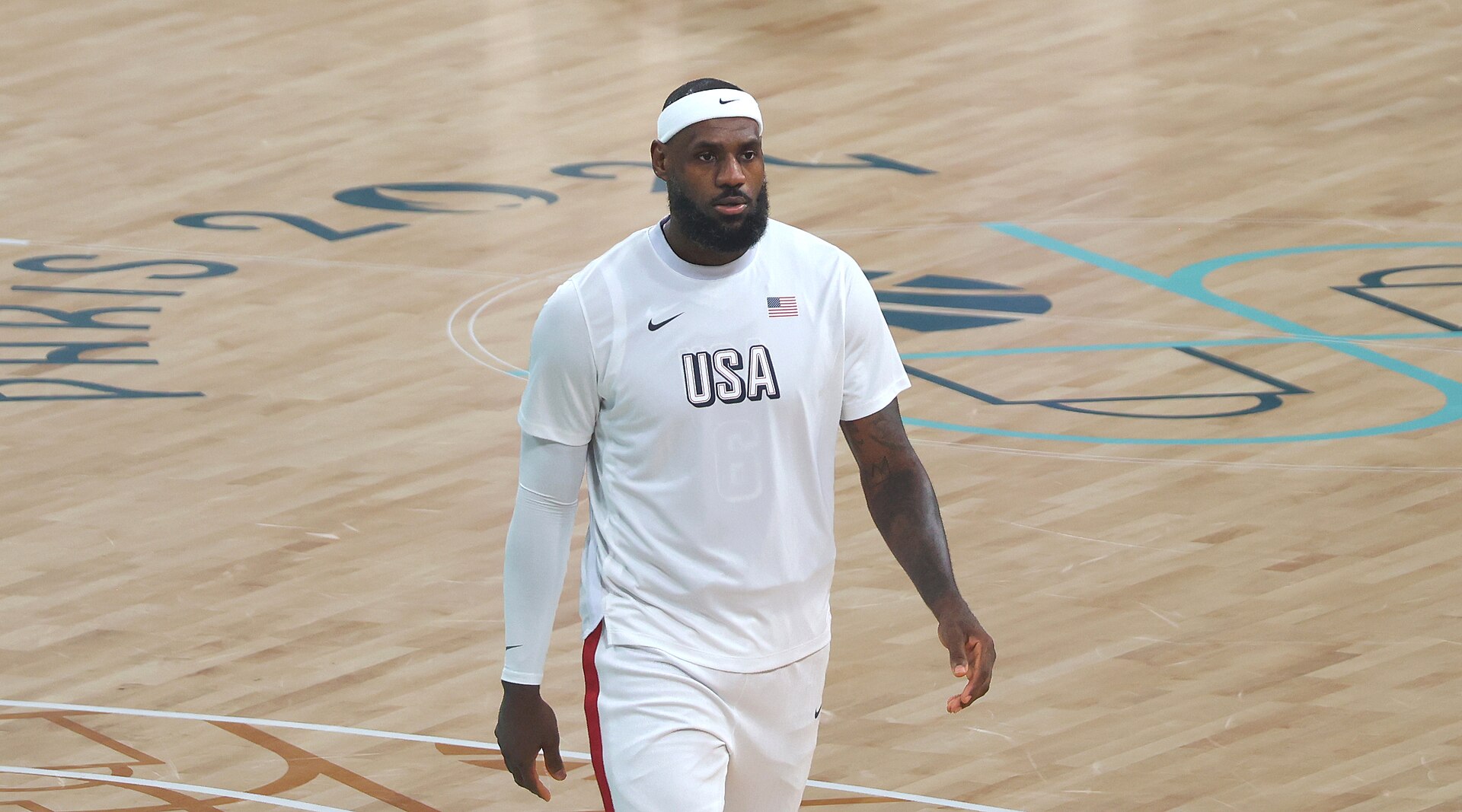
The reported pass was less about whether James can still matter and more about what New York was unwilling to change. The Knicks appear to have chosen continuity over the disruption of a superstar chase.
The New York Knicks reportedly passed on the chance to sign LeBron James. LeBron James’ camp reportedly approached the Knicks during free agency, and this article explains why the Knicks chose not to pursue James: New York believed its current roster was strong enough without him and did not want to disrupt it this offseason, according to reporting attributed to Hoops Wire’s Sam Amico and carried by Larry Brown Sports and Yardbarker.
That makes the reported LeBron pass less of a simple rejection story and more of a window into how the Knicks viewed themselves. In a league where star power usually bends everything around it, New York reportedly chose the team it already had.
A call that went nowhere
The supported sequence is narrow but notable. James’ camp reportedly contacted the Knicks during free agency, and New York did not pursue him.
The available reporting does not say there was a formal offer. It does not establish contract terms, trade mechanics, roster moves or how close anything came to becoming serious.
That distinction matters. NBA free agency is full of contact that never becomes negotiation. Camps test the market. Teams signal interest or disinterest. Many possibilities end before they become anything concrete.
Still, the name attached here changes the weight of the story. Teams usually take at least a long look when LeBron James is connected to them. The Knicks reportedly did not go down that road.
Why New York stayed put
Amico’s reporting, as cited by Larry Brown Sports and Yardbarker, said the Knicks believed they were good enough as constructed and did not want to disrupt their current roster.
That explanation is the center of the story. The Knicks were not simply deciding whether James could still help a team. They were weighing what his arrival would do to a group they apparently trusted.
Adding James would have meant more than adding a player. It would have brought attention, role questions and a different center of gravity around the team.
For some franchises, that is the point. For New York, according to the report, the cost was not just financial or mechanical. It was the possibility of changing a roster identity the Knicks believed was already strong enough.
The risk in saying no
There is a reason the report lands with force. Passing on a superstar possibility is easy to praise only if the existing group keeps validating the decision.
If the Knicks keep winning with the roster they protected, the move will look disciplined. It will read as a front office refusing to be distracted by the biggest available name.
If the group falls short, the same reported choice will be remembered differently. New York would have declined to pursue one of the most consequential players in NBA history at a moment when his camp reportedly made contact.
That is the tension. Confidence can look like clarity, or it can look like overconfidence after the fact.
Rich Paul’s comment shifts
The report also gives new context to earlier comments attributed to Rich Paul, James’ longtime agent.
Paul reportedly said earlier in the offseason that James would have gone to the Knicks if they had not just won an NBA title. At the time, that could be read as an optics point: James avoiding the appearance of joining a team already framed as a champion.
With the later reporting, the focus changes. If James’ camp reached out and the Knicks had no interest in pursuing him, then New York may have had more agency in ending the possibility than that earlier framing suggested.
That does not prove how far anything advanced. It only supports the limited conclusion that there was reported interest from James’ side and reported reluctance from the Knicks.
Philadelphia adds another layer
The same reporting also said the Knicks believe they are better than the Philadelphia 76ers.
That comparison adds competitive edge to the decision without changing what is known. The available extracted material does not add unsupported certainty about James’ exact Philadelphia status, and the report should not be stretched beyond what it says.
But the Philadelphia reference does reinforce the broader theme. The Knicks, as described in the reporting, do not sound like a team acting out of insecurity.
They reportedly did not view a LeBron pursuit as necessary to keep pace in the Eastern Conference. That is a strong internal statement, even if it came through reporting rather than a detailed public explanation from the franchise.
What remains unproven
The clearest supported points are these: James’ camp reportedly contacted the Knicks, the Knicks reportedly had no interest in pursuing him, and the reason in Amico’s reporting centered on confidence in New York’s current roster and a desire not to disrupt it.
Just as important is what has not been established in the available material. There is no detailed Knicks explanation in the extracted record. There is no confirmed financial structure. There is no clear account of how close any move could have become.
Larry Brown Sports also noted that James has received criticism from some corners for what is perceived as “team stacking.” That backdrop would have made a Knicks pursuit a louder story, especially if James had taken a major discount to join a team described in championship terms.
But the available reporting does not say public backlash drove New York’s thinking. The supported point is simpler and more revealing: the Knicks reportedly believed in the roster they had, and that belief was strong enough for them not to chase James.
Leave a Reply