
The former government scientist’s silence was not improvised. It reflected a deliberate calculation about perjury threats, political pressure and the limits of congressional questioning.
Anthony Fauci arrived at a high-stakes Senate hearing on Wednesday as Senate Republicans in Congress pressed him again over Covid-19. Fauci had a carefully planned strategy for the hearing: invoke his Fifth Amendment right more than 100 times, withstand questioning from Senate Republicans and avoid self-incrimination.
The hearing was a high-stakes confrontation because Fauci’s allies believed any detailed answer could be used to pursue new legal claims. As one person close to Fauci told CNN, ‘There was no other option.’
Silence as a legal strategy
Fauci’s approach was stark: answer almost nothing beyond an opening statement and rely repeatedly on the constitutional protection against self-incrimination. To his critics, that looked evasive. To his advisers, according to CNN’s reporting, it was the safest move in a room where the questioning could turn years of public statements, emails, diaries and documents into a potential legal trap.
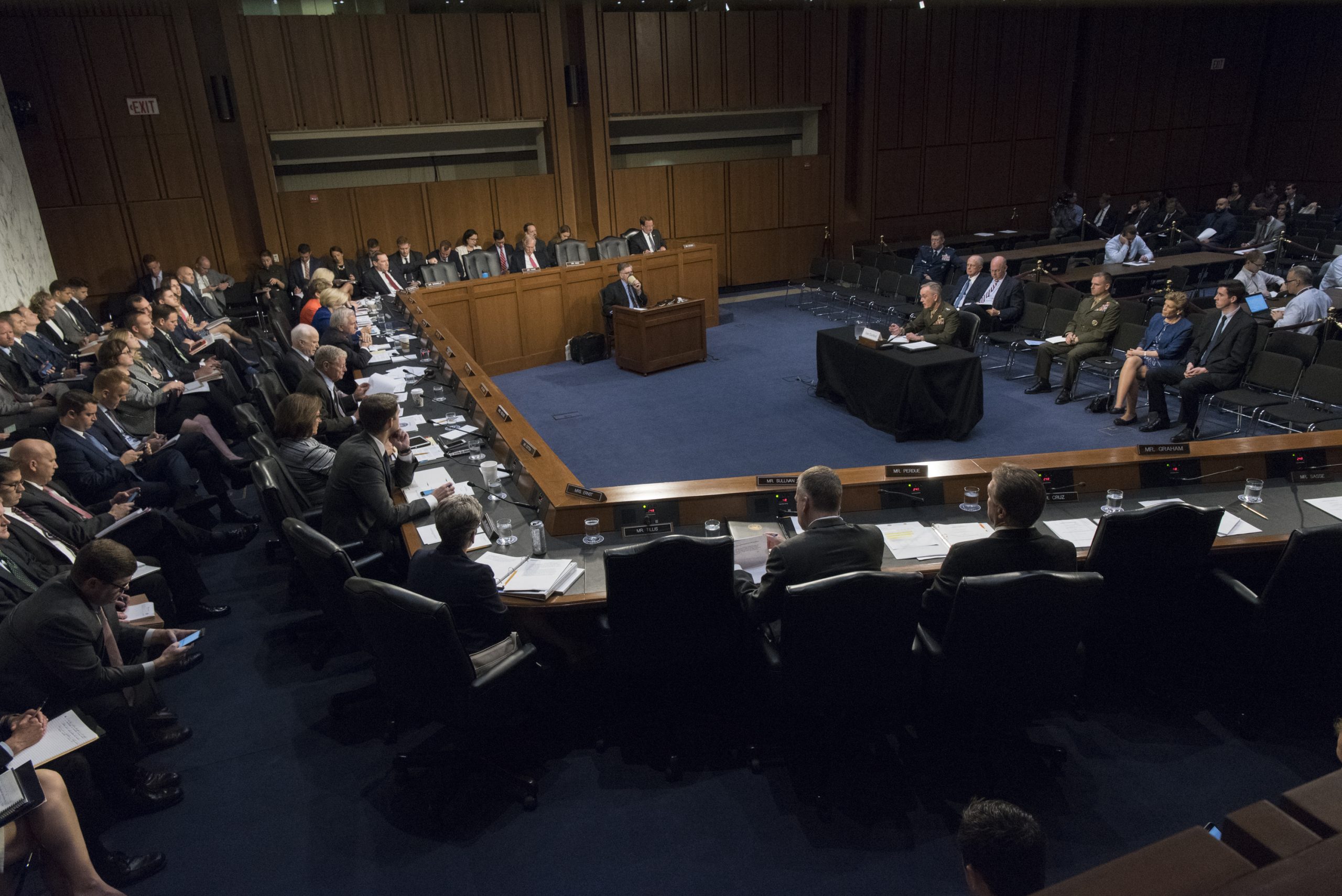
The former top government scientist was not trying to win a debate over pandemic policy. People close to him told CNN the goal was narrower: get through the hearing without creating fresh material for accusations of perjury.
That distinction matters. A congressional witness can face risk not only from the underlying conduct being examined, but from what they say under oath in the moment. Fauci’s team feared that even a small inconsistency with prior testimony, interviews or records could be framed by opponents as a new lie.
Sen. Rand Paul of Kentucky, Fauci’s most persistent Republican antagonist, has argued for years that Fauci misled Congress about pandemic-related matters. Paul has denied that Fauci should be able to use the Fifth Amendment as broadly as he did, but he also acknowledged during the hearing that whether the protection applied could become a question for courts.
Why advisers saw no alternative
The phrase ‘there was no other option’ captures the calculation around Fauci before he walked in. According to CNN, advisers believed Paul had access to millions of documents covering Fauci’s long public-health career. Fauci, by contrast, would not have every record in front of him as senators moved from subject to subject.
That imbalance made conventional testimony risky. A witness trying to answer from memory can be challenged with documents, emails or past statements. If the stakes include possible criminal referral, caution can quickly override any desire to defend one’s record in public.
Fauci’s team also expected Republicans to test whether he could properly invoke the Fifth Amendment. CNN reported that his opening statement was revised multiple times so it would criticize the hearing without discussing his Covid-era actions in a way that might weaken his claim that answers could incriminate him.
That is why the opening statement reportedly focused on Paul and the political nature of the proceeding, rather than on a point-by-point defense of pandemic decisions. The strategy was not just to stay silent during questions; it was to avoid accidentally opening a door before the questioning began.
Paul’s pressure campaign escalates
The hearing added another chapter to the long-running feud between Fauci and Paul. Paul has accused Fauci of misleading lawmakers and has pushed for consequences tied to prior testimony. After the hearing, he pledged a vote the following week on holding Fauci in contempt over his refusal to answer questions.
That threat sounds severe, but the path from committee action to criminal charges is uncertain. CNN noted that a contempt effort would typically face a high hurdle in the full Senate before any recommendation to the Justice Department. Paul has suggested he may be able to bypass that route and send a referral directly, but whether that would hold up is unclear.
Even if a referral reached the Justice Department, prosecutors would decide whether to pursue charges. That makes the hearing both a legal maneuver and a political performance: a way for Republicans to keep pressure on Fauci, even if the ultimate legal outcome remains doubtful.
For Paul and other Republicans, Fauci’s repeated invocations became a visual and rhetorical tool. For Fauci’s allies, the same silence was evidence that the proceeding had become less about fact-finding than about trying to create a new prosecutable moment.
The pardon did not end risk
One complication is the preemptive pardon Fauci received from then-President Joe Biden in 2025. Republicans have argued that the pardon undercuts Fauci’s need to invoke the Fifth Amendment. Fauci’s allies and some legal scholars cited by CNN see it differently.
Their argument is that a pardon would not necessarily protect Fauci from every possible exposure. It would not cover a new alleged false statement made at the hearing itself. Nor would it automatically resolve concerns about state or local proceedings tied to Covid-era actions.
That legal uncertainty helps explain the aggressive use of the Fifth Amendment. If answering could create a new federal allegation, the prior pardon would not be a complete shield. If other jurisdictions remained theoretically possible, advisers could argue the privilege still had force.
Republicans themselves appeared divided on the point. Oklahoma Sen. James Lankford said during the hearing that Fauci had a right not to answer questions, while also raising questions about whether making an opening statement affected that right. Paul framed the matter as one courts may need to decide.
A hearing built for clips
The spectacle was unavoidable. A witness invoking the Fifth Amendment more than 100 times gives political opponents a string of short clips, each one easy to post, replay and interpret as suspicious. Fauci’s team appears to have accepted that cost.
In their view, the alternative was worse. Speaking at length could have produced a single disputed phrase that opponents might treat as evidence of perjury. Silence might damage public perception, but it was less likely to create a new record of testimony that could be parsed word by word.
CNN reported that some Fauci allies believed Republicans overplayed their hand by continuing the hearing for hours despite his refusal to answer. Their argument is that the persistence made the proceeding look punitive rather than investigative. Republicans would say the opposite: that a major public official refusing to answer questions deserves sustained scrutiny.
Both readings can coexist. The hearing was partly about oversight and partly about power. It showed how congressional investigations now operate in a media environment where the usable moment may matter as much as the full transcript.
What remains unresolved
Fauci left government in 2023 after becoming one of the most recognizable and polarizing figures in the pandemic response. Retirement has not taken him out of the political fight. According to CNN, he has spent much of the period since then consulting with lawyers and advisers as Republican investigations continued.
People around Fauci have also faced consequences. CNN reported that his wife, Christine Grady, was among senior health officials linked to him who were fired or reassigned during National Institutes of Health cuts overseen by Health and Human Services Secretary Robert F. Kennedy Jr. Another former Fauci associate, David Morens, was charged in April with concealing federal records.
Those developments help explain the defensive posture. Fauci’s allies see a broader campaign that could produce legal peril even if ultimate conviction is unlikely. His critics see years of unanswered questions about pandemic decision-making and government transparency.
The immediate next question is whether Paul’s contempt push advances, and if it does, whether it has any legal effect beyond another round of political confrontation. For now, Fauci’s strategy achieved its narrow aim: he gave his opponents plenty to criticize, but little new testimony to use against him.
Leave a Reply