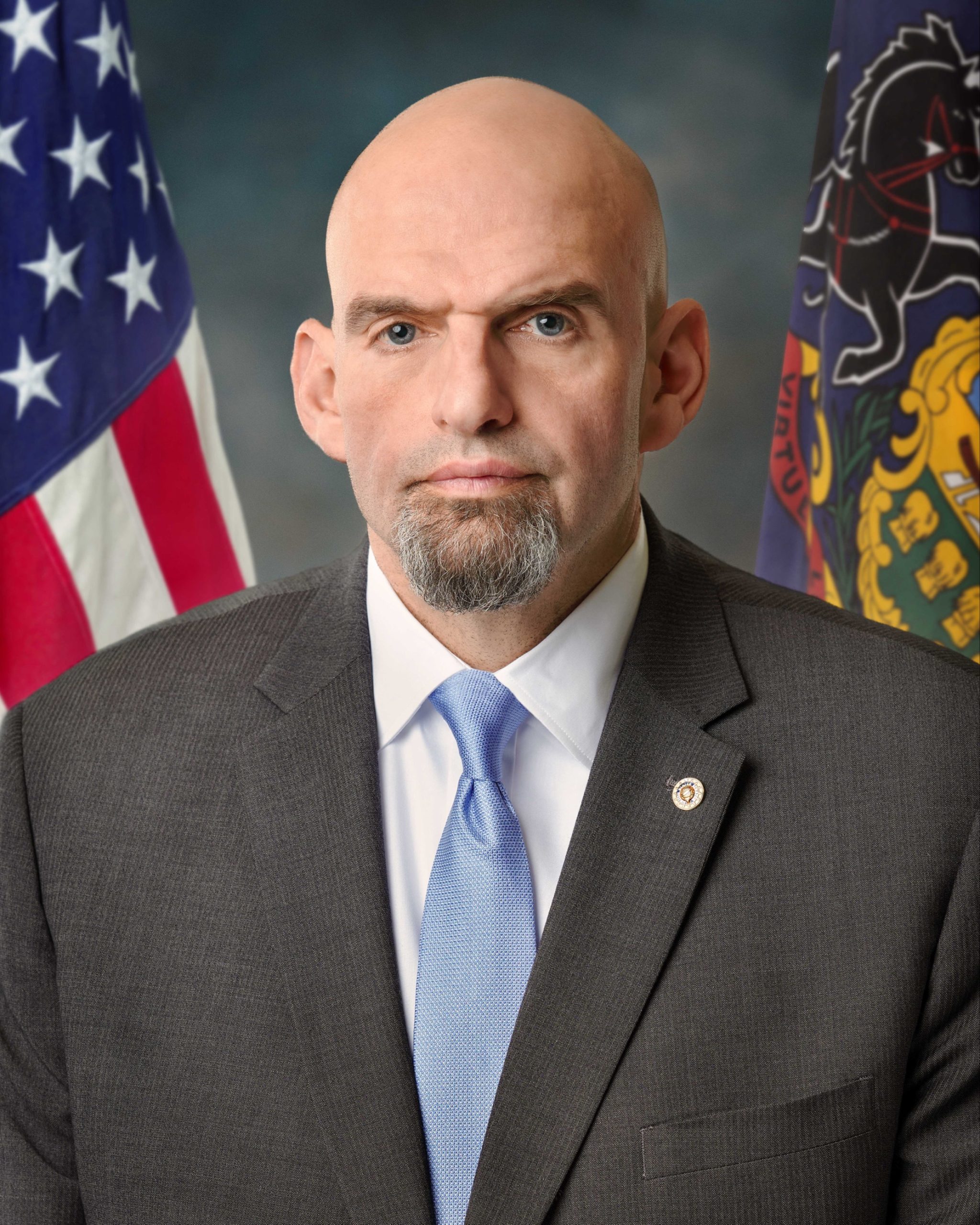
The claim has gained attention because a real vacancy would matter far beyond one senator. For now, the verified record shows continuity, not a resignation.
John Fetterman is the subject of an opinion claim that he will probably resign, but official congressional records still show the Pennsylvania Democrat’s Senate term ending in 2029 — specifically Jan. 3, 2029. The distinction between a John Fetterman resignation prediction and a verified resignation announcement matters because his Pennsylvania Senate seat carries active committee power and national political stakes.
That is the useful starting point: the prediction may be politically interesting, but it is not the same thing as a documented exit. The current public record described here still lists Fetterman as a sitting U.S. senator from Pennsylvania.
The claim is not confirmation
The phrase driving the discussion is blunt: Fetterman “will probably quit.” But the key word is probably. It signals a forecast, not a filing, statement or confirmed step toward resignation.
The headline that pushed the argument was labeled as opinion. That label matters in political coverage, where commentary can be written with confidence while still resting on interpretation rather than documentary proof.
There is no confirmed resignation announcement from Fetterman in the public record reviewed here. The official congressional biography identifies John Karl Fetterman as a senator from Pennsylvania, elected as a Democrat in 2022 for a term ending Jan. 3, 2029.
That does not make the conversation meaningless. It does mean readers should separate three things: what a columnist predicts, what political observers infer and what official records actually show.
Records show an active senator
Fetterman’s Senate biography does more than list a name and a term date. It describes current responsibilities, including service on several committees: Agriculture, Nutrition, and Forestry; Commerce, Science, and Transportation; and Homeland Security and Governmental Affairs.
The biography also lists him as ranking member of a Homeland Security subcommittee focused on border management, the federal workforce and regulatory affairs. It says he is a member of the U.S. Commission on Security and Cooperation in Europe, known as the Helsinki Commission, and a continuing member of the U.S. Senate Mental Health Caucus.
Those listings are not a crystal ball. Official pages can lag behind fast-moving developments. But they are a baseline for what institutions currently show: Fetterman is presented as a senator with assignments, not as someone whose resignation has been verified.
The Congressional Bioguide gives the longer arc of his public career: born in Reading, Pennsylvania; mayor of Braddock from 2006 to 2019; lieutenant governor from 2019 to 2023; elected to the U.S. Senate in 2022. That résumé is part of why resignation talk lands as a major political claim rather than a minor personnel rumor.
Why the rumor travels
Speculation about Fetterman has an easy path to attention because he represents Pennsylvania, a closely watched political state. Any sudden change involving one of its Senate seats would be read through national politics almost immediately.
Fetterman also has a distinct political identity and draws attention well beyond his home state. For allies, critics and voters trying to interpret his next move, a confident prediction can feel like a clue.
That is part of the appeal of the wording. “Will probably quit” sounds more definite than ordinary speculation, but it still does not assert that resignation has happened. It leaves readers searching for signals instead of confirmed evidence.
There is also a prior rumor cycle. In March 2023, USA Today published a fact check saying Fetterman had not announced his resignation, responding to claims that were circulating online at the time. That history explains why new resignation chatter can spread quickly — and why caution is necessary.
The case remains circumstantial
The argument for a possible resignation appears to be built from political inference rather than a stated decision. Observers may look at the pressure around Fetterman and decide that leaving office is plausible.
That kind of analysis can be part of politics. Senators face pressure from voters, parties, donors, activists, opponents and the media. They can frustrate allies, anger critics or shift their public image without leaving office.
What would make the claim stronger is specific evidence tied to an actual departure. That would include:
- a statement from Fetterman;
- confirmation from his office;
- a formal filing or Senate record;
- authoritative reporting based on named or otherwise substantiated sources;
- visible procedural steps consistent with a planned resignation.
Without that, the word “probably” remains a judgment call. It may later look prescient, or it may look wrong. Either way, it is not the same as confirmation.
Pennsylvania is the stakes
The reason this story has traction is not only Fetterman’s profile. It is the seat. A Pennsylvania U.S. Senate vacancy would matter to both parties and to voters who expect representation through the end of a six-year term.
A real resignation could trigger intense political maneuvering, speculation about succession and attention to the balance of power. That is why a forecast about a Pennsylvania senator can move quickly through partisan conversation even before any vacancy exists.
For voters, the practical question is simpler: who represents Pennsylvania, what work is being done and whether any change has actually occurred. On the first point, the official sources described here are clear. Fetterman is listed as the sitting senator.
The unresolved piece is political, not procedural. The opinion claim is making an argument about Fetterman’s durability. The official record, at this point, shows continuity.
What would change the story
A verified resignation would not be subtle. It would be supported by a direct announcement, confirmation from the senator’s office, Senate documentation or authoritative reporting that goes beyond speculation.
Until then, the fair way to read the claim is as commentary about Fetterman’s future. There is room to debate whether his political path is sustainable, whether his brand fits his party and whether pressure could eventually push him out.
Those are opinion questions. The factual takeaway is narrower: an opinion piece can argue John Fetterman will probably quit, and readers can evaluate that argument. But the confirmed record still shows the Pennsylvania Democrat serving a Senate term scheduled to end on Jan. 3, 2029.
Leave a Reply