The sentencing pushes a difficult legal question into sharper focus: when can a parent be criminally responsible for failing to keep a weapon away from a child? The case follows a small but closely watched wave of prosecutions after school shootings.
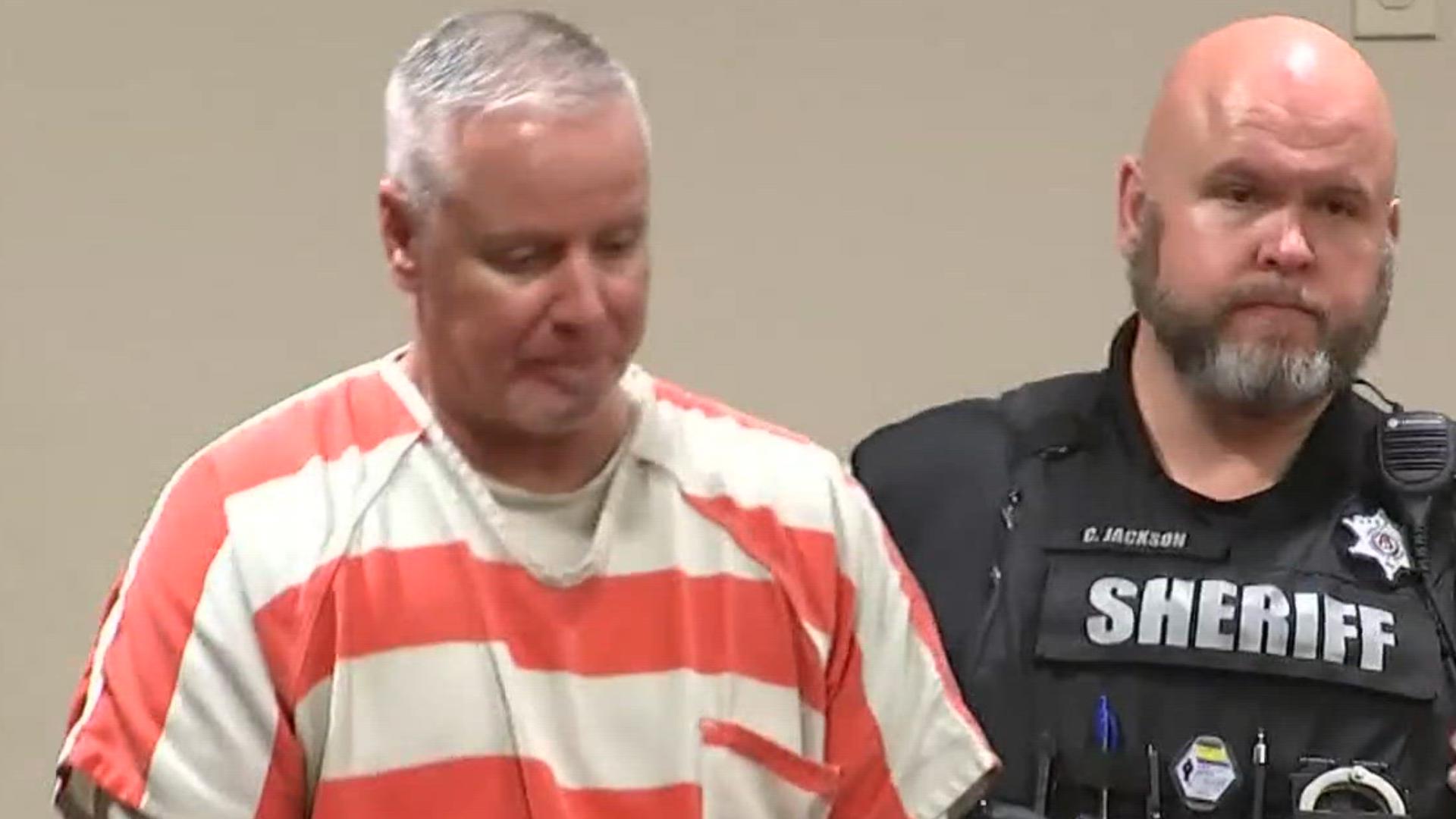
Colin Gray, the father who bought an AR-15 for his son who carried out a school shooting in Georgia, was convicted and sentenced Thursday to 15 years in prison in a case described as a first-of-its-kind conviction. The Sept. 4, 2024, attack at Apalachee High School in Winder, Georgia, killed 4 people and was carried out by Gray’s 14-year-old son, now 16.
Judge Nicholas Primm imposed the sentence after a March jury conviction that included second-degree murder and involuntary manslaughter charges. The case matters beyond Georgia because it tests how far courts can go in holding a parent accountable when a child uses a weapon the parent provided.
A sentence tied to another crime
Gray was not sentenced for firing the gun. His son, Colt Gray, pleaded guilty in the Apalachee High School shooting and was sentenced to life without parole, according to NBC News.
The father’s sentence turned on a different question: whether his actions and failures before the shooting made him criminally responsible for what followed. Prosecutors argued that Gray gave his son the rifle despite warning signs that should have made the danger clear.
Chief Judge Nicholas Primm, of the Piedmont Circuit Superior Court, acknowledged the unusual posture of the case during sentencing. The Washington Post reported that Primm said Gray’s crimes were “tethered to the tragedy committed by his son,” making the situation “a little unique.”
Reuters reported that Primm also noted the charges did not carry mandatory prison time. That left the judge to decide how much punishment was justified for crimes connected to, but not identical with, the shooter’s own acts.
What prosecutors said Gray ignored
According to NBC News, prosecutors said Gray gave the weapon to his son as a Christmas gift after law enforcement had previously visited the family’s home over threats the teenager allegedly made about shooting up an elementary school.
That allegation became central to the case. The prosecution theory was not simply that a parent bought a gun later used in a crime. It was that Gray had notice of danger, failed to get his son help, and failed to remove firearms from the home.
During sentencing, Primm framed the failure in stark terms, according to NBC News: “You fail to get Colt counseling. You fail to remove the guns from the house.”
The victims killed at Apalachee High School were students Mason Schermerhorn and Christian Angulo, both 14, and teachers Richard “Ricky” Aspinwall, 39, and Cristina Irimie, 53. NBC News reported that another teacher and eight students were wounded, seven of them by gunfire.
Why the case is unusual
The phrase “first-of-its-kind conviction” carries weight because prosecutors are increasingly looking beyond the person who pulls the trigger in school shootings. In Gray’s case, the charges included second-degree murder and involuntary manslaughter, tied to the father’s alleged role in making the weapon available and failing to act on warnings.
The case sits alongside other recent efforts to prosecute parents after mass school violence. The most widely known example came in Michigan, where the parents of the Oxford High School shooter were convicted of involuntary manslaughter in separate trials after prosecutors said they ignored warning signs and made a gun accessible to their son.
Gray’s case appears to push that accountability theory further because of the charges and the factual link prosecutors drew between the father’s purchase of the AR-15-style weapon and the Apalachee attack. The legal principle is still narrow: prosecutors must prove more than bad parenting or tragic hindsight.
That distinction is why the sentencing drew attention from outside Georgia. It signals that courts may allow criminal liability when a parent allegedly ignores specific danger signs while giving a child access to a firearm.
Families pressed for the maximum
Several victims’ family members testified at the sentencing and asked the court to impose the maximum punishment, according to NBC News. Their comments focused on responsibility, not only grief.
The wife of Richard Aspinwall, who is also a high school teacher, criticized Gray for failing to be a responsible gun owner. Mason Schermerhorn’s mother, Maria Schermerhorn, rejected the idea that the strain of single parenthood excused Gray’s conduct.
Her point, as reported by NBC News, was that there is a difference between struggling as a parent and refusing to take basic protective steps. That argument tracks the heart of the prosecution’s case: the law cannot punish parents for every terrible choice a child makes, but it can punish conduct that foreseeably enables violence.
Defense arguments in cases like this often warn against letting public anger transform a parent’s mistake into a murder conviction. The sentencing shows the court found Gray’s conduct crossed a more serious line.
The shooter’s age matters
Colt Gray was 14 at the time of the Sept. 4, 2024, shooting and is now 16. He was charged as an adult and later received a life-without-parole sentence, NBC News reported.
His age matters for both sides of the debate. For prosecutors, it underscored why adults in the home had a duty to control access to weapons. For critics of expanded parent prosecutions, a teenager’s independent criminal choices raise hard questions about where parental liability should end.
Investigators also described the teenager as fixated on past mass killers, including the perpetrators of the Columbine High School and Sandy Hook Elementary School shootings, according to NBC News. Prosecutors played jailhouse calls in which he appeared to relish attention from the massacre.
Those details may have strengthened the argument that the danger was not abstract. Still, the broader legal question remains sensitive: courts must separate specific warning signs from general fears that could be applied too broadly to parents of troubled children.
What the ruling may change
Gray’s 15-year sentence does not create a national rule by itself. Criminal law is state-based, and future cases will depend on local statutes, the evidence of warning signs, how the firearm was stored or supplied, and what the parent knew before the attack.
But the sentencing will likely be studied by prosecutors, defense lawyers and gun-safety advocates because it shows a pathway for charging parents in the aftermath of school shootings. It also gives gun-rights advocates and criminal-defense lawyers a concrete case to scrutinize for overreach concerns.
The practical takeaway is not that every parent of a child who commits violence faces prison. It is that the legal risk grows when prosecutors can point to a chain of facts: a weapon supplied by the parent, prior threats or warning signs, failure to secure guns, and a direct connection to the attack.
For the Apalachee High School families, the sentencing closes one part of the criminal case. For courts elsewhere, it leaves a difficult template: how to punish preventable access to deadly weapons without turning every act of teenage violence into a parent’s criminal trial.
Leave a Reply