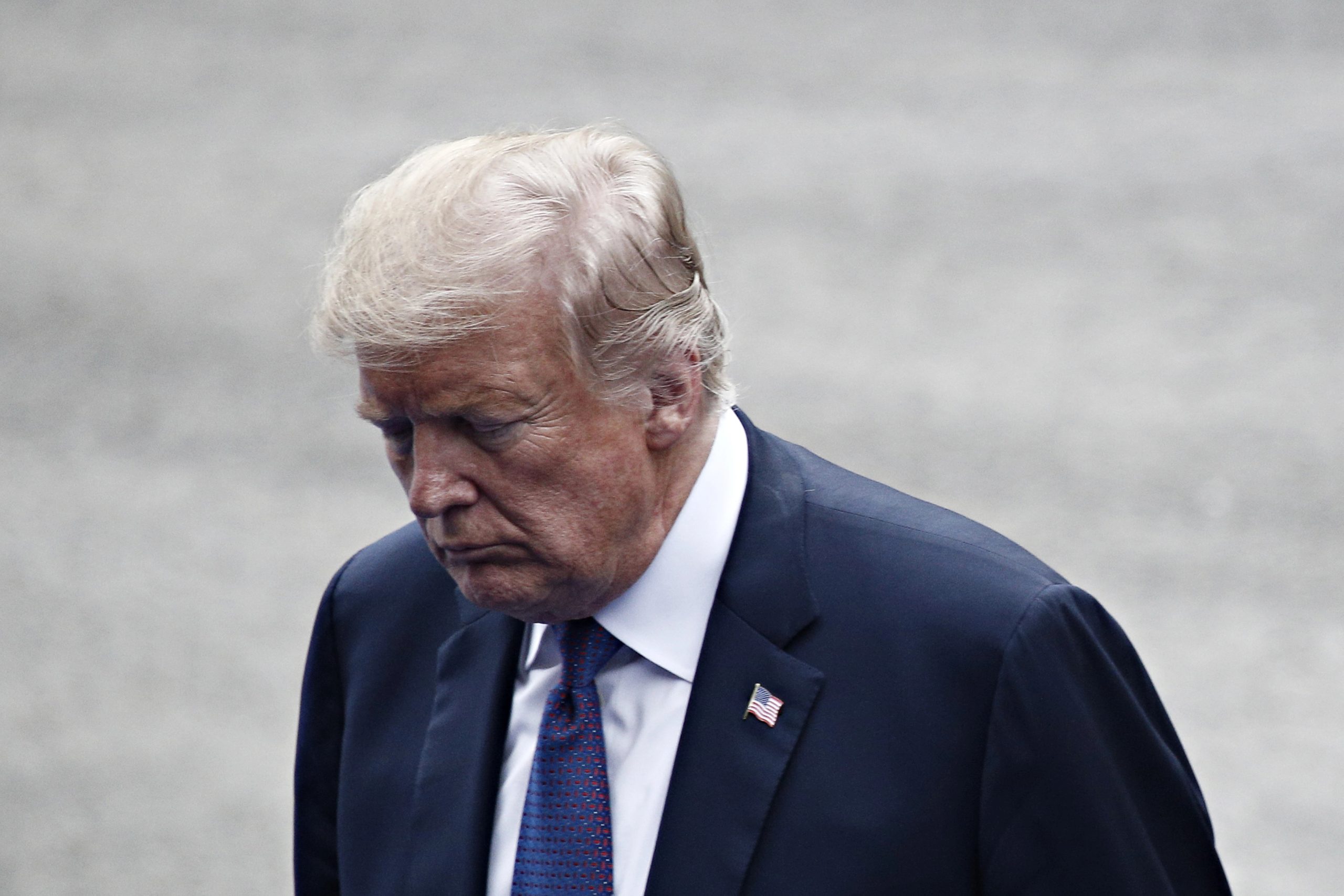
The warning points to a familiar problem in Trump litigation: even a weak legal claim can create delay, exposure and political pressure for prosecutors. The fight also shows why procedural disputes can matter as much as headline charges.
Donald Trump is involved in a court case with the Department of Justice, and an expert says the case is a sure loser. The warning is sharper than it sounds: the case could blow up in the Department of Justice’s face not because Trump is expected to prevail, but because even a weak claim can create delay, force strategic concessions and test the DOJ’s credibility in court.
The dispute centers on Trump-related litigation over the Justice Department’s investigative authority, including the special-master fight that followed the search of Trump’s Florida property. Reuters reported in 2022 that Trump’s lawyers and the DOJ sparred before the 11th U.S. Circuit Court of Appeals over whether an appeals court could review Judge Aileen Cannon’s special-master order.
The risk is not just losing
The phrase “sure loser” usually suggests a case that has little chance on the law. In Trump litigation, though, the legal merits are only one part of the story.
A losing case can still consume months, slow investigators, create uncertainty around evidence and invite courts to wade into questions that prosecutors would rather keep narrow. That is the sense in which a case can backfire on the Justice Department even if the department ultimately wins.
That dynamic was visible in the special-master fight. After the FBI searched Mar-a-Lago in 2022, Trump sought outside review of materials seized by investigators. Cannon granted a special master, a move the Justice Department challenged. Reuters reported that Trump’s lawyers argued the appeals court lacked the power to review Cannon’s decision, while DOJ lawyers pressed for relief from restrictions they said affected their investigation.
For the Justice Department, the danger in such a fight is not simply an adverse ruling. It is the possibility that a judge’s interim order becomes a practical obstacle before a higher court can correct it.
Why DOJ fought the order
The special-master dispute was procedural, but the stakes were real. A special master is a neutral reviewer appointed by a court to sort through seized materials, often to screen for privileged documents. In ordinary cases, courts may use one to protect attorney-client privilege or other sensitive interests.
The Trump matter was far from ordinary because it involved a former president, classified-records issues and a politically explosive federal investigation. DOJ’s position, as reflected in public litigation and reported by Reuters, was that the district court’s intervention improperly limited investigators’ use of materials and that the appeals court could step in.
Trump’s legal team took the opposite view. They argued the lower court had authority to appoint a special master and that the appeals court should not disturb that decision at the government’s request.
That is where the expert warning lands: if DOJ presses too broadly, it can open itself to judicial second-guessing; if it moves too cautiously, it can allow delay to harden into strategy.
Trump’s broader legal backdrop
The special-master fight did not unfold in isolation. The Associated Press has tracked Trump’s criminal and civil cases, including the New York hush-money case, the federal election-interference case in Washington, the Georgia election case and the classified-documents case in Florida.
Trump has denied wrongdoing across his major cases and has repeatedly described prosecutions and investigations against him as politically motivated. Prosecutors and investigators have rejected that framing, arguing in court filings that their cases are grounded in evidence and law.
The Justice Department’s own published Special Counsel Smith report said that in the fall of 2022, Trump was a subject of two separate criminal investigations. That report is important context because it shows how procedural fights over documents, privilege and investigative access were tied to much larger federal inquiries.
None of that means a procedural dispute decides guilt or innocence. It means the path to trial, appeal or dismissal can shape the outcome before a jury ever hears evidence.
How a weak case can hurt
There are several ways a court fight branded a “sure loser” can still harm DOJ. The first is time. Delay is not neutral when evidence review, witness interviews and charging decisions are on the line.
The second is precedent. Even a narrow order can be cited later by other litigants seeking special treatment, especially in politically sensitive investigations. DOJ has an institutional interest in avoiding rulings that suggest high-profile defendants can obtain unusual judicial supervision before charges are filed.
The third is disclosure. Litigation can force prosecutors to explain investigative steps, reveal legal theories or preview evidence earlier than they otherwise would. Even when filings are sealed or redacted, the act of fighting can put pressure on investigative secrecy.
The fourth is public confidence. Reuters reported separately that errors and setbacks can erode DOJ credibility in civil and criminal matters. In Trump cases, every procedural move is magnified, and a stumble can quickly become a political argument about the department’s competence or motives.
The competing legal views
DOJ’s strongest argument in these disputes is institutional: courts should not lightly interfere with an executive-branch criminal investigation, especially before charges are filed. The department also has a public-safety and national-security interest when classified or sensitive government records are involved.
Trump’s side frames the issue differently. His lawyers have argued in past litigation that a former president has unique interests, that seized materials may include privileged records and that courts have a role in preventing government overreach.
Both arguments speak to real legal values. Prosecutors need room to investigate. Targets of searches retain constitutional rights. Courts must decide where ordinary protections end and extraordinary intervention begins.
The expert’s “blow up” warning is about that boundary. A judge does not have to accept Trump’s full theory for DOJ to face consequences. A narrower procedural ruling, a delay or a demand for more explanation can still complicate the department’s strategy.
What remains unresolved
The immediate question in any Trump-DOJ procedural fight is usually narrow: who has authority, what materials can be reviewed, and how quickly the government may proceed. The broader question is harder: whether courts should treat Trump like any other litigant or account for the unprecedented status of a former and future political figure entangled with federal law enforcement.
That uncertainty is why legal experts can call a case weak and still warn DOJ not to underestimate it. Winning later may not repair the damage caused by delay now.
The clean takeaway is this: the danger for the Justice Department is not only that Donald Trump might win a long-shot court case. It is that a case viewed as a “sure loser” can still force the government onto risky terrain, where process, timing and public trust matter almost as much as the final ruling.
Leave a Reply