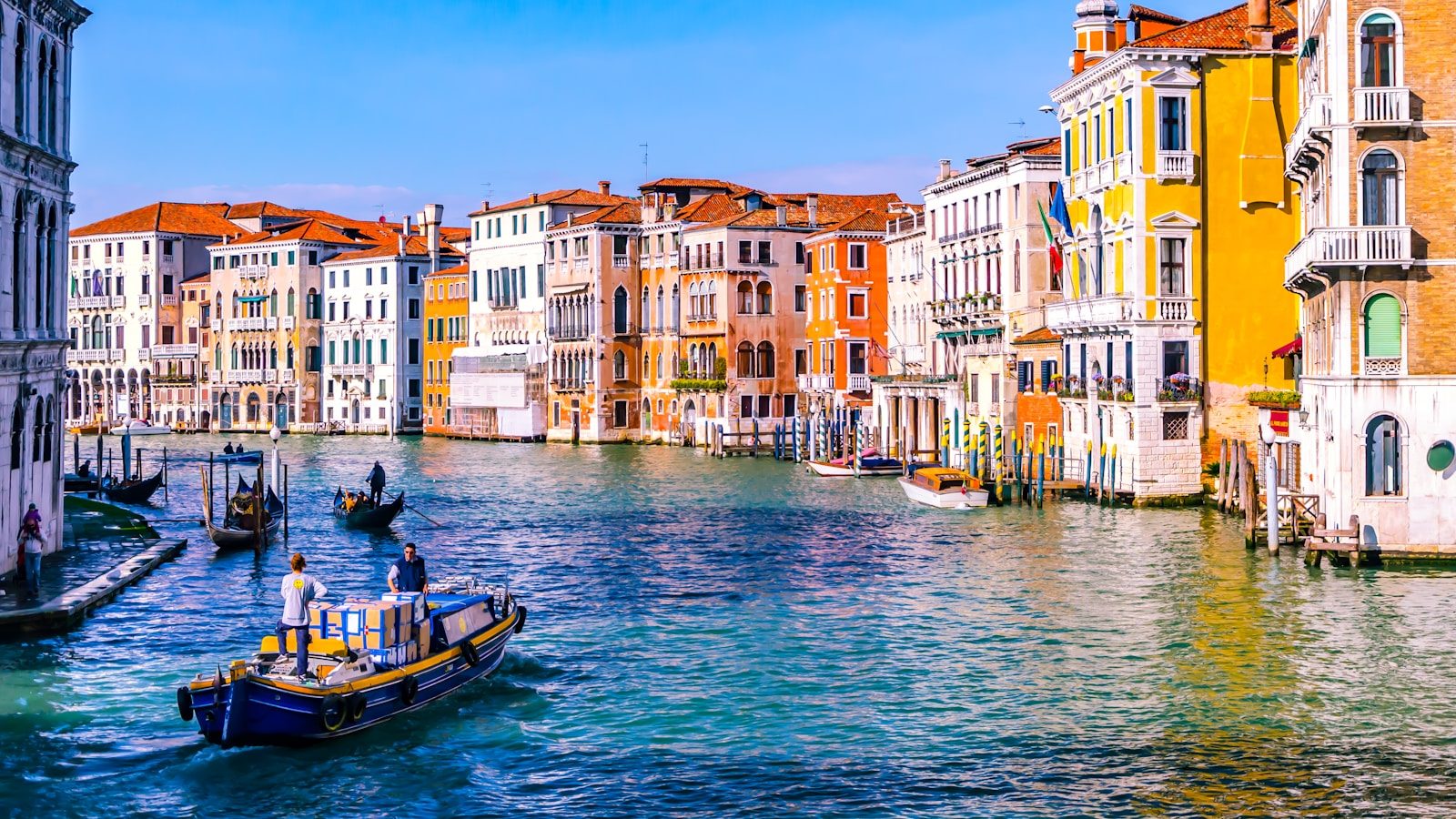
A shirtless run that felt ordinary to two New Yorkers drew sharp reactions in Venice, where public-space rules are designed to protect a tightly regulated historic center. The episode is a reminder that tourist etiquette can carry real financial consequences.
Julia Latoff and Mike Naccarella, a U.S. couple visiting Venice, Italy, ran shirtless through the city when locals reacted with anger and disgust, according to Latoff’s account. The couple had unknowingly broken an obscure Venice rule: bare-chested attire and swimwear can bring a fine in the historic city center.
Latoff said the stares, head-shaking and criticism made them realize something was wrong. After checking their phones, they learned why, hid in an alley and bought Naccarella a shirt — a potentially costly travel mistake that shows why Venice’s visitor rules deserve more attention than many tourists give them.
A run took an awkward turn
Latoff told Newsweek that she and Naccarella run in nearly every city they visit. They were in Italy and Austria for a family trip celebrating Naccarella’s grandparents’ 60th wedding anniversary, and a run seemed like a routine way to start the day.
It was early July and hot. Naccarella ran without a shirt, something Latoff said is commonplace during summer in New York City, where they live. The pair had also run in Florence earlier in the week and seen other shirtless runners, so they did not expect Venice to be different.
But Venice residents’ reactions quickly made the distinction clear. Latoff said people looked disgusted, shook their heads and appeared upset. When someone shouted at them, the couple stopped to investigate.
That moment matters because travelers often use habits from home — or even another Italian city — as an informal guide. In Venice, that can be a poor substitute for checking local rules.
Venice restricts bare-chested attire
Venice City Council regulations prohibit people from walking around public streets and squares in the historic center bare-chested or wearing swimwear. The policy is intended to encourage respectful conduct around the city’s cultural and religious sites.
The reported penalty for the clothing violation can reach €250, or roughly $290 at the conversion cited by Newsweek. More broadly, the city’s administrative penalties for violations of these public-behavior regulations can range from €25 to €500, depending on the offense.
The rule may sound unusually strict to visitors from places where shirtless jogging is unremarkable. Yet Venice is not simply a warm-weather tourist destination. Its narrow pedestrian routes, residential neighborhoods, churches, historic buildings and intensely crowded public areas overlap in a compact city center.
That setting helps explain why the city frames these measures around decorum, hygiene, safety and the protection of its historic environment — not merely clothing preferences.
Why the local reaction felt strong
Latoff described the response she and Naccarella encountered as immediate and visibly negative. That account does not establish how every Venice resident views shirtless visitors, but it reflects a long-running strain in a city where residents live alongside a vast volume of tourism.
For tourists, a shirtless run can register as athletic wear. For people navigating a daily commute, working near landmarks or passing through a residential square, it may read as disrespectful behavior in a place with clear public standards.
There is also an important difference between an honest mistake and an exemption. Latoff said the couple felt embarrassed once they understood the issue, and their response was to correct it promptly. But unfamiliarity with a municipal rule does not necessarily prevent a fine.
That is the central practical lesson: local objections can be a warning sign, but waiting for that signal is risky when rules are enforceable and penalties can be substantial.
The rules go beyond clothing
Venice’s restrictions cover several tourist behaviors that may seem casual elsewhere. The city prohibits eating or drinking while sitting on the ground, and it bars sitting or lying on banks, monuments, bridges, steps, wellheads and raised walkways. Those violations can lead to fines reported at €100 to €200.
- Swimming, diving or bathing in Venice’s canals is prohibited and can carry a €350 fine.
- Littering or dumping rubbish in public spaces can also result in a €350 penalty.
- Feeding pigeons or seagulls is banned, with potential fines ranging from €25 to €500.
- Bicycles are prohibited in the historic center, including when pushed by hand; the reported fine is €100.
- Camping or bivouacking in public areas is banned and can bring a €200 fine.
In some cases, people who violate rules involving prohibited sitting or eating, canal swimming or public camping may also face a DASPO, an urban exclusion order requiring them to leave and stay away from the area where the offense occurred.
These rules are not designed as a trivia challenge for tourists. They reflect a city trying to manage behavior in an unusually fragile, crowded and heavily visited urban setting.
Tourist common sense has limits
There is a fair counterpoint: visitors cannot realistically memorize every local ordinance before every walk, meal or workout. Rules are often scattered across municipal websites, hotel guidance, travel videos and signs that may be overlooked in a crowded destination.
Still, Venice is a place where a small amount of pre-trip research can be unusually valuable. Travelers planning to exercise should bring a shirt that covers the torso in public areas, even during hot weather. Beachwear should stay at the beach, and canals should be treated as waterways rather than swimming spots.
When a local points out a problem, the safest response is to stop, adjust and verify the rule rather than argue from what is normal at home. Naccarella and Latoff did exactly that once they understood the concern.
Latoff later posted a video about the experience on her Instagram account, @eats.by.julia, with a simple warning for future visitors: pack a running shirt for Venice.
A small mistake with a wider lesson
Latoff and Naccarella were not reported as having received a fine. Their story ended with a quick clothing purchase and an embarrassing memory rather than a documented penalty.
What remains unclear is whether city officials were ever involved, or whether the couple’s encounter was limited to criticism from passersby. The larger rule, however, is not unclear: Venice treats bare-chested attire in its historic center as a potentially finable offense.
For travelers, the takeaway is straightforward. Venice rewards curiosity, but it also expects visitors to recognize that its streets and squares are living public spaces, not a backdrop governed by the norms of home.
Leave a Reply