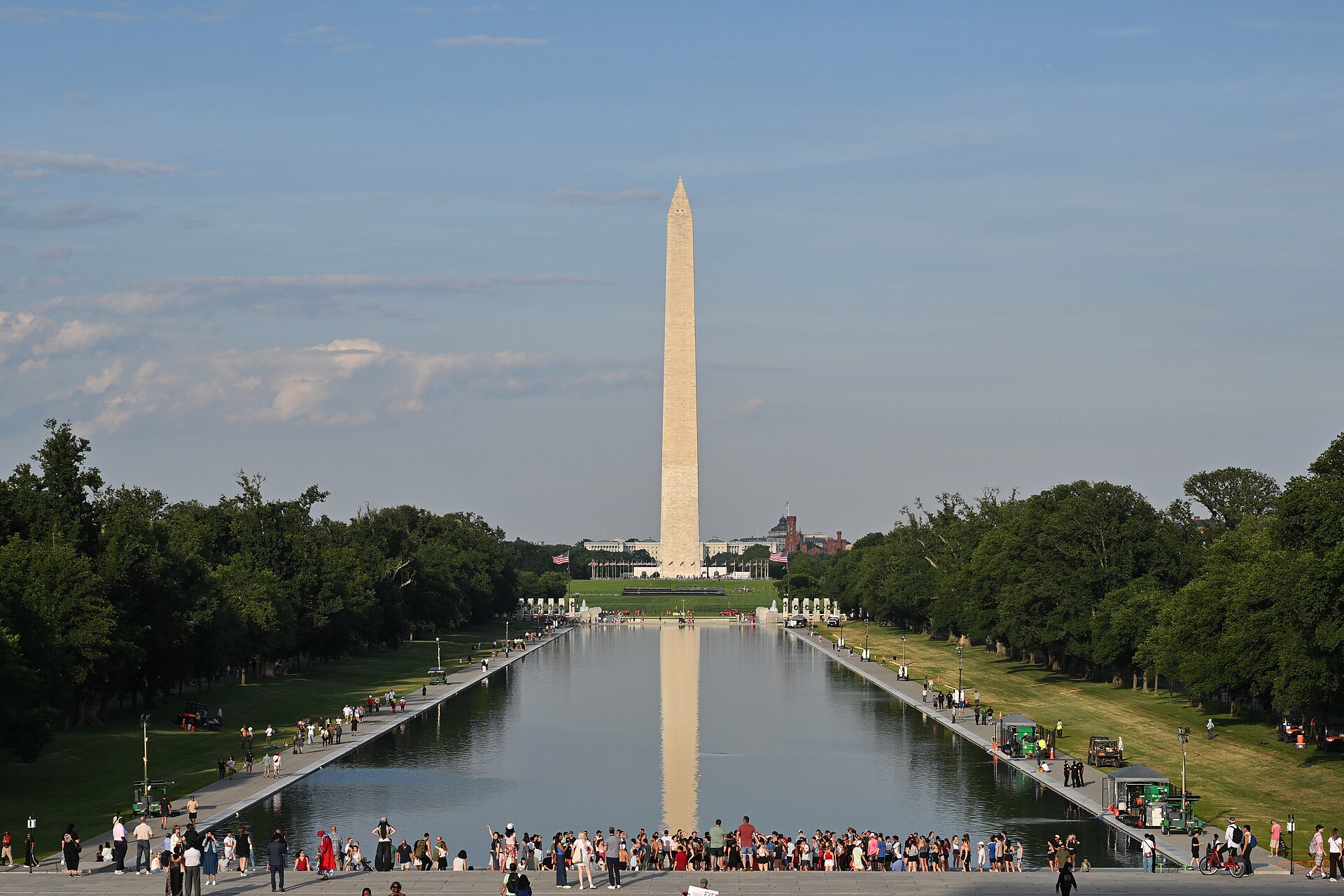
The newly disclosed timeline complicates the government's earlier claim that damage at the Lincoln Memorial Reflecting Pool was caused by a visitor. Prosecutors have since dropped the case, but are seeking a dismissal that could leave open the possibility of refiling charges.
The Trump administration was warned that the Lincoln Memorial Reflecting Pool was peeling before it brought a vandalism case tied to the Washington, D.C., landmark. A U.S. National Park Service engineer reported the problem on June 11—nearly a month before the case was brought—and said the top layer of the pool liner had peeled during renovation work.
The warning matters because federal prosecutors later charged former Olympic canoeist David Hearn over alleged damage during a June 19 visit to the pool. A new court filing says the peeling information raises substantial doubt about whether Hearn caused the damage, even as the U.S. attorney’s office seeks a form of dismissal that would allow charges to be brought again.
A warning before the allegation
According to the court filing, the Park Service engineer sent an email to Interior Department and Park Service personnel on June 11 describing peeling on the floor of the Reflecting Pool.
![[Women working at a switchboard at the U.S. Capitol, Washington, D.C.] (LOC)](https://idaholearningnews.com/wp-content/uploads/2026/08/trendwire-7gx40k6v-auv0w8im.jpg)
The engineer wrote that the top layer of liner had peeled, but said it was thin and would not affect the liner’s strength. The email attributed the peeled material to what the contractor called overspray from work involving polyurea around a perimeter joint.
The engineer also warned that the condition could leave a strip roughly one to two feet wide vulnerable to peeling. That detail is central to the dispute: it suggests a pre-existing installation issue rather than damage necessarily caused by a visitor.
How David Hearn was charged
President Donald Trump publicly accused people of “destroying” the Reflecting Pool after it reopened. The U.S. attorney’s office in Washington subsequently charged Hearn with destruction of property connected to his June 19 visit.
Hearn, a former Olympic canoeist, became the focus of a case that treated the peeled material as evidence of vandalism. The later disclosure of the June 11 email changed the factual backdrop because it documented concerns about peeling before Hearn’s visit.
The timing does not itself establish what happened during that visit. It does, however, make the source and significance of the material an essential question for any prosecution.
Prosecutors acknowledge the gap
In the filing, prosecutors said they were not aware of, or in possession of, Interior Department documentation about installation problems when they charged Hearn. The government said the information was furnished to prosecutors weeks after a grand jury had indicted him.
Assistant U.S. Attorney Michael Spence told the court that the engineer’s statements cast significant doubt on whether Hearn caused damage to the lining. The filing described the peeled piece as overspray of little or no value.
Spence also said records showing blistering and peeling noted by contractors would undermine the government’s ability to prove its case. That is a notable concession in a criminal matter: prosecutors must prove that a defendant caused the charged damage, not merely show that damage existed.
The case was dropped in July
On July 31, the U.S. attorney’s office led by Jeanine Pirro withdrew the case against Hearn. The office said information it received had weakened the evidentiary basis for the indictment.
That information included Interior Department documents indicating that damage to the Reflecting Pool in June 2026 resulted from flawed installation by contractor Atlantic Industrial Coatings, according to the office’s earlier explanation.
Trump criticized Pirro’s decision to withdraw the charge and maintained that the pool had been vandalized. The competing accounts leave a sharp divide between the president’s public characterization and the prosecution’s account of the evidence it later received.
Why dismissal language matters
Hearn’s lawyers are asking the court to block any future attempt by the Justice Department to pursue what they call a politically motivated prosecution. Their goal is a final resolution that would prevent the charge from returning.
The U.S. attorney’s office, by contrast, has asked a Superior Court judge to dismiss the case without prejudice. A dismissal without prejudice would end the current case but preserve the government’s ability to refile charges later.
That distinction is more than procedural. It means Hearn may remain exposed to a renewed prosecution even after the government said the available evidence had been undermined by documentation about the pool’s installation.
Questions about the information chain
The filing does not resolve exactly why the June 11 warning did not reach prosecutors before the indictment, or whether additional evidence could change the government’s assessment. It says the engineer’s email went to Interior Department and Park Service personnel, while prosecutors say they did not have the installation records when charges were filed.
The broader issue is how a high-profile allegation moved from visible peeling at a newly renovated public monument to a criminal charge before the government had the full maintenance record. The disclosure puts the renovation work, contractor documentation and agency communication at the center of the case.
For now, the known record is clear on one important point: officials had been alerted to a peeling condition at the Lincoln Memorial Reflecting Pool before Hearn’s June 19 visit became the basis for a vandalism prosecution. Whether that warning ends the matter permanently will depend on the court’s dismissal decision and on whether prosecutors choose to pursue the case again.
Leave a Reply