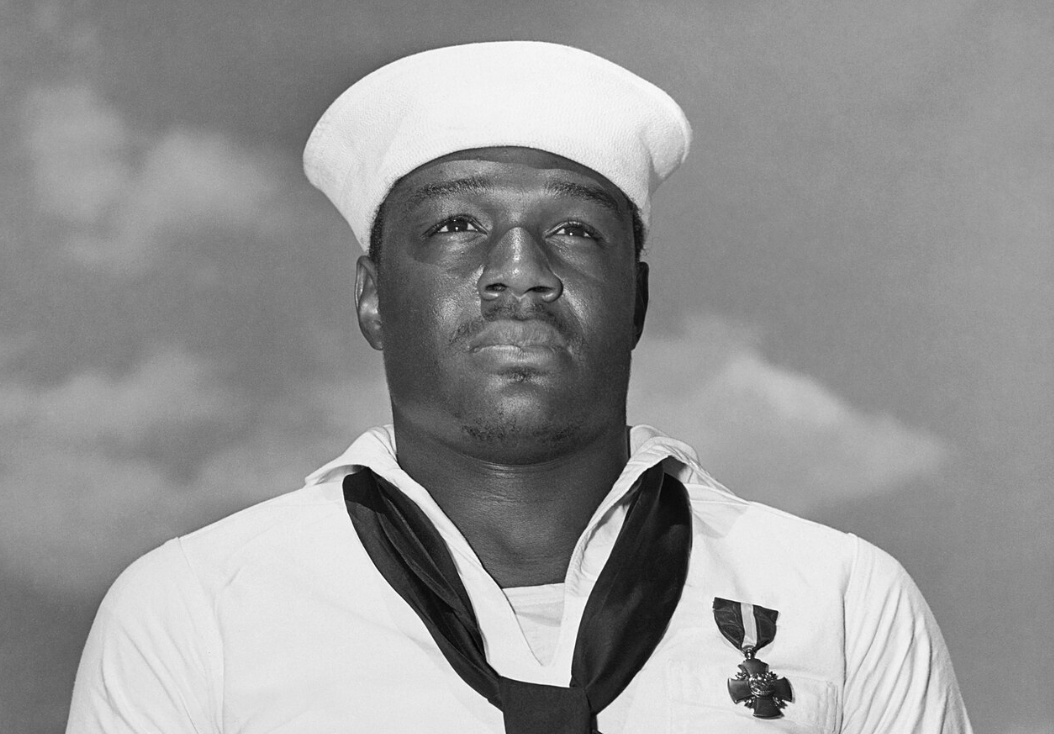
A reported plan to replace the Doris Miller name with Donald Trump’s would turn an aircraft-carrier designation into a debate over military tradition, historical recognition and presidential legacy. The Navy has not publicly detailed whether a final decision has been made.
The U.S. Navy is considering renaming an aircraft carrier that was slated to honor Black war hero Doris Miller, potentially switching the carrier’s name to Donald Trump, according to CNN. The reported move matters because the future USS Doris Miller was announced as the first aircraft carrier named for an African American and the first named for an enlisted sailor’s actions in combat.
The Navy has not publicly laid out a final decision or timeline in the material available. But the report has put fresh attention on Miller’s World War II record, the meaning of military ship names and the unusual prospect of revisiting a high-profile naming decision years after it was announced.
The carrier name now in question
In January 2020, then-Acting Navy Secretary Thomas Modly announced that a future Gerald R. Ford-class aircraft carrier would be named USS Doris Miller. The announcement was made around Martin Luther King Jr. Day and presented as recognition of the contributions of African Americans to the U.S. military.
The Navy said at the time that the selection would make Miller the first African American honored with an aircraft carrier’s name. It also said the ship would be the first carrier named for a sailor recognized for heroism while serving in the enlisted ranks.
That gives the reported effort to rename the ship significance beyond a routine administrative update. Carrier names are closely tied to the Navy’s public history, and the vessels are expected to serve for decades once they enter the fleet.
Doris Miller’s record at Pearl Harbor
Doris Miller was a Ship’s Cook Third Class aboard the battleship USS West Virginia during the Japanese attack on Pearl Harbor on Dec. 7, 1941. The official Navy account says he first went to his battle station but found it damaged by a torpedo strike.
Miller was then ordered to help the ship’s mortally wounded commanding officer. Although he had not been trained on the weapon, he later manned a .50-caliber anti-aircraft machine gun and fired until the ammunition was exhausted, according to the Navy.
He also helped move injured sailors as the West Virginia was abandoned amid fires and burning oil. The Navy awarded Miller the Navy Cross, one of the service’s highest decorations for valor.
Miller died in 1943 when the escort carrier USS Liscome Bay was torpedoed and sank near Butaritari Atoll in the Gilbert Islands. His story has since become a prominent example of Black Americans’ service and bravery in a military that was still segregated during World War II.
Why the proposed switch stands out
Aircraft carriers are not ordinary naval assets. They are among the military’s most visible symbols of U.S. power, often operating as the centerpiece of a carrier strike group and deployed around the world for years at a time.
The Navy’s 2020 announcement described Ford-class carriers as central to crisis response, humanitarian assistance, forward presence and major combat operations. A carrier’s name therefore becomes part of the public language used to describe American military power for a generation or more.
Presidents have frequently been honored with carrier names, including George H.W. Bush, Ronald Reagan, George Washington, Abraham Lincoln and Gerald R. Ford. A carrier named for Trump would fit that long-standing presidential pattern.
Still, replacing Miller’s name rather than assigning Trump’s name to another future ship would be a distinct decision. Supporters could see it as a president being recognized through a major Navy naming tradition. Critics could see it as withdrawing a rare and historically important honor from an enlisted Black sailor.
What has and has not been confirmed
CNN reported that the Navy is weighing the change. That wording is important: considering a name change is not the same as announcing one, and the available reporting does not establish that the carrier has been formally renamed.
There is also no public explanation in the provided material for why the Doris Miller designation would be replaced, whether other names are being evaluated, or whether a replacement honor for Miller would be contemplated.
The original 2020 announcement remains a public Navy record. It explicitly identified the future ship as USS Doris Miller and framed the choice as recognition for service members of every race, religion and background.
Until the Navy issues a formal statement, the scope of any review remains unclear. So does the status of internal recommendations, if any, and whether officials have reached a decision.
A test of continuity and memory
The dispute is likely to draw attention because it brings together two different ideas of how the Navy should use its most prestigious names. One emphasizes continuity with a tradition of naming carriers after presidents. The other emphasizes Miller’s exceptional distinction as an enlisted sailor and the historic barriers he faced.
Neither argument changes the documented facts of Miller’s service. The question is whether the 2020 decision to put his name on a Ford-class carrier will stand.
For now, the central development is the reported review itself. If the Navy moves forward with a Trump name, it will need to explain not only the new choice, but what becomes of the commitment it made to honor Doris Miller on one of the fleet’s most consequential ships.
Leave a Reply