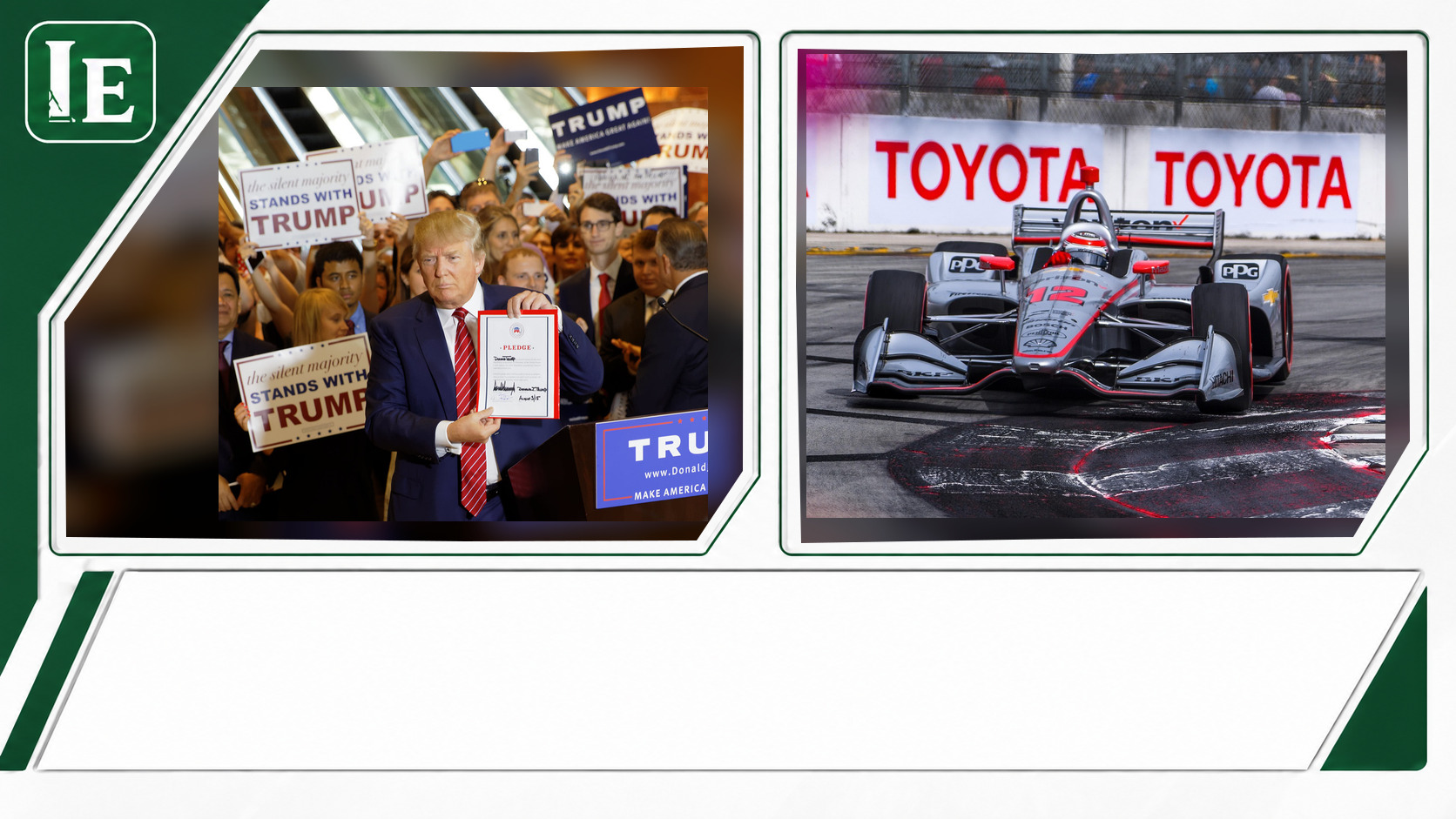
The Freedom 250 offered a rare IndyCar spectacle against Washington’s most recognizable landmarks. It also tested how much disruption a crowded, security-heavy street race can place on the capital’s public spaces.
Donald Trump’s Freedom 250 Grand Prix brought IndyCar racing to Washington, DC, on August 22 and 23, 2026, turning the National Mall into a high-speed street circuit. The 1.66-mile course linked roads including Pennsylvania Avenue, and the event put fans, museums, commuters and security agencies under unusual pressure as spectators faced oppressive heat, extensive closures and presidential-level security.
The two-day race was designed as a major 250th-anniversary attraction, with a projected crowd of nearly 300,000. But the Freedom 250’s real test was bigger than the 147-lap, 250-mile main event: Could central Washington function as both a tightly controlled race venue and a public civic district?
A circuit through the capital
The Freedom 250 was not held at a permanent speedway. Its route ran along 3rd Street near the National Mall and used sections of Pennsylvania Avenue, Constitution Avenue, Independence Avenue, Maryland Avenue and 9th Street.
That layout put race cars near the US Capitol, Washington Monument, National Gallery of Art, National Archives and Smithsonian Air and Space Museum. Reporting described IndyCars as capable of speeds approaching 180 mph, a striking contrast with an area more commonly associated with sightseeing, public gatherings and school trips.
The setting was central to the event’s appeal. CNN reported that the 147 laps and 250-mile distance were intended to connect the race to celebrations marking the United States’ 250th anniversary.
Yet a race framed by monuments also created a practical conflict. A temporary circuit requires barriers, restricted entrances, traffic controls and ticketed areas in a part of Washington built for broad public access.
Trump’s role changed the scale
CNN reported that Trump fast-tracked the event through a January executive order after Penske Corporation President Bud Denker proposed it. That process bypassed local bureaucratic hurdles that otherwise could have delayed the project.
A White House official cited by CNN said Trump was expected to attend the Sunday main event, take a ceremonial lap in the presidential limousine known as The Beast, and drop the green flag. His expected presence added another layer to an already complex weekend.
Street racing needs crowd management and road closures under ordinary circumstances. A presidential appearance also meant accommodating the security demands associated with a sitting president and Cabinet members.
Supporters could reasonably see the race as a high-profile anniversary celebration and an opportunity to introduce new audiences to motorsports. For residents, visitors and businesses trying to move through the area, the same event could look like a major restriction on access to the city’s civic core.
Heat complicated the fan experience
Reports that fans were sweltering matter because watching a street race can involve more than sitting in a fixed stadium seat. Spectators may walk long distances between entrances, wait for screening, stand behind fencing and search for views around grandstands and barriers.
Those demands become harder in oppressive heat. Pavement, crowds, fuel fumes and limited shade can make an outdoor event feel more punishing than the temperature alone would suggest, particularly for children, older adults and visitors unfamiliar with the area.
The available reporting does not provide a detailed official accounting of heat illnesses, medical treatment or crowd-control incidents. Reporting from the first day also described light morning drizzle and temperatures cooling later in the evening.
That leaves an important distinction: the material supports concern about difficult conditions for spectators, but it does not establish a verified public-health emergency or explain precisely what operational failures, if any, led to descriptions of chaos.
Security reached beyond the track
Security was among the most visible features of the Freedom 250. CNN reported that attendees were expected to pass through tall magnetometers, while the FBI, National Guard, US Park Police and Naval Criminal Investigative Service were among federal personnel on site.
Traffic and parking restrictions extended the event’s impact beyond the immediate race route. The Federal Aviation Administration said it would pause departures from Ronald Reagan National Airport from 10:15 a.m. to 1:15 p.m. Sunday, subject to change.
Museum access was also affected. Visitors needed Freedom 250 tickets to enter museums within the race path, according to CNN. The National Gallery of Art conducted an extensive vibration study and adopted safety measures for guests and collections near the pit lane.
Those precautions underline the unusual nature of the event: high-speed motorsports were placed near heavily visited institutions and irreplaceable artifacts. The race may have been promoted as a civic celebration, but it temporarily made part of the civic center less available to people not attending it.
A street course has its own hazards
Drivers also had to adapt to a course shaped by an active city rather than a purpose-built facility. CNN reported that more than one driver appeared to miss a sharp turn on 9th Street NW during practice, then had to turn around and rejoin the circuit.
Denker’s team reportedly used silicone on nearly 50 manhole covers to prevent high-speed cars’ aerodynamic suction from lifting them. That is the kind of technical preparation required when ordinary roads become a racing surface.
These details do not by themselves show the event failed. Temporary street circuits routinely demand adjustments from drivers and organizers. Still, they reveal how pavement, drainage covers, tight turns, barriers, pedestrian routes and emergency access become part of the competition.
For spectators, that complexity can mean longer walks, blocked sightlines and uncertainty about entry and exit routes. For Washington, it means the event’s success cannot be measured only by the result on the track.
The unresolved cost of spectacle
The Freedom 250 delivered an image few cities could offer: IndyCar racing against the backdrop of the National Mall and the US Capitol. Fans interviewed by CNN praised the historic setting, and the race demonstrated why street events can draw attention beyond the sport’s usual audience.
Its wider effects remain less clear. Available reporting does not yet establish how organizers managed the reported heat and crowd strain, how well access plans worked for ticket holders and non-ticketed visitors, or how residents and institutions experienced the disruptions after the final lap.
Those answers matter if Washington considers the Freedom 250 a model worth repeating. The event showed that a race can make the capital a dramatic sporting stage, but it also showed that speed, security and access restrictions are inseparable when the track runs through the center of a working city.
Leave a Reply