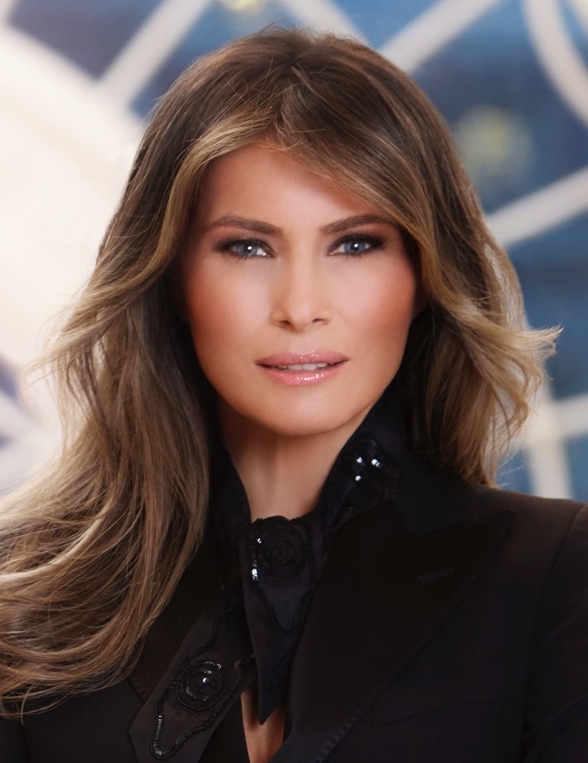
The controversy turns on a narrow reported contact, a much broader Tate brothers political story, and a parenting attack that goes beyond what has been publicly established.
Melania Trump is facing criticism over a reported link between Barron Trump and Andrew Tate, after a PBS NewsHour interview with New York Times investigative reporter Megan Twohey described Barron as an Andrew Tate fan who had spoken with Tate by Zoom. The report has fueled a “worst mother” attack on Melania, even as key facts remain unclear: what the Zoom contact involved, whether it continued, and whether Melania knew anything about it.
The backlash matters because Tate is not just a polarizing online figure. He and his brother, Tristan Tate, have faced criminal investigations and charges connected to alleged sex crimes, which both men deny, making any reported Trump family connection politically charged.
The claim is narrow
The central claim is not that Melania Trump arranged a meeting, approved a relationship or endorsed Andrew Tate. According to the PBS NewsHour interview, Twohey said New York Times reporting found that Tate had cultivated relationships with people on the American right, including members of the Trump family.
In that account, Barron Trump, Donald Trump’s youngest son, was by 2024 a fan of Andrew Tate and had spoken with him by Zoom the previous year. That is the reported contact at the center of the current reaction.
That distinction matters. A reported fandom and a Zoom conversation do not, on their own, establish a close friendship, a political alliance or any ongoing coordination. They also do not show that Melania Trump had any role in making the contact happen.
Why Melania drew fire
The criticism of Melania Trump rests largely on public perception of her role as Barron’s protective, private mother during Donald Trump’s political career. The “worst mother” label is a personal judgment aimed at that image, not a finding based on evidence that she took a specific action.
Critics argue that a parent in Melania Trump’s position should have kept Barron away from a figure widely associated with misogynistic content and serious criminal allegations. In that view, the reported Zoom contact is treated as a parenting failure because of Tate’s reputation and influence among young male audiences.
There is also a competing view. Barron Trump is an adult, and the public reporting cited in the PBS interview does not establish that Melania knew about the Zoom contact, approved it or could have prevented it. Blaming a mother for an adult son’s media interests or online associations is a significant leap.
That tension is why the story has traveled beyond a simple celebrity-politics item. It combines the Trump family’s unusually public private life with a broader worry about combative online influencers and their appeal to young men.
Tate’s legal troubles raise stakes
Andrew Tate and Tristan Tate were described by PBS as right-wing figures with large social media followings who have faced criminal investigations and charges connected to alleged sex crimes. That legal context is central to why the reported Barron Trump contact became explosive.
In the PBS interview, Twohey said the brothers had been under investigation in Romania, where they were accused of trafficking women into their pornography business and where Andrew Tate was accused of rape. She also said they were facing charges in Britain involving rape and trafficking.
Both men have denied the criminal allegations. That qualifier is important: allegations and charges are not convictions, and the brothers’ denials remain part of the public record.
For critics, though, the unresolved cases make any reported connection to Tate troubling. For skeptics of the Melania backlash, the same legal uncertainty reinforces the need to separate what has been reported from what is being assumed.
A wider Trump family thread
The PBS segment did not present Barron Trump as the only Trump family connection in the reporting. Twohey said Andrew Tate’s contact with Donald Trump Jr. stretched back to 2017, when Tate posted positively about Donald Trump and Donald Trump Jr. liked the post.
Twohey said that relationship developed further, including time at Trump Tower in New York. She also said Donald Trump Jr. later posted online in defense of the Tates and criticized the Romanian investigation.
That broader pattern changes the frame. The story is not only about one reported Zoom conversation involving Barron Trump. It also sits inside reporting that described the Tate brothers as trying to build support among conservative media figures, political allies and figures on the American right.
That is why Barron’s reported Zoom contact has taken on outsized meaning. He is not an elected official, but he is part of a family whose personal associations often become stand-ins for larger arguments about Donald Trump’s political movement.
Romania and Florida complicate it
Another part of the PBS reporting concerned the Tate brothers’ ability to travel. PBS reported that Romanian authorities had barred the brothers from leaving the country while prosecutors pursued their case, but that the travel ban was lifted in February, allowing them to fly to Florida.
Twohey said the New York Times found that U.S. supporters of the Tates gained influence after Donald Trump’s reelection, including special diplomatic envoy Richard Grenell. According to her account, Grenell had at least two conversations with Romanian officials about the Tates’ case.
Twohey said that within days of the second conversation, an order came from high levels of the Romanian government instructing prosecutors to reach a compromise with the brothers. She also said the Romanian prime minister believed the move would appease the Trump administration.
Those claims are serious, but they are separate from the criticism aimed at Melania Trump. The available reporting described in the PBS interview does not show that Melania had a role in decisions involving Romania, Florida or the Tate brothers’ travel restrictions.
What remains unproven
The clearest verified point is also the most limited one: Barron Trump was described in reporting discussed by PBS as an Andrew Tate fan by 2024 and as having spoken with him by Zoom the previous year. The public reaction has expanded from that reported contact into a broader judgment about Melania Trump’s parenting.
What remains unclear is substantial. The reporting does not publicly establish what was discussed on Zoom, whether there was any continuing relationship, or whether the contact involved influence, coordination or politics.
It is also unclear whether Melania Trump knew about the reported Zoom contact at the time. No public evidence in the PBS interview shows that she facilitated it, endorsed Tate or commented on the allegations involving Andrew Tate and Tristan Tate.
The bottom line is narrower than the backlash suggests: the “worst mother” attack is a public accusation layered on top of a reported Barron Trump-Andrew Tate connection. The stronger documented story concerns the Tate brothers’ efforts to cultivate allies on the right and the unresolved legal allegations around them, not any proven action by Melania Trump.
Leave a Reply