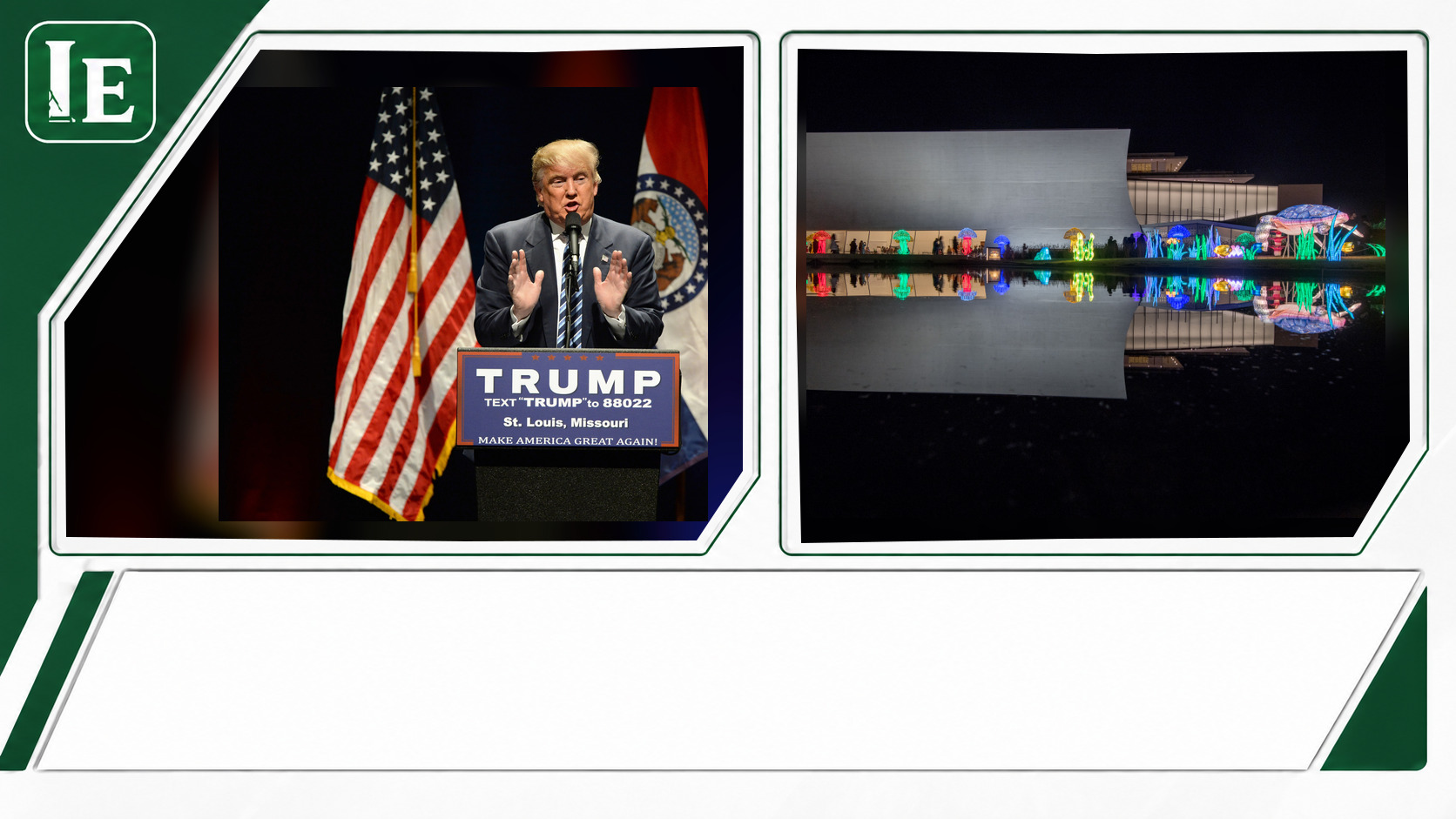
Claims of a “doomsday” financial outlook are colliding with official assertions that Donald Trump’s leadership rescued the Kennedy Center. The dispute is now about more than a name: it is testing the future of a federally created cultural institution.
The Kennedy Center is facing a dire financial outlook described as “doomsday” and is reportedly plunging toward a financial “fiscal cliff” amid a name change associated with Donald Trump. The alarm matters because the Washington arts institution is also a federal memorial to John F. Kennedy, and the available reporting leaves major questions about its finances, authority and future unresolved.
One account frames the center as nearing a financial crisis after the Trump-linked renaming effort. Yet the Kennedy Center and the White House have presented the opposite case, saying Trump’s leadership saved the institution from financial ruin. Those sharply competing claims make the underlying records—and not the branding fight alone—the central issue.
Financial warnings lack public detail
The reported “doomsday” and “fiscal cliff” language signals an unusually severe concern about the Kennedy Center’s finances. But the research available for this article does not include audited figures, a budget gap, a cash-on-hand total, a fundraising target or a specific forecast showing when a shortfall might hit.
That absence does not disprove the warning. Cultural institutions can face financial pressure through declining ticket sales, donor hesitation, higher operating costs, production commitments or maintenance needs long before a final public accounting is available.
It does mean readers should distinguish between a description of the situation and a fully documented financial diagnosis. A claim that the center is nearing a cliff needs to be measured against financial statements, attendance data, donor trends and the organization’s own plans for balancing its budget.
The renaming fight changed the stakes
According to reporting by The Guardian, the Kennedy Center board moved in December 2025 to add Trump’s name to the institution, potentially calling it the Trump-Kennedy Center. White House press secretary Karoline Leavitt said the board had voted unanimously, while the center confirmed a vote to change the name in an email to The Washington Post.
The move came after Trump installed himself as chair of the Kennedy Center board in February and replaced board members. Trump described that intervention as a “take-over” and said the institution should reflect what he viewed as the nation’s leading performers.
For supporters, the shift represents a reset of a prominent national arts venue. The center’s vice president of public relations, Roma Daravi, said the board’s action recognized a chairman who had saved the institution from “financial ruin and physical destruction.”
For critics, the renaming has become inseparable from concerns over political influence at a venue meant to serve as a national cultural institution. Any financial trouble now carries an added risk: it will be interpreted through the fight over who controls the center and what it represents.
A federal memorial has limits
The Kennedy Center is not simply another performing-arts nonprofit. It was established as the John F. Kennedy Center for the Performing Arts, a living memorial to the assassinated president, through federal law.
Joe Kennedy III, John F. Kennedy’s grandnephew, argued that the name could not lawfully be changed by board action alone. He compared the issue to attempting to rename the Lincoln Memorial, saying a federally designated memorial cannot be relabeled merely because officials want it changed.
Critics have pointed to statutory language saying the board must ensure that no additional memorials or memorial-like plaques are designated or installed in the public areas of the center after December 2, 1983. Whether that provision directly blocks adding Trump’s name is a legal question that remains unsettled in the reporting provided.
The distinction matters. A board vote may signal intent, but it does not necessarily settle whether the rebranding can survive legal scrutiny or whether Congress would need to act.
Even the board vote is disputed
The claim of a unanimous vote has also been challenged. Rep. Joyce Beatty, an ex-officio member of the Kennedy Center board, said she was muted during the call and could not voice opposition. “For the record. This was not unanimous,” she wrote on X.
The Kennedy Center responded that ex-officio members without a vote had been allowed to listen to the meeting. That reply addresses participation rules but does not erase the broader dispute over how the decision was made or how much dissent was heard.
Governance concerns can become financial concerns quickly. Donors, artists, audiences and prospective partners often make decisions based not only on a venue’s programming but also on whether they view its leadership as stable, transparent and mission-focused.
Conversely, backers of the new direction may argue that a stronger management approach, a different artistic identity and closer ties to the administration could attract support that the center previously lacked. Neither argument can be fairly judged without public financial evidence over time.
Programming became part of politics
The renaming push is part of a broader effort by the Trump administration to reshape major Washington cultural institutions. Earlier proposals included renaming the Kennedy Center’s Opera House for first lady Melania Trump, while the administration also pursued a review of the Smithsonian Institution.
Trump has taken a direct role in the Kennedy Center’s public identity. He served as compere for the center’s honors ceremony, whose honorees included George Strait, Michael Crawford, Sylvester Stallone and Gloria Gaynor. Trump said he had been “very involved” in choosing the honorees.
That visibility makes the center a potent political symbol. It also raises a practical challenge for an arts organization that depends on broad public participation: programming and governance decisions may now be judged as signals of political allegiance as much as artistic judgment.
What would clarify the crisis
The key unanswered question is not whether the renaming controversy has generated public backlash. It clearly has. The question is whether the Kennedy Center’s financial outlook has materially worsened, improved or simply been described in incompatible political terms.
A clearer picture would require the center to disclose current operating results, reserves, fundraising performance, future obligations and the assumptions behind any warning of a fiscal cliff. It would also help to know whether artists, ticket buyers, donors or corporate partners have changed their commitments following the governance overhaul.
Until then, the institution sits at the intersection of two unresolved disputes: whether its Trump-linked renaming can stand and whether its financial position matches the competing claims of near-collapse and rescue. For a federally created memorial and national stage, both questions carry consequences far beyond a new sign on the building.
Leave a Reply