The fight is not only about what happened at a U.S. base in Kuwait. It is also about whether the Pentagon’s public account matches what injured troops say they experienced.
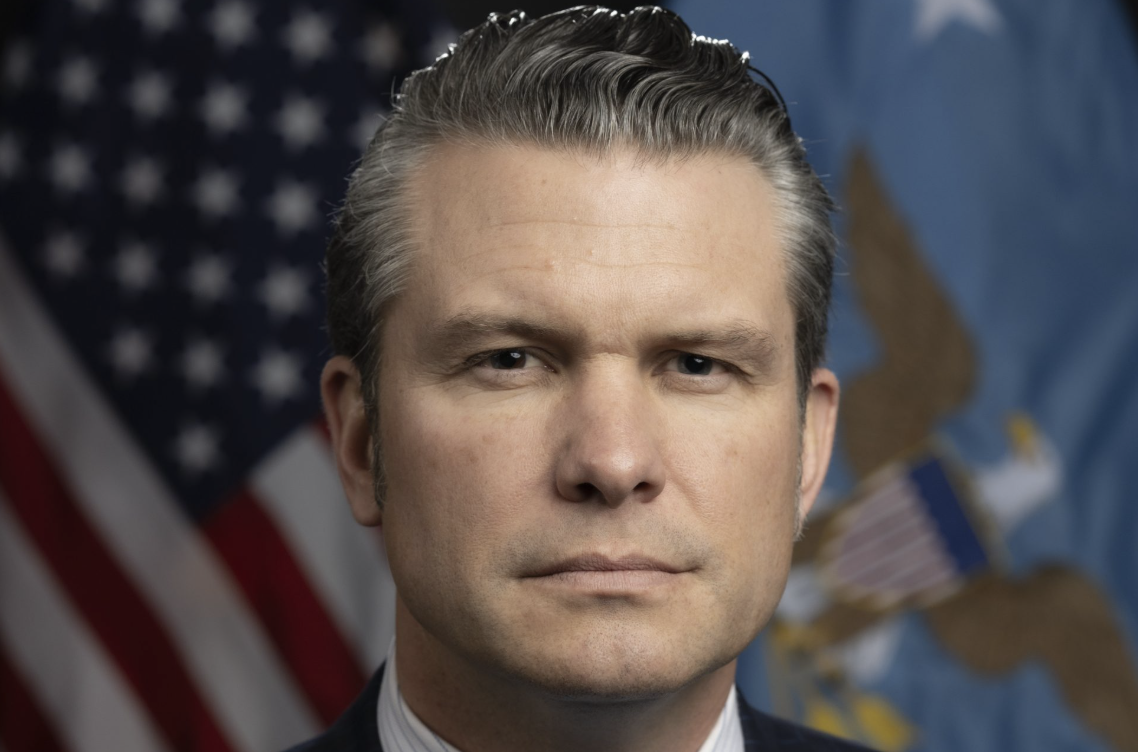
Democrats plan to investigate a deadly Iranian attack following disputed claims attributed to Hegseth, focusing on a March 1 unmanned Iranian drone strike that killed six U.S. servicemembers at a U.S. base in Kuwait. In a letter to Defense Secretary Pete Hegseth, Rep. Maggie Goodlander and 13 House Democratic veterans demanded an immediate review of force protection failures, saying his characterization of the attack conflicts with accounts from injured troops and with concerns about Iran’s drone threat.
The dispute matters now because it turns a battlefield tragedy into an oversight fight: what the Pentagon knew, how the base was protected, and whether officials accurately described the attack afterward.
Democratic veterans sharpen the demand
The clearest public record comes from Goodlander’s congressional office, which said she joined 13 House Democratic veterans in demanding that Hegseth investigate force protection failures after the deadly attack in Kuwait. The group named in the release includes Reps. Gil Cisneros, Herbert Conaway, Jason Crow, Chris Deluzio, Chrissy Houlahan, Ted Lieu, Seth Moulton, Jimmy Panetta, Pat Ryan, Mike Thompson, Derek Tran and Eugene Vindman.
The lawmakers are not simply asking for a casualty report. They are asking for an examination of how an unmanned Iranian drone was able to strike a U.S. base and kill six servicemembers, and whether the military’s defenses, warnings and response procedures were sufficient.
That makes this a classic congressional oversight fight with a sharper edge: several of the lawmakers pressing the issue have served in uniform. Their argument is that the deaths demand more than condolences or general reassurances. They want a specific accounting of what failed.
Why Hegseth’s account is disputed
Goodlander’s office said the members were calling out contradictions in Hegseth’s characterization of the attack. The release also says troops injured on the base described parts of that characterization as falsehoods.
The public materials reviewed here do not lay out every disputed detail of Hegseth’s account, and that absence is part of the problem. Democrats are arguing that if injured personnel and the defense secretary are offering conflicting descriptions of a deadly attack, Congress needs to know which version is supported by evidence.
There are competing realities in cases like this. The Pentagon may have operational or intelligence reasons for limiting what it says publicly, especially when Iranian drone capabilities are involved. Lawmakers, however, have a constitutional oversight role and a duty to press for answers when U.S. servicemembers die on a base that should have been protected.
The question is not only whether Hegseth misspoke or framed the incident too narrowly. It is whether the official account minimized warning signs, obscured vulnerabilities or left families and troops with an incomplete picture.
Force protection is the hard question
Force protection is the military term at the center of the Democrats’ demand. In plain language, it means the systems, intelligence, training and command decisions meant to keep servicemembers alive.
For a U.S. base in Kuwait, that can include air defense coverage, drone detection, threat alerts, hardened shelters, evacuation procedures and coordination with regional partners. A single successful drone strike can reveal gaps across several of those layers.
The lawmakers’ letter, as described by Goodlander’s office, focuses on whether failures in those protections contributed to the deaths of the six servicemembers. That is a narrower and more concrete question than the broader politics of U.S.-Iran tensions.
It is also the question most likely to matter to troops still stationed in the region. If the same threat environment persists, the practical stakes are immediate: what changes before the next drone approaches?
Kuwait sits near larger dangers
Kuwait is a key U.S. military partner and has long hosted American forces tied to operations across the Middle East. That geography matters because a strike there does not happen in isolation; it sits inside a wider regional contest involving Iran, Iranian-backed groups and U.S. military posture.
The Goodlander release specifically points to broader implications from Iranian drone threats. That framing suggests Democrats see the Kuwait attack as a warning sign, not only a past failure.
Drones have changed the risk calculation for bases that once relied heavily on distance, perimeter security and conventional air defenses. Small unmanned aircraft can be difficult to detect, cheap to deploy and capable of inflicting major casualties if they penetrate defenses.
That is why the investigation demand is likely to look beyond one day in March. Lawmakers may seek to understand whether the base had adequate counter-drone equipment, whether warnings were shared, and whether commanders had the authority and resources to act before the strike.
What Congress may ask next
If Democrats escalate the issue, the next phase could include document requests, classified briefings, hearing questions and demands for a formal Pentagon review. The lawmakers may ask for timelines showing when the drone was detected, who was notified, what defensive systems were active and how casualty notifications were handled.
They may also press for the internal basis of Hegseth’s public description of the attack. If his comments relied on early or incomplete reporting, that would be one explanation. If they conflicted with known facts at the time, Democrats will likely argue the problem is more serious.
Several practical questions remain unanswered from the public record:
- What exactly did Hegseth say that injured troops and Democrats say was inaccurate?
- What force protection measures were in place at the Kuwait base on March 1?
- Did commanders receive warnings about an Iranian drone threat before the attack?
- Has the Pentagon opened, or agreed to open, the immediate investigation Democrats requested?
- What changes, if any, have been made at similar U.S. facilities in the region?
The accountability test ahead
The political fight will inevitably fall along familiar lines, with Democrats pressing Hegseth and Republicans potentially accusing them of turning a military tragedy into a partisan confrontation. But the substance of the demand is not inherently partisan: when six servicemembers are killed, Congress usually seeks a record of what happened and what can be fixed.
The harder issue is whether the Pentagon can provide enough detail to satisfy oversight without exposing sensitive intelligence or defensive weaknesses. That tension is real, but it does not erase the need for answers.
For now, the verified facts are stark: a deadly Iranian drone attack killed six U.S. servicemembers in Kuwait; Goodlander and a group of House Democratic veterans are demanding an immediate investigation; and Hegseth’s characterization of the attack is being challenged as contradictory by Democrats, with injured troops cited as disputing it.
The investigation, if it moves forward, will test more than one official’s wording. It will test whether the U.S. military can explain how a lethal drone reached American personnel, and whether it has closed the gaps before another attack comes.
Leave a Reply