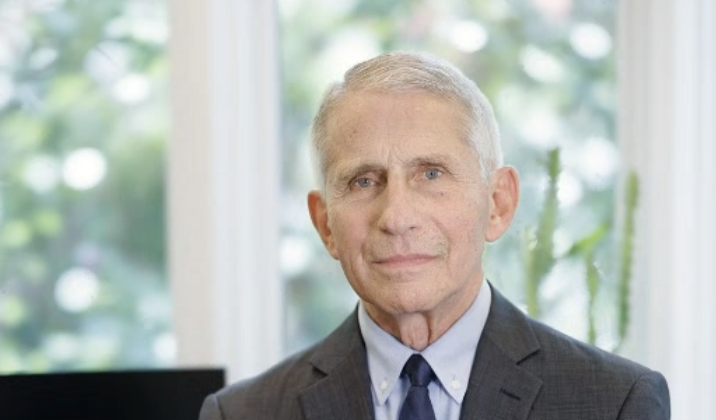
The hearing produced little testimony from Fauci, but its images carried political weight. A Fox News host in the frame helped turn a legal refusal into a broader argument over how the pandemic years should be judged.
Laura Ingraham was seated directly behind Anthony Fauci at a Capitol Hill hearing Wednesday, where Anthony Fauci invoked the Fifth Amendment and refused to testify minutes into the proceeding, according to CNN. Republican Sen. Bernie Moreno used Ingraham as an example in a Covid-era free speech argument, making the Fox News host’s presence politically significant.
The result was a hearing shaped as much by positioning as by testimony. Fauci’s silence, Ingraham’s visibility and Moreno’s comments turned a Capitol Hill appearance into a broader fight over pandemic accountability, media criticism and who gets to define the Covid years.
A hearing defined by silence
Fauci appeared after a subpoena from Sen. Rand Paul, according to the source reporting. He had long been one of the central public faces of the U.S. government response to Covid-19, which made his appearance a high-profile moment before any questions were answered.
But the most important development came quickly. Fauci invoked his Fifth Amendment right against self-incrimination and declined to testify, according to CNN.
That move shifted the hearing away from a back-and-forth over pandemic decisions and toward the meaning of the refusal itself. In congressional settings, legal caution can become political material almost instantly.
Why Ingraham’s seat mattered
Ingraham was not the witness. Based on the public record described in the reporting, she did not need to speak for her presence to become part of the story.
CNN’s video report showed the Fox News host seated directly behind Fauci during the Capitol Hill hearing. That placement put her in the same visual frame as the former federal health official whose pandemic-era role has remained intensely divisive.
The reported “reaction” was not a lengthy statement or a dramatic confrontation. The notable fact was visual and political: Ingraham was there, visible behind Fauci, while lawmakers debated the treatment of people who challenged Covid-era policies or messaging.
That distinction matters. The verified moment is not that Ingraham altered the proceeding. It is that her presence was visible and then became part of Moreno’s argument inside the hearing.
Moreno made her the example
According to CNN, Moreno referred to Ingraham as someone who was “shamed” over what she said about Covid-19. With that remark, he turned a familiar cable-news figure from a background presence into a symbol of a larger Republican complaint.
For many critics of the pandemic response, the argument is that dissenting voices were dismissed, stigmatized or treated as dangerous when they questioned public-health guidance. In that view, Ingraham’s presence fit a broader grievance shared by commentators, parents, doctors and politicians who say they were punished socially or politically for challenging official consensus.
Fauci’s defenders see the same period differently. They argue public-health officials were navigating a fast-moving emergency with incomplete information and a responsibility to communicate guidance during a crisis that cost lives on a massive scale.
Those competing views explain why one seating arrangement became meaningful. Fauci represented the federal response to many viewers; Ingraham represented media criticism of that response; Moreno supplied the explicit free speech frame.
The Fifth is not a confession
The legal core of the moment should not be lost in the politics. The Fifth Amendment protects people from being compelled to give testimony that could incriminate them.
Invoking that right is not an admission of wrongdoing. It is a constitutional protection, and witnesses can use it in settings where testimony may carry legal, political or reputational consequences.
Still, congressional hearings rarely operate only as legal exercises. They also create clips, arguments and impressions. A refusal to testify can be interpreted very differently depending on what a viewer already believes about the witness and the committee.
Fauci’s critics are likely to view the decision as evidence that unanswered questions remain. His supporters are likely to see it as a careful legal response to a hostile or politically charged process. Both reactions were predictable, and both help explain why the hearing drew attention beyond the room.
The Covid fight underneath
The hearing landed inside a long-running battle over how the pandemic should be remembered. Fauci remains a polarizing figure: to some, a steady scientific voice during a frightening national emergency; to others, the symbol of shifting guidance, school closures, mask mandates and distrust in federal institutions.
Congress has continued revisiting the pandemic response through hearings, records requests and public questioning. Official congressional records, including Congress.gov pages for Fauci-related hearings, show how deeply the response has become part of ongoing oversight.
But the fight is no longer only about decisions made in 2020 or 2021. It is also about who has authority to write the lessons now: public-health officials, lawmakers, media figures, courts, voters or those who believe they were ignored when they challenged expert opinion.
That is why a hearing can become a media event even when testimony is limited. The central figures are already familiar, and the audience often arrives with firm views before the first answer is given.
What remains unresolved
The public record described in the reporting does not establish that Ingraham made remarks during the hearing. It also does not show that her personal reaction changed the proceeding.
What it does show is narrower but politically revealing: she was seated behind Fauci, she was visible, and Moreno named her while arguing about Covid-era speech and public shaming.
It also remains unclear what, if anything, Fauci may say in another setting. Invoking the Fifth stopped his testimony at that hearing, but it did not settle the arguments over pandemic decision-making, federal transparency or the treatment of people who criticized Covid policies.
The moment mattered because it compressed several unresolved disputes into one frame. Fauci’s refusal supplied the legal drama. Ingraham’s seat supplied the media symbolism. Moreno’s comments tied both to a continuing political fight over pandemic accountability and free speech.
Leave a Reply