
John Fetterman’s 46% overall favorability masks a stark partisan realignment in Pennsylvania. His growing appeal with Republicans comes as many Democrats voice frustration with his public breaks from the party.
John Fetterman has experienced a notable shift in support in Pennsylvania: Republicans now view the Democratic senator more favorably than they view the state’s sitting Republican senator, David McCormick. A New York Times/Philadelphia Inquirer/Siena poll put Fetterman’s overall favorability at 46 percent, showing why his standing has become a consequential political question inside both parties.
The result is not a conventional bipartisan-success story. Fetterman’s stronger standing with Pennsylvania Republicans has arrived alongside deep resistance from Democratic voters, reflecting the political cost and benefit of his unusually public criticism of his own party.
Republicans give Fetterman a warmer rating
Among self-identified Pennsylvania Republicans, 73 percent said they viewed Fetterman favorably in the poll. That was higher than the 63 percent favorable rating for McCormick, Pennsylvania’s Republican senator.
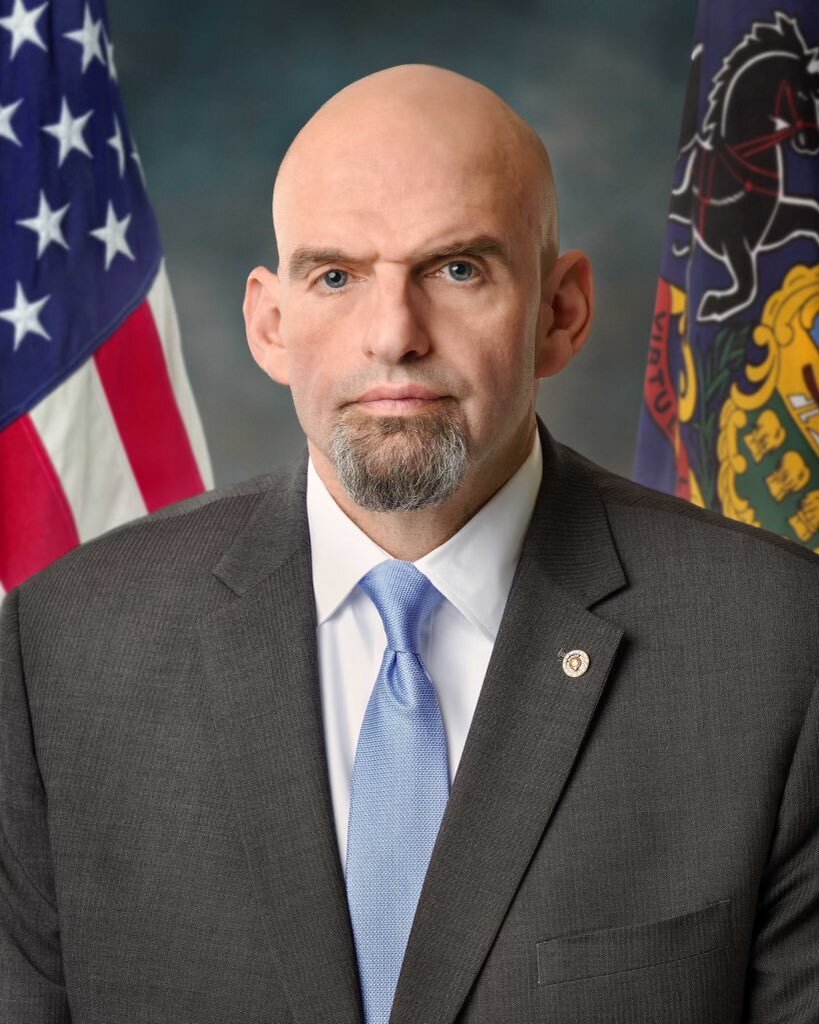
The comparison comes with an important qualification. The poll found McCormick was less well known to many respondents, with a substantially larger share saying they had not heard enough about him or had no opinion. A favorability gap is meaningful, but it does not automatically show that Fetterman would win more Republican votes in an election.
Still, it is an unusual result for a Democratic senator in a closely watched swing state. It suggests that Fetterman’s profile has moved beyond ordinary partisan lines, even as the reasons voters approve of him differ sharply by party.
Democratic support tells a different story
The same survey found only 22 percent of self-identified Democrats viewed Fetterman favorably. That contrast with his 73 percent Republican rating is the central fact behind his current political position: he is drawing praise from many voters outside his party while alienating a large share within it.
Fetterman has repeatedly argued that Democrats have moved too far left, and conservative media outlets have often amplified those critiques. His public clashes with fellow Democrats have made him a familiar figure to Republican audiences that might otherwise pay little attention to a Democratic senator.
He has also faced criticism from the Democratic left over his strong support for Israel. The poll’s questions on Israel captured the tension around that issue: 29 percent of Pennsylvania voters said Fetterman had been too supportive of Israel, while 41 percent said his approach was about right. Another 24 percent said they did not know, and 7 percent said he had not been supportive enough.
A 46 percent rating needs context
Fetterman’s 46 percent overall favorability is not, by itself, evidence of a statewide surge. The Times reported that it was close to where his rating stood when the same polling partnership last measured it in May 2024.
What has changed is the composition of that support. His statewide number can remain relatively steady while the coalition beneath it is reshaped: better ratings among Republicans can offset worsening views among Democrats, or the reverse.
That is why the poll offers a more complicated reading than a headline about popularity alone. A politician can be broadly recognizable and regarded favorably by one group while facing serious trust problems among the voters most likely to form his natural electoral base.
Why Fetterman’s approach resonates
Fetterman’s political style has often been confrontational, including toward his own side. For Republican voters, his criticism of Democratic leadership and progressive activists can serve as evidence of independence, even when they disagree with him on major policy questions.
For many Democrats, those same moves can look less like independence than a public weakening of party unity. That disagreement is not merely about tone. It reaches questions of Israel, the direction of the Democratic Party and whether elected officials should use conservative media attention to criticize their allies.
There is also a strategic distinction worth keeping in view. Republicans may appreciate Fetterman’s criticisms without supporting him as a Democratic candidate. Favorability reflects an opinion at a given moment, not a declaration of future party loyalty or voting behavior.
The poll has built-in limits
The survey was conducted Aug. 17 through Aug. 21 among 760 Pennsylvania voters. Interviewers conducted the poll by telephone, and more than 95 percent of respondents were contacted on cellphones, according to the poll methodology.
Its margin of sampling error was plus or minus 4.6 percentage points among the likely electorate and plus or minus 4.5 points among registered voters. Polls also face uncertainties beyond sampling error, including whether respondents answer candidly and whether the weighted sample fully captures the eventual electorate.
Those limits do not erase the striking partisan divide, but they argue against treating any one survey as a fixed verdict. The poll is best understood as a snapshot of how Pennsylvania voters were responding to Fetterman’s public posture in late August.
What the split means for both parties
For Fetterman, the numbers underline a difficult balance. He has said he does not plan to leave the Democratic Party, yet the survey shows that his perceived distance from the party may be helping him with Republicans while damaging his standing among Democrats.
For Pennsylvania Democrats, the question is whether his brand of independence broadens the party’s appeal or turns a prominent statewide figure into a source of internal division. For Republicans, his popularity may be politically useful as validation of their critiques of Democrats, even though he remains a Democratic senator.
The clearest takeaway is that Fetterman’s political support has not simply risen or fallen. It has been redistributed. In Pennsylvania, a senator’s appeal now appears to be crossing party lines in a way that could bring attention and leverage, but also leave him with fewer dependable allies where he needs them most.
Leave a Reply