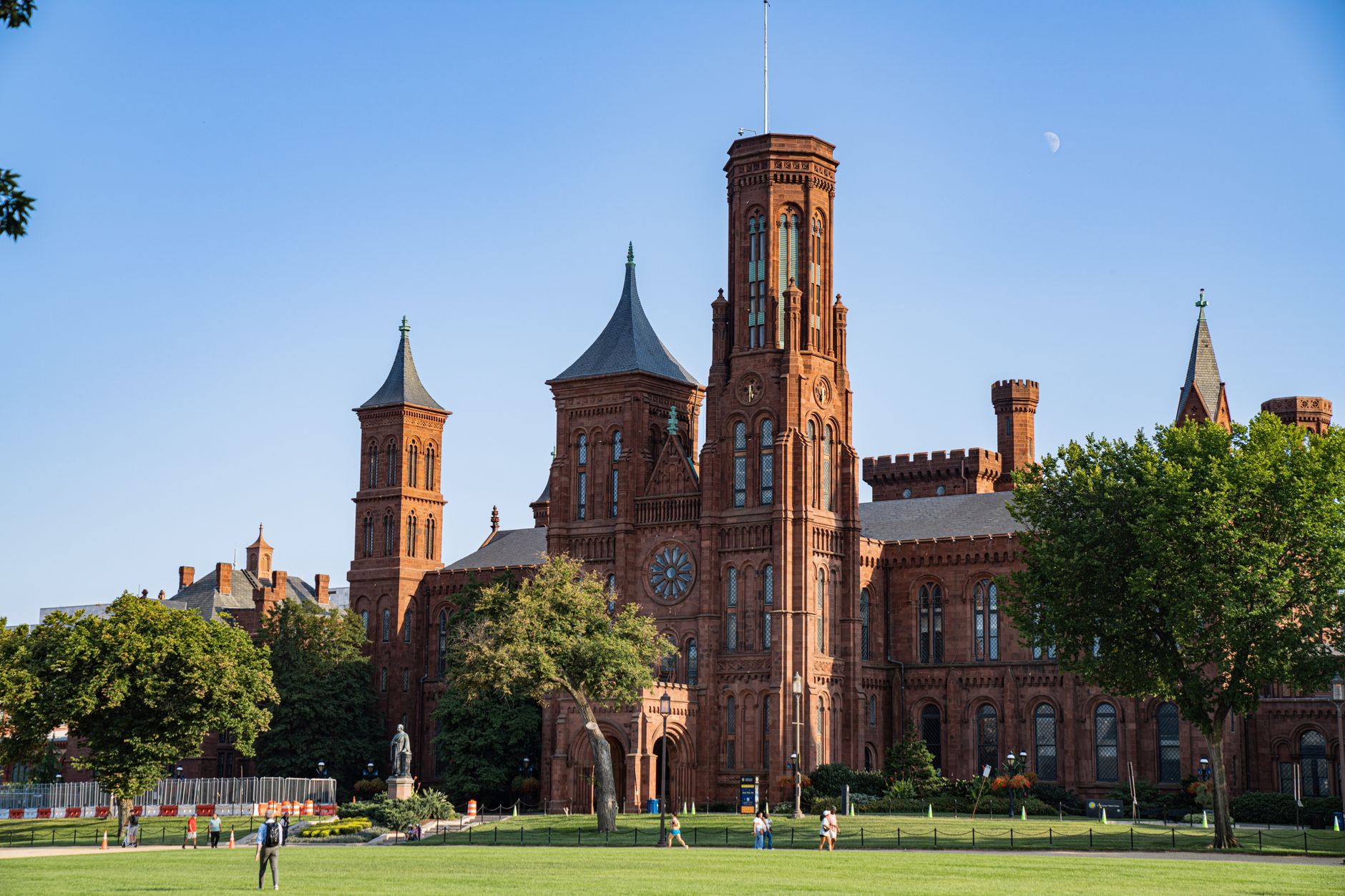
The dispute is part of a larger clash over who gets to frame America’s national story. At issue is whether museums can confront the country’s hardest history without being accused of political indoctrination.
A descendant of enslaved people criticized the Smithsonian Institution, alleging that its portrayal of American history and the United States amounts to “woke” indoctrination. The complaint lands as the White House pushes the Smithsonian’s National Museum of American History to change exhibits and public-facing material it says present the country through an ideological lens.
The immediate argument is over whether the Smithsonian gives Americans a fair account of their national inheritance. The larger fight is about what a public museum owes its visitors: a more celebratory story of the United States, a fuller account of injustice and conflict, or an uneasy mix of both.
The criticism joins a federal campaign
The Smithsonian dispute has moved beyond commentary and into policy. On July 24, 2026, President Donald Trump issued Executive Order 14416, titled Restoring Trust in the Smithsonian Institution.
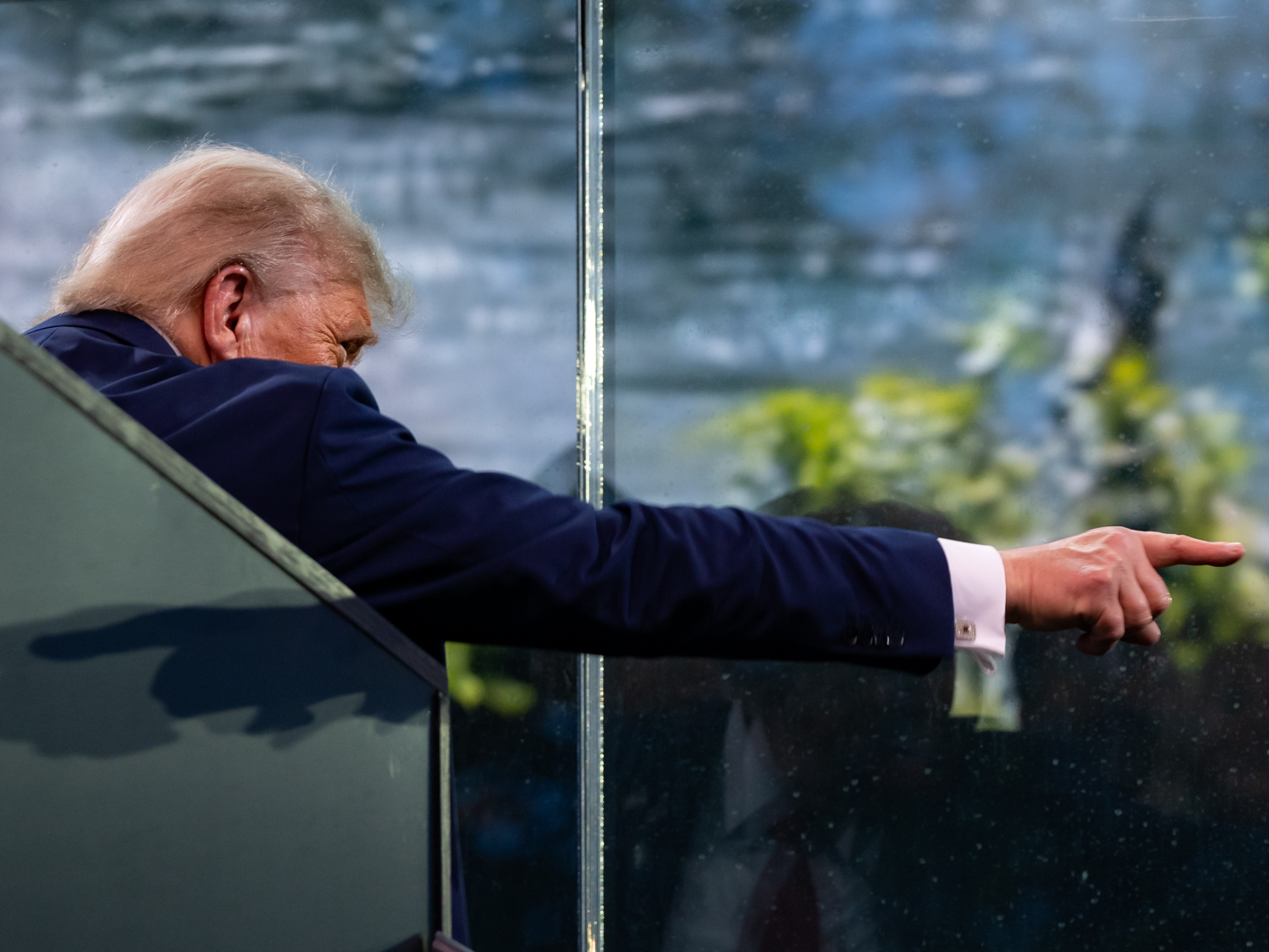
The order followed a months-long Domestic Policy Council review of the Smithsonian and the National Museum of American History. The administration’s report was titled Saving America’s Story: How Ideological Capture at the Smithsonian Institution’s National Museum of American History Erases Our Heritage.
That framing closely tracks the allegation in the criticism from a descendant of enslaved people: that the museum’s approach does not simply provide historical context but advances a political interpretation of the country.
Still, “woke indoctrination” is a political characterization, not a neutral finding. It reflects the language used by critics of the Smithsonian’s approach and by the administration’s broader campaign against what it calls ideological capture in cultural institutions.
What the White House says is wrong
The executive order says the administration’s review found that Smithsonian leadership had treated American history as a tool for advancing social justice and “radical transformation,” rather than as a shared inheritance to be taught and celebrated.
The White House argues that this approach leaves visitors with an unfairly negative or incomplete view of the United States. Its stated goal is to restore an account of the country grounded in “honesty and gratitude.”
The order directs the Interior Department, the Office of Management and Budget, the General Services Administration and White House domestic-policy staff to use available authority to address the administration’s concerns.
It also calls for temporary signs along National Park Service-maintained paths leading to the National Museum of American History. Those signs are intended to tell visitors about the administration’s findings and state that exhibits should be renovated in line with the report.
Why slavery remains central to it
A critique from someone identified as a descendant of enslaved people complicates an argument often reduced to partisan labels. Descendants of enslaved Americans are not a political monolith, and family history alone does not dictate a single view of how slavery should be taught or displayed.
For some people, a museum’s emphasis on slavery, segregation, racial violence and exclusion is essential to telling the truth about the United States. Omitting or softening those subjects, they argue, turns patriotism into selective memory.
For others, including critics aligned with the White House’s position, a sustained focus on oppression can make the nation’s story seem defined chiefly by its failures. They argue that museums should give equal or greater weight to constitutional ideals, civic achievement, military service, invention and democratic progress.
Those views are not necessarily incompatible. The disagreement is often about proportion, tone and authority: which facts are foregrounded, how exhibits connect past injustice to the present, and whether that connection becomes advocacy.
A museum can be public and contested
The Smithsonian is not a typical federal agency, although it receives federal funding and operates through a distinctive governance structure. Its museums are public institutions with a national audience, which makes their curatorial choices especially vulnerable to political scrutiny.
The National Museum of American History faces a difficult assignment. It is expected to preserve objects, educate visitors and create narratives that work for schoolchildren, scholars, tourists, veterans, immigrants and families with sharply different views of the country.
Every museum exhibit involves selection. Space is finite, objects require interpretation and curators decide what belongs in the main story rather than a side gallery. Critics may call those choices bias; museum professionals may call them historical judgment.
The practical concern is whether pressure from elected officials improves accuracy or places cultural institutions under partisan control. The administration sees intervention as accountability. Opponents are likely to see it as an attempt to direct scholarship and public memory from the White House.
The Declaration dispute adds pressure
The executive order singles out the museum’s treatment of the 56 signers of the Declaration of Independence during the country’s 250th anniversary year. The White House says the museum failed to honor them appropriately.
It instructs the National Park Service, working with White House domestic-policy staff, to put up temporary exhibits or signs on federally maintained outdoor areas that would correct what the order calls inaccurate information at the museum.
That detail matters because it shifts the fight from a general disagreement about exhibit priorities to a visible intervention at the museum’s doorstep. Visitors could encounter the administration’s interpretation before entering the Smithsonian itself.
The order says implementation must remain consistent with law and available appropriations. It does not, on its face, settle which specific indoor exhibits will change, on what timetable, or how Smithsonian leaders will respond to the administration’s findings.
The unresolved question is balance
The descendant’s criticism and the White House order share a central complaint: that the Smithsonian’s account of America has become too ideological. Their preferred alternative is a story that gives more room to national achievement, unity and gratitude.
But museums cannot avoid difficult history simply by changing the tone of a label or adding more patriotic symbols. Slavery, dispossession, inequality and political conflict are part of the American record, just as democratic institutions, reform movements and major achievements are.
The real test for the Smithsonian will be whether it can defend its historical choices clearly while remaining open to legitimate criticism. The test for political leaders will be whether calls for balance leave room for independent scholarship rather than demanding a museum-approved version of patriotism.
For now, the dispute shows that arguments over American history are no longer confined to classrooms and social media. They are playing out in the nation’s museums, in federal directives and in the question of what millions of visitors will be invited to see as the American story.
Leave a Reply