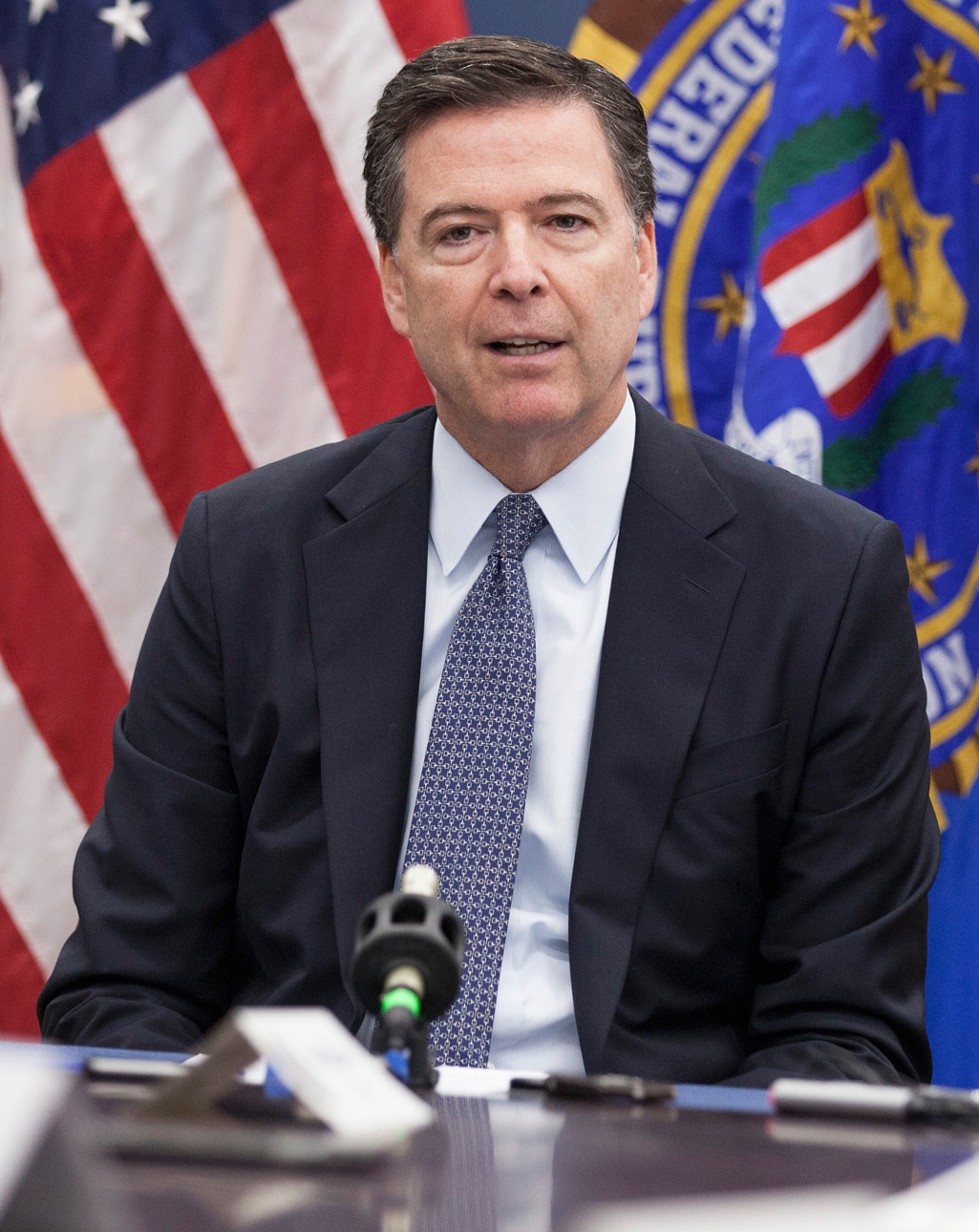
The fight is less about old Washington drama than about how nominees answer questions when the FBI, DOJ independence and James Comey are on the table.
New Comey revelations throw a wrench into testimony connected to a Trump pick, the trend signal says: new revelations about James Comey complicate testimony connected to a Trump pick, and a former DOJ lawyer says this matters because it could sharpen questions about candor, independence and the Justice Department. Donald Trump’s choices for top law-enforcement posts are judged not only on résumé, but on how they answer when Comey, the FBI and DOJ pressure are at issue.
The available record is thin on the precise revelations behind the claim. But the political stakes are clear: Comey’s firing and the testimony surrounding Trump’s law-enforcement nominees have long been treated as tests of whether the Justice Department can withstand White House pressure.
A testimony problem, not just politics
The phrase Comey revelations throw a wrench is doing more than signaling partisan conflict. In a confirmation or oversight setting, new information can make prior testimony look incomplete, evasive or newly vulnerable to follow-up questions.

That is why a former DOJ lawyer’s view matters. Former department officials often focus less on cable-news theater and more on the record: what was asked, what was answered, what was omitted and whether a nominee’s account still holds together after later disclosures.
The Alternet item distributed through MSN frames the issue as a Trump pick’s testimony being complicated by new Comey-related information. Without the full underlying article, the extracted record does not identify the former DOJ lawyer by name or provide the exact quotation. That gap matters, and it limits what can be stated as fact.
Still, the broader dynamic is familiar. When a nominee is tied to the FBI or DOJ, Comey becomes a proxy for a larger question: would that person protect the institution’s independence if pressured by a president?
Why Comey still shapes this fight
James Comey remains central because his removal by Trump became one of the defining events of the first Trump administration’s clash with federal law enforcement. The firing came as the FBI was under intense scrutiny over investigations connected to Russian interference in the 2016 election.
That history turns almost any Comey-related disclosure into potential confirmation ammunition. Senators can use it to revisit what a Trump nominee knew, how the nominee described past events and whether the nominee’s public testimony squared with the internal record.
For Trump allies, the Comey years are often cited as evidence of a politicized bureaucracy that resisted an elected president. For critics of Trump, Comey’s firing is treated as a warning sign about presidential pressure on investigations. Both sides can look at the same episode and see opposite lessons.
That is why testimony connected to Comey rarely stays narrow. A question about one meeting or one disclosure can quickly become a question about the rule of law, FBI independence and loyalty to the Constitution versus loyalty to a president.
The Wray precedent matters
The most useful public context in the extracted research is NBC News’ 2017 profile of Christopher Wray, Trump’s choice to replace Comey as FBI director. NBC described Wray as a former federal prosecutor who was poised to lead an FBI shaken by Comey’s firing.
NBC reported that Wray’s confirmation was certain to be scrutinized because Trump had dismissed Comey amid the Russia investigation. The network also noted the size of the institution Wray would inherit: more than 30,000 FBI employees across 56 U.S. field offices.
Wray’s own DOJ history gave senators plenty to examine. In 2004, according to NBC’s account, Wray indicated he was willing to stand with Comey, Robert Mueller and other Justice Department officials who were concerned about the legality of the Bush administration’s warrantless wiretapping program.
That episode cut two ways. It gave Wray a reputation among some former colleagues as someone with a backbone. It also tied his public image to Comey’s version of a DOJ that, at moments, had to resist pressure from the White House.
What an ex-DOJ critique targets
A former DOJ lawyer looking at new Comey revelations would likely focus on the integrity of the testimony record. Did the Trump pick give a complete answer? Did later information contradict the answer? Did the nominee avoid a material point that senators would have cared about?
Those questions are not automatically proof of wrongdoing. Confirmation testimony often involves imperfect memory, careful lawyering and tightly worded answers. A witness can be accurate while still leaving lawmakers unsatisfied.
But in the DOJ context, the bar is higher than ordinary political messaging. The department’s credibility depends on officials who can say no to political pressure, respect investigative boundaries and answer Congress with precision.
That is the significance of the ex-DOJ framing. The issue is not simply whether Comey is sympathetic or unsympathetic. The issue is whether a Trump nominee’s testimony can survive a new round of factual scrutiny.
What remains unclear
Several key pieces are missing from the extracted record. It does not provide the full details of the new Comey revelations, the identity of the former DOJ lawyer, the specific Trump pick at issue in the Alternet piece, or the exact testimony that is said to be affected.
Those omissions should make readers cautious. A headline can accurately capture a legal analyst’s argument while still leaving out the facts needed to judge the strength of that argument.
What is known from NBC’s reporting is that Trump’s FBI pick after Comey, Christopher Wray, came to the confirmation process with a long DOJ résumé and a past connection to one of Comey’s most dramatic accounts of internal government resistance. Wray had overseen major matters at the criminal division and had testified in 2003 during scrutiny of the Valerie Plame leak investigation.
NBC reported that Wray told lawmakers then that no punches were to be pulled in that investigation. That kind of statement is exactly why later testimony fights matter: nominees build credibility through assurances, and critics test those assurances against the record.
The Senate’s real test
The immediate political debate may sound like another Comey-Trump rerun. It is more useful to see it as a test of testimony itself.
If new information genuinely changes the picture, senators can seek supplemental answers, hold follow-up hearings or press for documents. If the claim is overstated, defenders of the Trump pick can argue that critics are recycling Comey-era grievances rather than identifying a real inconsistency.
Either way, the Comey question keeps returning because it sits at the junction of law enforcement and presidential power. For any Trump pick connected to the DOJ or FBI, the core question is still simple: when the pressure rises, does the testimony show independence, or does it show accommodation?
Leave a Reply