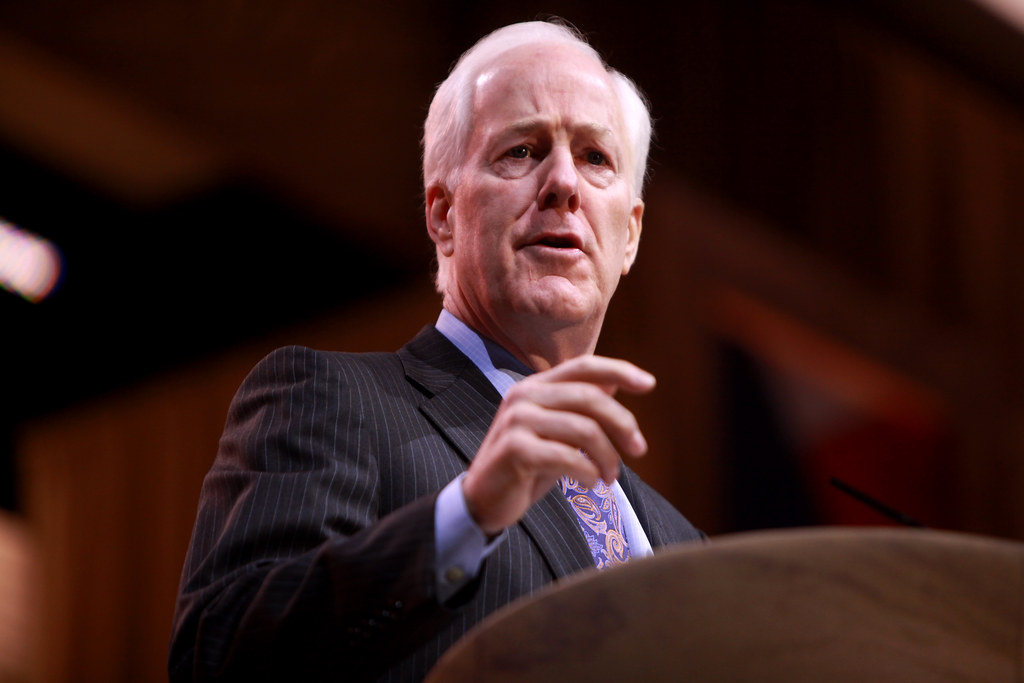
The dispute shows how quickly a nomination can become a loyalty test inside the president’s own party. Blanche’s path now depends on whether Republican senators treat Cornyn’s warning as an isolated grievance or a broader sign of unease.
Sen. John Cornyn says Donald Trump burned him, and the Republican senator says he is prepared to vote no on Todd Blanche, Trump’s attorney general nominee, as Blanche’s nomination is facing a Senate confirmation fight in the U.S. Senate. Reuters reported that the confirmation vote was postponed amid Republican backlash over a disputed weaponization fund.
The fight matters because Blanche is not a routine nominee. He is closely tied to Trump, and Cornyn’s resistance shows how a personal political rupture can complicate the White House’s plans even inside a Republican conference.
Cornyn’s warning changes the math
A single senator’s threat to vote no does not automatically sink a Cabinet-level nominee. It does, however, change the tempo of a confirmation fight, especially when the opposition is coming from inside the president’s party.
Cornyn’s stance is notable because he is not merely asking questions or saying he remains undecided. According to the reporting, he has signaled he is prepared to oppose Blanche. That is the kind of statement leaders cannot ignore, because confirmations are built on vote counts, not vibes.
The Senate can still confirm a nominee with defections if there is enough cross-party support or if the majority has room to lose votes. But attorney general nominations tend to draw intense scrutiny, and nominees closely associated with a president often struggle to win over the other party.
That is why a postponed vote matters. Delay can mean leadership wants more time to negotiate, calm objections, or avoid forcing members into a public split before the votes are locked down.
Why Blanche draws scrutiny
Todd Blanche’s nomination carries unusual political weight because of his relationship with Trump. Blanche served as one of Trump’s lawyers, a fact that shapes how senators, critics and supporters read the nomination.
For supporters, that connection can be framed as trust. Presidents often choose legal advisers they know well, especially for roles that require judgment, loyalty and command of the Justice Department’s sprawling bureaucracy.
For skeptics, the same connection raises a different question: whether the attorney general would act as the nation’s chief law enforcement officer or as the president’s personal defender. That tension has followed Justice Department nominations across administrations, but it is sharper when the nominee has represented the president directly.
Blanche’s defenders are likely to argue that legal experience and personal familiarity with the president do not disqualify anyone. His critics are likely to press for clear commitments on independence, prosecutorial restraint and the limits of White House influence.
The Trump-Cornyn rupture
The personal backstory gives this confirmation fight its edge. Reuters reported Trump suggested Cornyn may be upset because Trump did not endorse him, referring to Cornyn having lost his primary runoff.
That remark lands like a political shrug: maybe this is not about Blanche, Trump implied, but about Cornyn’s own grievance. Cornyn’s camp, by contrast, can point to the vote itself as an exercise of Senate judgment rather than payback.
Both things can be true in Washington. Personal loyalty and institutional oversight often travel together, especially in a Senate where endorsements, committee relationships and presidential favors all matter.
The phrase that Cornyn was burned by Trump is politically potent because it flips the usual Trump-era script. Instead of a senator fearing Trump’s retaliation for opposing him, this is a senator who has already absorbed the cost and may now feel freer to say no.
The fund dispute adds pressure
The immediate policy flashpoint is a disputed weaponization fund, according to Reuters. The term echoes a long-running Republican argument that federal law enforcement has been used for political ends.
That makes the dispute complicated. Some Republicans want aggressive accountability for what they describe as politicized investigations and prosecutions. Others may worry that creating or expanding a fund under that banner could make the Justice Department look more political, not less.
For Blanche, the fund issue could become a proxy battle over how he would run the department. Would he pursue claims of government abuse through normal channels, with career prosecutors and inspector general processes? Or would he be expected to drive a more political agenda from the top?
The available reporting does not fully settle what changes senators are demanding or what assurances the White House has offered. That uncertainty is part of the problem. Nominees often survive controversy by narrowing the dispute. Blanche’s confirmation fight appears to be widening.
Republicans face two tests
The first test is numerical. If Democrats oppose Blanche or mostly oppose him, Republicans have to supply nearly all of the votes. That gives individual GOP senators leverage, especially if leadership is trying to avoid a messy floor defeat.
The second test is political. Senate Republicans have spent years navigating Trump’s influence over primaries, endorsements and conservative media attention. Cornyn’s opposition raises the uncomfortable possibility that Trump’s dominance can also create resentment among members who believe he did not protect them when it mattered.
There is also a broader institutional issue. The Senate’s advice-and-consent role is supposed to be more than a formality, even when the president’s party controls the chamber. A no vote from a Republican senator is a reminder that nominees still have to satisfy senators who answer to their own states, ambitions and political wounds.
- For Trump: the fight tests whether personal loyalty still delivers votes when senators feel crossed.
- For Blanche: the challenge is proving he can lead the Justice Department independently despite his closeness to Trump.
- For Senate Republicans: the question is whether concerns over process and power are strong enough to delay or reshape the nomination.
What happens next
The postponed vote gives the White House and Senate leaders time, but it does not erase the problem. Cornyn could still be brought around, especially if he receives assurances on the fund or on how Blanche would handle politically sensitive cases.
Blanche’s supporters may also decide to force the issue if they believe Cornyn is isolated. That strategy carries risk. A failed or unexpectedly close confirmation vote would make the nomination look weaker and could invite other senators to air their own concerns.
The cleanest path for Blanche is to turn the fight back into a qualifications argument: legal experience, management ability and commitments to independence. The harder path is letting the nomination become a referendum on Trump’s treatment of Republican senators.
For now, Cornyn’s warning has done what one determined senator can do in a closely watched confirmation fight. It has slowed the process, exposed a rift and made Blanche’s path less predictable than the White House wanted.
Leave a Reply