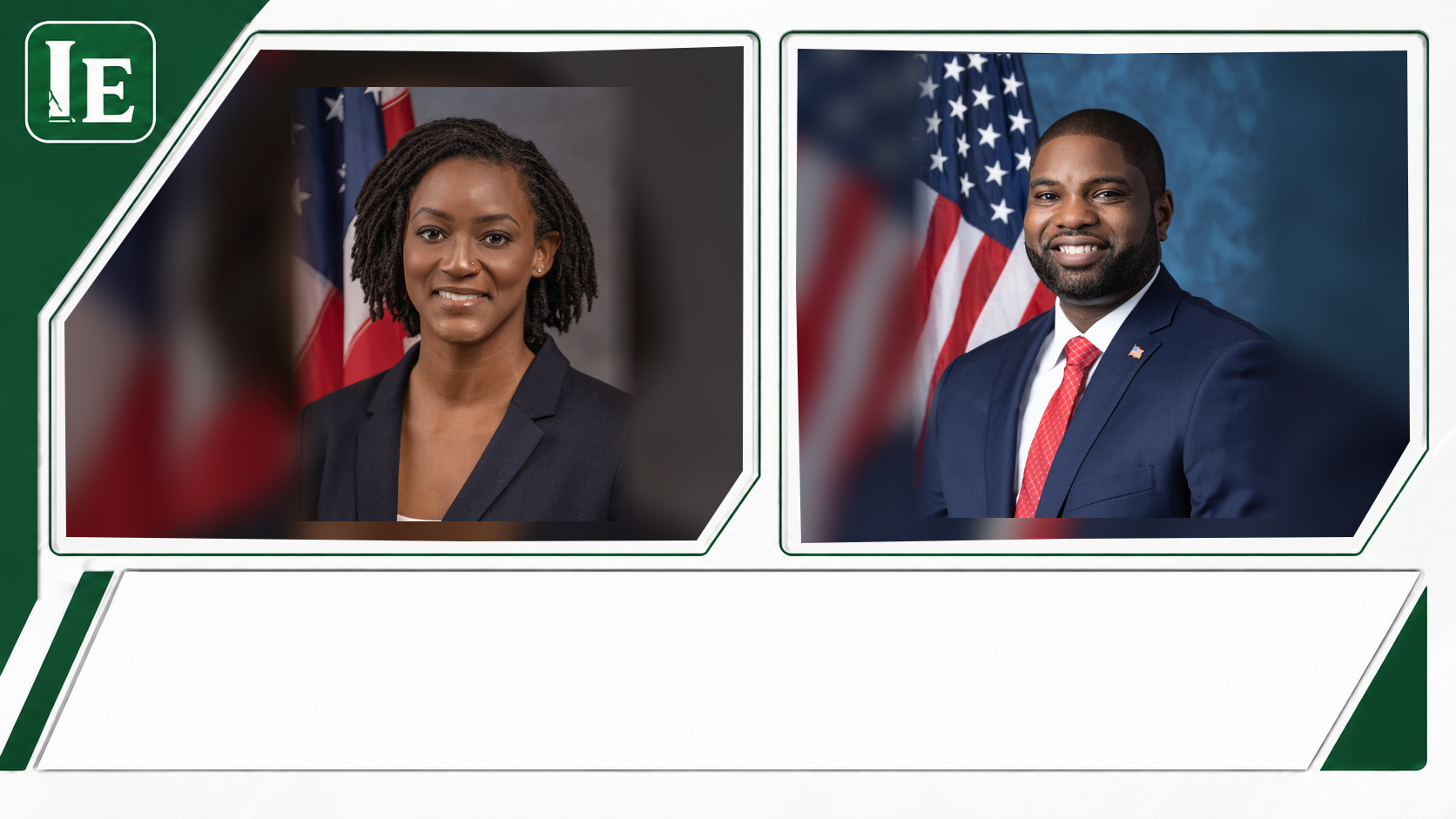
Florida’s primaries produced very different messages for each party: an insurgent win on the Democratic side and a more conventional path forward for a leading Republican. The results also showed how candidate controversies and ideological labels can matter differently from race to race.
Angie Nixon, a democratic socialist, won the Democratic Senate primary in Florida on Tuesday, August 18, 2026, while Byron Donalds won a comfortable primary victory that moved him closer to becoming Florida’s first Black Republican governor. The same Florida elections also saw insurgent far-right candidates defeated and a scandal fell Republican lawmaker Cory Mills.
Those are the key Florida takeaways from a night that delivered mixed signals rather than a single statewide verdict. Nixon’s victory jolted Democratic leaders, while Donalds’s advance underscored the strength of a major Republican contender in a state that has moved rightward in recent election cycles.
Nixon’s win upends Democratic plans
State Rep. Angie Nixon defeated Alex Vindman for the Democratic nomination for the U.S. Senate, according to PBS NewsHour. The outcome was an upset because Vindman entered with national name recognition, a far larger fundraising operation and support from Democrats who hoped he could make the race more competitive.
Vindman, a former National Security Council official whose testimony was central to President Donald Trump’s first impeachment, had raised about $16 million and spent more than $9 million by the end of July, PBS reported. Nixon had raised just under $1 million.
That financial gap makes the result more than a routine primary win. It suggests that a campaign’s local connection, message and ability to motivate committed voters can overcome the advantages associated with national profiles and large campaign accounts.
Nixon has embraced positions including universal health care and child care, and she has been a vocal critic of U.S. foreign policy and the war in Gaza. She recently joined the Democratic Socialists of America and had backing from progressive members of Congress including Reps. Rashida Tlaib and Ilhan Omar.
A progressive message found an opening
Supporters of Nixon see the result as evidence that an explicitly populist economic message can win in the South. Britney Whaley of the Working Families Party, which supported Nixon, said the campaign should be a warning to party leaders who assume that a bold progressive agenda cannot connect with Southern voters.
That argument will now face a difficult general-election test. Nixon is set to challenge Sen. Ashley Moody, the former Florida attorney general whom Gov. Ron DeSantis selected to fill the Senate seat after Marco Rubio became secretary of state, PBS reported.
Florida Democrats have struggled for years to build a durable statewide coalition. The state is large, diverse and expensive for candidates to campaign across, but its voting patterns have tilted increasingly Republican since 2016.
For Democrats, Nixon’s nomination opens a real debate. Her allies can argue that a clearer, more confrontational economic message is the best way to expand participation among liberal and younger voters. Skeptics may worry that the same ideological identity that energized primary voters could make it harder to win independents and moderate voters in November.
Donalds’s path looks more conventional
Byron Donalds’s comfortable primary victory offered a sharply different kind of result. The congressman moved closer to a potential historic milestone: becoming Florida’s first Black Republican governor.
While Nixon prevailed against a better-funded establishment-backed opponent, Donalds advanced as a well-known Republican figure with a prominent national profile. His result is a reminder that Republican primary voters can reward candidates who combine ideological alignment with recognizable party standing and an established political network.
The gubernatorial contest still has to be decided, and a primary win is not the same as a statewide victory. But Donalds’s performance puts him in a stronger position to define the next stage of the campaign and to argue that his coalition reaches beyond a narrow faction of the GOP.
His candidacy also carries significance beyond Florida. A successful run would be watched nationally as a test of how Republican voters respond to candidates who are closely identified with the party’s current conservative direction while also representing a historic first for the state.
Far-right challengers did not break through
The defeats of insurgent far-right candidates are an important counterweight to any claim that Tuesday was simply a win for ideological outsiders. The Wall Street Journal’s account of the Florida contests described far-right provocateurs as falling short in their races.
That does not mean hard-line politics has disappeared from Florida Republican campaigns. It does suggest that a confrontational political identity alone does not guarantee a path through a primary, particularly when voters are choosing among multiple Republicans with different levels of experience, support and campaign infrastructure.
Primary electorates are often portrayed as uniformly driven by the loudest ideological voices. Florida’s results complicate that assumption. In some races, voters elevated an insurgent; in others, they rejected insurgent candidates or chose a more established figure.
The details of each district and contest matter. Candidate quality, local issues, fundraising, endorsements and controversy can shape outcomes as much as broad national labels such as progressive, establishment or far-right.
Cory Mills’s loss carries its own lesson
Cory Mills’s defeat was linked to scandal, according to the Wall Street Journal’s summary of the election night. The result places candidate conduct at the center of the story, not just partisan ideology.
Without treating every contested race as a referendum on one issue, Mills’s loss shows the limits of assuming party loyalty will erase doubts about an individual candidate. Voters can make distinctions between support for a party’s agenda and comfort with a particular officeholder.
That is especially relevant in primaries, where campaigns often depend on highly attentive voters who may be more familiar with local allegations, media coverage and a candidate’s record than casual general-election voters are.
It remains unclear how much the scandal, compared with other campaign dynamics, determined the margin in Mills’s race. But the outcome gives rivals in future Florida contests a reminder that controversy can become politically consequential even in strongly partisan environments.
One election night, competing lessons
The temptation after a busy primary night is to declare a broad ideological winner. Florida’s results resist that shortcut. Nixon’s upset gives progressives a potent argument about enthusiasm and message discipline, while Donalds’s win reinforces the power of a strong Republican contender with mainstream party standing.
The far-right losses and Mills’s defeat add another layer: voters did not uniformly reward every candidate who ran as an outsider or relied on intense partisan branding. Florida’s primaries instead showed a series of choices shaped by the particular candidates on the ballot.
The next question is whether Nixon can translate a coalition built for a Democratic primary into one broad enough for a statewide general election, and whether Donalds can sustain his momentum through the governor’s race. Tuesday clarified who has advanced. It also sharpened the arguments both parties will carry into November.
Leave a Reply