
Crowley’s win gives Wisconsin Democrats a nominee for a pivotal general-election contest against Republican Tom Tiffany. It also shows how a close primary can turn a colorful campaign anecdote into a bigger story than the result itself.
Francesca Hong lost the Wisconsin Democratic primary for governor to David Crowley on Aug. 11, 2026, handing Crowley the party’s nomination in a battleground-state race. A viral headline also said Crowley re-entered the race after his wife saw a bird, but the supplied reporting verifies his return to the contest and does not independently substantiate that unusual explanation.
Crowley, Milwaukee County’s executive, narrowly defeated Hong, a democratic socialist and Madison-area state representative. The close outcome matters because Wisconsin Democrats must now unite behind Crowley before a general-election matchup with Republican U.S. Rep. Tom Tiffany.
Crowley emerged from a photo finish
The Associated Press declared Crowley the winner after Hong conceded, according to reporting published by PBS NewsHour. The race was close enough that Hong could have sought a recount because Crowley’s margin was under 1 percentage point.
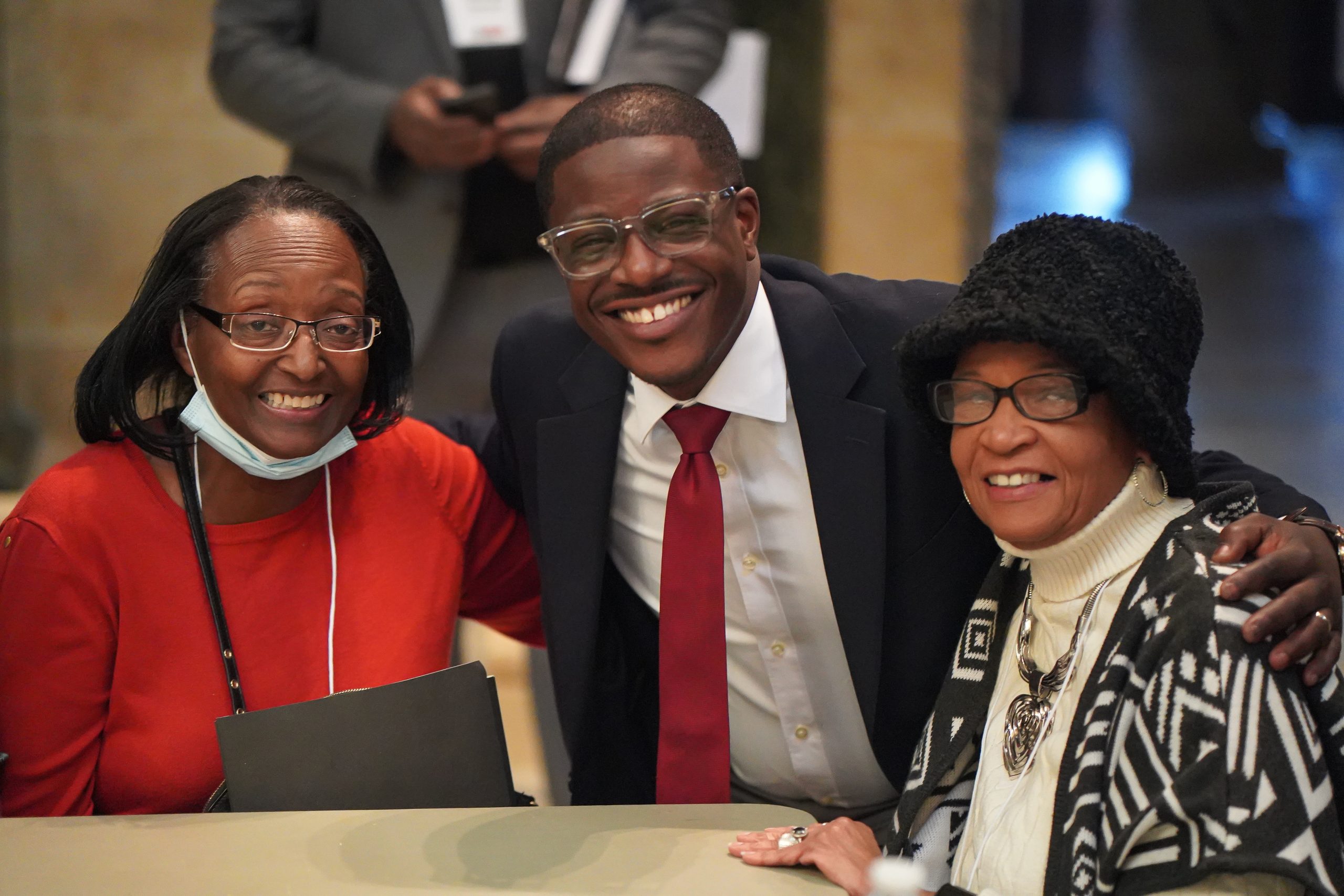
Wisconsin rules would have required Hong’s campaign to pay for a recount because the margin was wider than 0.25 percentage points, PBS reported. Her concession removed that possibility and cleared the way for Crowley to become the Democratic nominee.
Crowley’s campaign framed the result as the start of a broader coalition effort. Campaign manager Garren Randolph said Crowley was focused on winning support from Democrats, Republicans, independents and voters who want government to deliver results.
The bird story needs caution
The claim that Crowley returned because his wife saw a bird is the attention-grabbing detail in the trend headline supplied for this article. It should not be treated as an established explanation for a consequential political decision without a direct account from Crowley, his wife or the campaign.
The independently reported timeline is clearer. Crowley dropped out of the contest in early July, then returned 10 days later with outgoing Democratic Gov. Tony Evers’ endorsement, according to the PBS report.
That does not prove the bird anecdote is false; it means the available reporting does not verify it. Campaign folklore can be memorable, especially in a fast-moving primary, but readers should distinguish a colorful origin story from the documented facts of a candidate’s decision.
Hong tested progressive momentum
Hong’s campaign was closely watched as a measure of whether a democratic socialist could win statewide in Wisconsin, where elections are often decided by narrow margins and moderate or independent voters can be decisive.
The 37-year-old former line cook and single mother sought to channel frustration with the Democratic establishment, the cost of living, immigration enforcement and U.S. military aid to Israel. Her campaign came amid recent progressive victories elsewhere, including Democratic socialist-aligned candidates in New York City and Abdul El-Sayed’s U.S. Senate primary win in neighboring Michigan.
But Hong did not receive endorsements from some high-profile national progressive figures, including Sen. Bernie Sanders and Rep. Alexandria Ocasio-Cortez. That absence underscored a broader reality: the progressive movement is active but not politically uniform, and its candidates do not necessarily share the same coalitions or priorities.
Hong told supporters late on election night that the campaign had built something that would change politics, while her campaign manager, Becky Cooper, said the team was proud of a clean race that created meaningful change for the progressive movement.
Why Wisconsin Democrats chose Crowley
Crowley presented himself as the candidate best equipped to beat Tiffany in November. As Milwaukee County executive, he has a record in one of the state’s most consequential Democratic strongholds and could become Wisconsin’s first Black governor if elected.
For Democrats, the choice was partly about ideology and partly about electability. Some voters and party leaders worried that a candidate associated with democratic socialism could face a tougher path in a statewide contest, particularly against a Republican opponent likely to focus on public safety, taxes and cultural issues.
Hong’s narrow defeat complicates any claim that Wisconsin Democrats rejected progressivism outright. A candidate from the party’s left nearly won a major statewide primary, signaling that a large part of the Democratic electorate wants sharper answers on affordability, power in politics and dissatisfaction with the status quo.
The November race changes the stakes
Wisconsin is a state where national politics and state government often collide. Democrats are hoping to retain the governor’s office and flip both chambers of the Legislature, which would give the party full control of state government for the first time since 2010.
Republicans, meanwhile, will have a chance to argue that Democratic control in Madison has gone too far. Tiffany, a congressman from conservative northern Wisconsin who has received President Donald Trump’s endorsement, will bring a distinctly different political coalition to the governor’s race.
Crowley and Hong both said near the end of the primary that Democrats needed to come together to defeat Tiffany. Whether Hong’s progressive supporters enthusiastically consolidate behind Crowley may be one of the campaign’s central unanswered questions.
A result bigger than one anecdote
The verified takeaway is straightforward: Crowley won a narrow Democratic primary over Hong and will carry his party’s banner into a competitive Wisconsin governor’s race. His brief exit and return added another twist to an already turbulent contest that saw other prominent candidates leave the field amid scandals.
The bird claim may continue to travel because it is unusual and easily shared. But it is not the part of this story that determines Wisconsin’s political future. The more consequential test is whether Crowley can hold together a party split by strategy and ideology while persuading the swing voters who so often decide elections in the state.
Leave a Reply