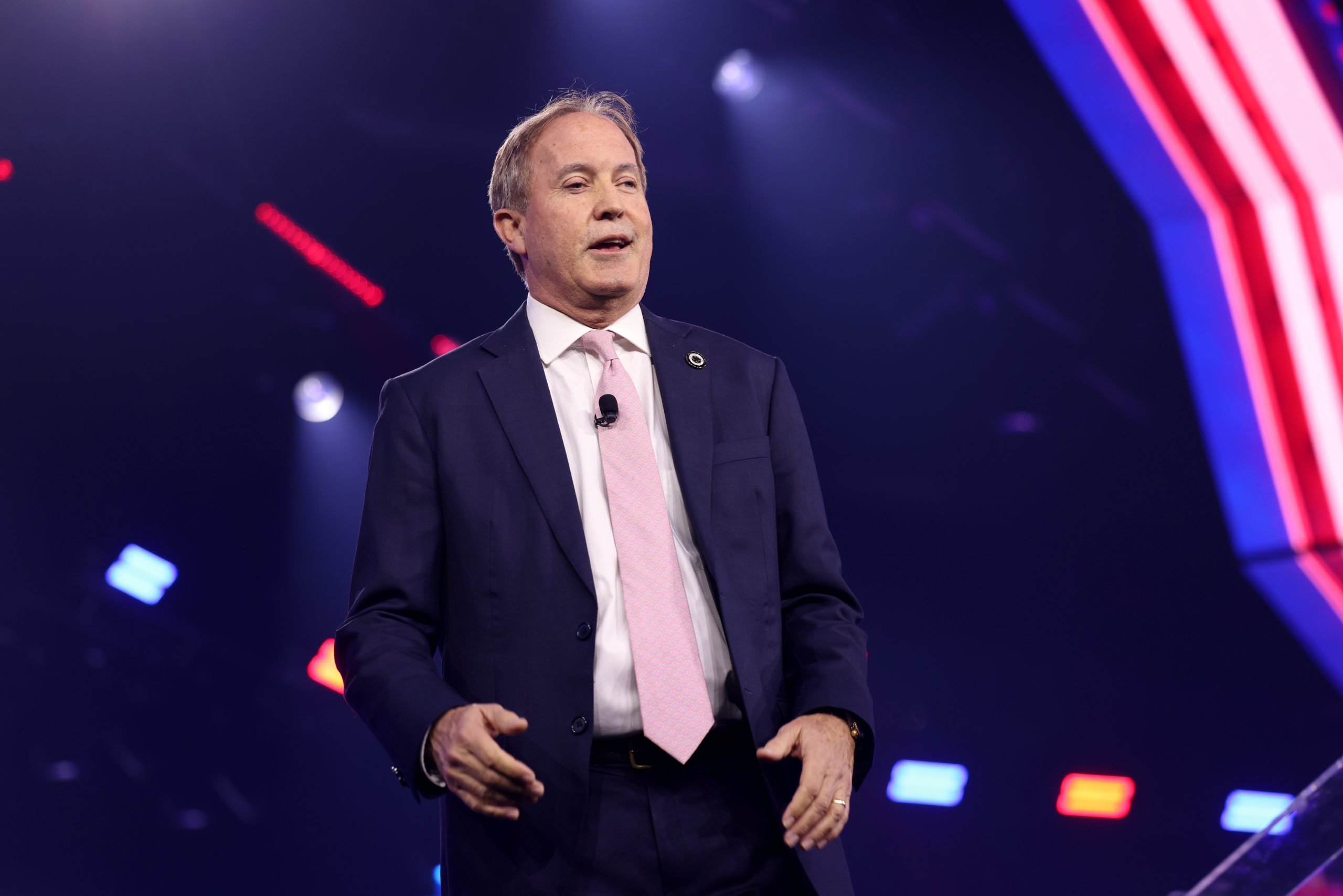
The incidents put a spotlight on how quickly a campaign stop can become a viral political confrontation. The available reporting draws an important line between documented disruptions and personal allegations that remain unproven.
Ken Paxton was heckled during campaign stops in Texas as he campaigns for a U.S. Senate seat, with disruptions in San Antonio and Allen drawing attention to allegations about his personal conduct. The incidents have been framed in coverage around cheating allegations, but available video and reporting confirm the disruptions more clearly than they establish every claim shouted at the events.
For Paxton, Texas’ attorney general and a Republican Senate candidate, the confrontations matter because campaign tours are intended to showcase support. Instead, public appearances have created moments opponents and protesters can use to force difficult questions into the open.
San Antonio stop turns tense
The San Antonio Current reported that Paxton encountered hecklers at a Saturday appearance at the Angry Elephant, a Republican-themed bar on San Antonio’s North Side. The event was part of his Protecting the Texas Promise tour.
According to the outlet, Paxton left the stage shortly after reporters asked difficult questions, including one concerning his real-estate holdings. It was his first campaign stop in San Antonio since late May, the San Antonio Current reported.
Coverage described Paxton as being heckled over cheating allegations. But an allegation voiced at a campaign event is not a finding of fact, and the reporting available does not document a response from Paxton to the specific allegation referenced in that coverage.
Allen video shows an removal
A separate confrontation occurred at a Paxton event in Allen, Texas, on Aug. 4. USA Today reported that a woman carrying a sign for Paxton’s Democratic opponent, Texas state Rep. James Talarico, was escorted out while people in the crowd booed.
A New York Times journalist posted video from the Allen event, USA Today reported. The woman appeared to shout in Paxton’s direction as she was removed, but USA Today said the video did not make clear what she said.
That distinction is central to understanding the episode. The footage supports that an interruption occurred and that a Talarico supporter was removed; it does not independently verify the exact language used or connect every remark at the event to the cheating allegations mentioned elsewhere.
What the reporting confirms
The available accounts point to two separate moments on the campaign trail: heckling at the San Antonio stop and the removal of a Talarico supporter in Allen. Both show a more confrontational setting than campaigns generally seek at public events.
They do not provide a complete transcript of the San Antonio exchange, a detailed account of the allegation raised there, or a documented answer from Paxton addressing that allegation. The available material also does not establish whether the events were coordinated or whether they will affect the race.
That narrower conclusion may be less dramatic than a clipped social-media video, but it is the supported one. A short recording can capture a sharp moment without supplying the context needed to evaluate every accusation, response or audience reaction.
A tour built for visibility
Paxton is running against Talarico in the November general election, according to USA Today. Both candidates have scheduled tours across Texas, placing them before voters in major cities and smaller communities during a concentrated period of travel.
Paxton’s Protecting the Texas Promise tour included planned stops in Houston, McAllen and San Antonio, USA Today reported. Talarico announced a New American Dream Tour that included Arlington, Pasadena, Port Arthur, Abilene, Killeen, Austin, Beeville, the Rio Grande Valley, Dallas-Fort Worth and Kerrville.
Campaign tours are designed to deliver favorable images: packed rooms, familiar messages and candidates connecting with supporters. A disruption can change that calculation quickly, producing video that circulates beyond the event and requiring a campaign to choose whether to respond, dismiss the incident or characterize it as political theater.
Why personal claims travel fast
Allegations involving private conduct can carry unusual political force because they speak to character and trust rather than a conventional policy disagreement. They may shape perceptions even when details are disputed, incomplete or only briefly heard at a public event.
Still, repetition does not turn an allegation into proof. Nor does the lack of an immediate answer resolve the matter. The reporting leaves open larger questions about what evidence is publicly available and whether Paxton will address the specific claims directly.
Paxton’s supporters may view heckling as an effort to disrupt his message rather than meaningful accountability. Critics may see the incidents as evidence that questions surrounding him cannot be kept outside a controlled campaign appearance. Those views can coexist when the public record does not capture every exchange in full.
The campaign test ahead
Paxton is already a prominent Texas political figure because of his role as attorney general and years of political and legal controversy. That familiarity can benefit a candidate with an established base, while also giving opponents more issues to raise in public.
For now, the verified takeaway is limited but significant: Paxton’s Senate campaign events in Texas have drawn disruptions, including reported heckling tied in coverage to cheating allegations and the removal of a Talarico supporter at a separate Allen stop.
Whether those scenes become a recurring feature of the Senate contest remains unclear. Their lasting impact may depend on whether future events produce similar confrontations or whether voters refocus on policy, endorsements, fundraising and debates.
Leave a Reply