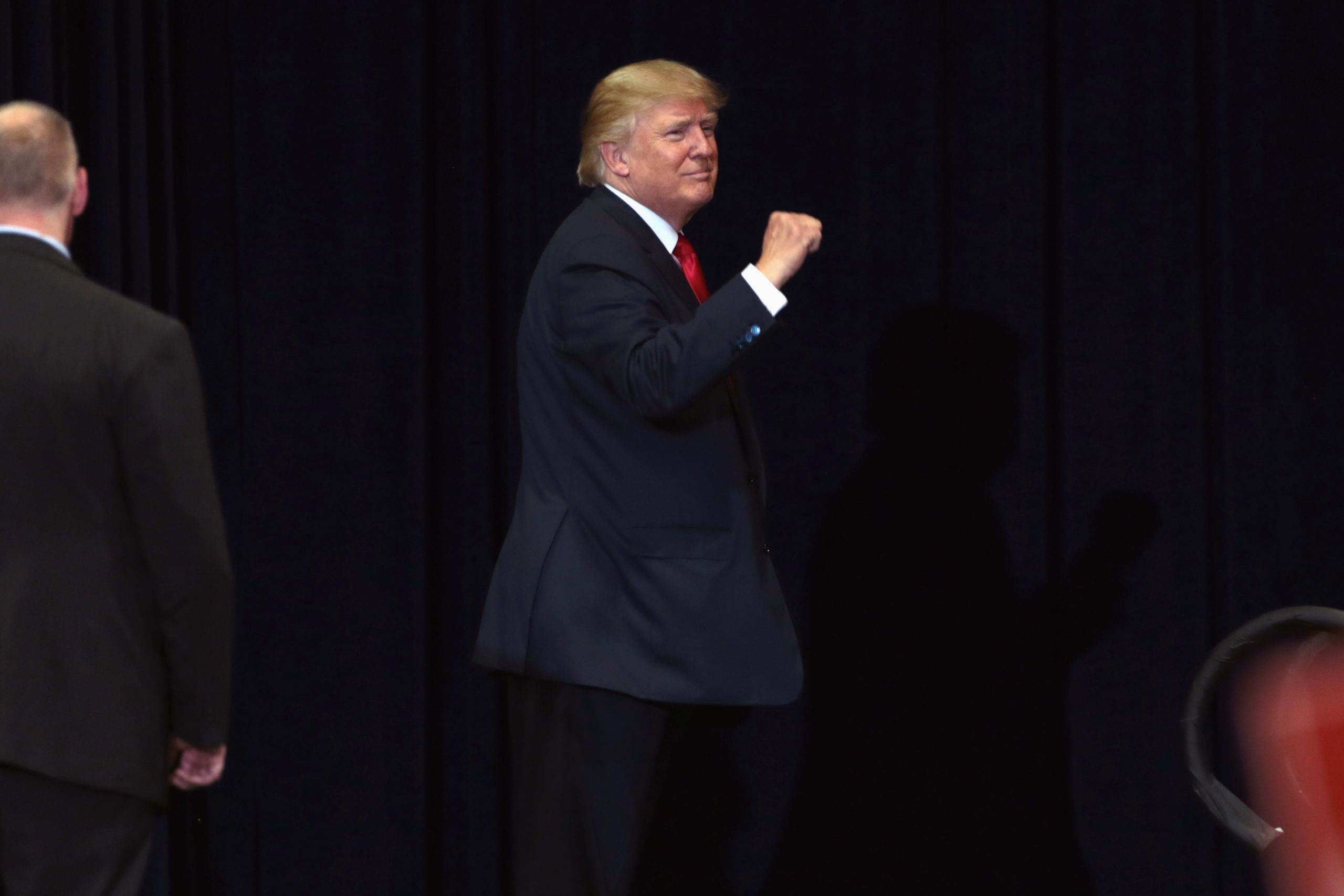
The clash is less about one phrase than about election power: Washington’s reach, state authority and the local offices that actually run voting.
Trump said Republicans should take over voting in the U.S., using the phrase “take over the voting” and calling for Republicans to “nationalise” elections, according to the BBC account cited in the original reporting. A Republican governor warned against the move, turning Trump’s push into a larger GOP dispute over who controls U.S. elections: presidents and party leaders, or state and local officials.
The scrutiny matters now because the remarks landed alongside federal attention to 2020 voting records in Georgia and a Trump administration demand for 2024 ballots in Michigan, bringing election administration back into the political center.
A GOP warning changes the frame
Trump’s comments might have been dismissed by supporters as campaign rhetoric, or by critics as another escalation in his long-running attacks on election systems. The Republican governor’s warning makes the dispute harder to file away as a standard partisan fight.
The warning, as described in the source reporting, is that Trump is trying to take over elections. That is a significant charge because it comes from inside the party, not only from Democrats or voting-rights advocates who have long criticized Trump’s claims about fraud.
The conflict now turns on a basic question: whether Trump was talking about stricter election rules, a political strategy for Republican-controlled places, or a more direct attempt to place election machinery under partisan or federal control.
Trump did not identify the “at least 15 places” where he said Republicans should “take over” voting, according to the BBC. That omission leaves room for competing interpretations — and for concern from officials who run elections under state law.
Why “nationalise” hit a nerve
American elections are not normally administered by the president. States set many rules, and local officials handle much of the day-to-day machinery: registration, polling places, ballot processing, counting and certification.
That system is uneven by design. It can produce different deadlines, different procedures and different courtroom fights from one state to the next. But decentralization also makes it harder for one person in Washington to dictate how ballots are collected and counted across the country.
That is why Trump’s use of “nationalise” is so politically loaded. Supporters may hear it as a call for tougher national standards. Opponents hear a move toward partisan control of voting, especially because Trump continues to repeat false claims that he won the 2020 election.
The distinction matters. Congress can pass election laws within constitutional limits, courts can decide legal disputes, and states can change their own rules. A president urging one party to take over voting in selected places raises a different and more volatile question.
Georgia and Michigan deepen scrutiny
The comments did not arrive in a vacuum. In Georgia, Trump’s remarks followed an FBI raid at the Fulton County Election Hub, where officials said the government’s warrant sought records related to the 2020 election, according to the BBC.
The FBI described the action as court-authorized law enforcement activity. Still, the location carries heavy political weight. Trump narrowly lost Georgia in 2020, and Fulton County became a recurring target in his false fraud claims.
Fulton County Commissioner Mo Ivory called the raid “an assault on your vote,” the BBC reported. Director of National Intelligence Tulsi Gabbard confirmed she was present for the raid and said Trump had personally asked her to be there, according to the BBC.
Gabbard also said she facilitated a brief call between Trump and FBI agents so he could thank them, adding that he did not ask questions or issue directives. In Michigan, Reuters reported that officials refused a Trump administration demand for 2024 election ballots and accused the administration of trying to cast doubt on the integrity of U.S. elections.
The White House defense
The White House has rejected the idea that Trump is attacking constitutional election rules. Press secretary Karoline Leavitt said Trump “believes in the United States Constitution” but also believes there has been “a lot of fraud and irregularities” in American elections, according to the BBC.
Leavitt connected Trump’s remarks to the Safeguard American Voter Eligibility Act, known as the SAVE Act. The proposal would require people to show documentary proof of citizenship when registering to vote.
Supporters of that approach argue that tighter registration requirements would protect elections and prevent non-citizens from voting illegally. Critics respond that non-citizens are already barred from voting in federal elections and most statewide contests, and that proof-of-citizenship rules could block eligible citizens who do not have easy access to passports, birth certificates or updated records.
That policy fight is related to election administration, but it is not identical to Trump’s “take over” language. One debate is about changing registration rules. The other is about who controls the offices and systems that administer voting.
Republicans face competing pressures
Republican leaders have long supported voter ID laws, tighter registration procedures and broader claims about election security. Many GOP voters also remain skeptical of election administration after years of Trump’s claims about 2020, despite the lack of evidence for widespread fraud that would have changed the outcome.
But governors and state election officials have reasons to be wary of a federal takeover, even when they share Trump’s party. State control over elections is a core part of gubernatorial authority. If Washington can dictate control in one place, that precedent could reach Republican-led states as well as Democratic-led ones.
There is also the practical strain on election offices. Local administrators already face threats, staffing shortages, litigation and public distrust. A national partisan push to “take over” voting could make it harder to recruit poll workers, reassure voters and certify results without new turmoil.
That is the real split exposed by the governor’s warning. It is not simply Democrats versus Republicans. It is also a clash between politicians who want federal power applied to elections and officials who see local administration as essential to public trust.
What Trump has not explained
The biggest unknown is what Trump means in practice. He has not named the 15 places. He has not described a legal mechanism for nationalizing election administration. He has not explained how such a move would fit with the state-based system Republicans have often defended.
It also remains unclear how far federal agencies can go in seeking old election records without worsening public distrust. A court-authorized investigation may be lawful and still politically explosive, particularly when it involves a president with a direct personal history in the election being examined.
For voters, the fight is shifting. The loudest argument is no longer only about whether fraud occurred. It is about who gets to define the rules, inspect records, administer ballots and decide how much control Washington should have over systems traditionally run by states and counties.
If Trump’s remarks remain rhetoric, the dispute may become another campaign flashpoint. If they become policy or pressure on state officials, the confrontation over presidential power and state-run elections could become one of the most consequential fights over American democracy.
Leave a Reply