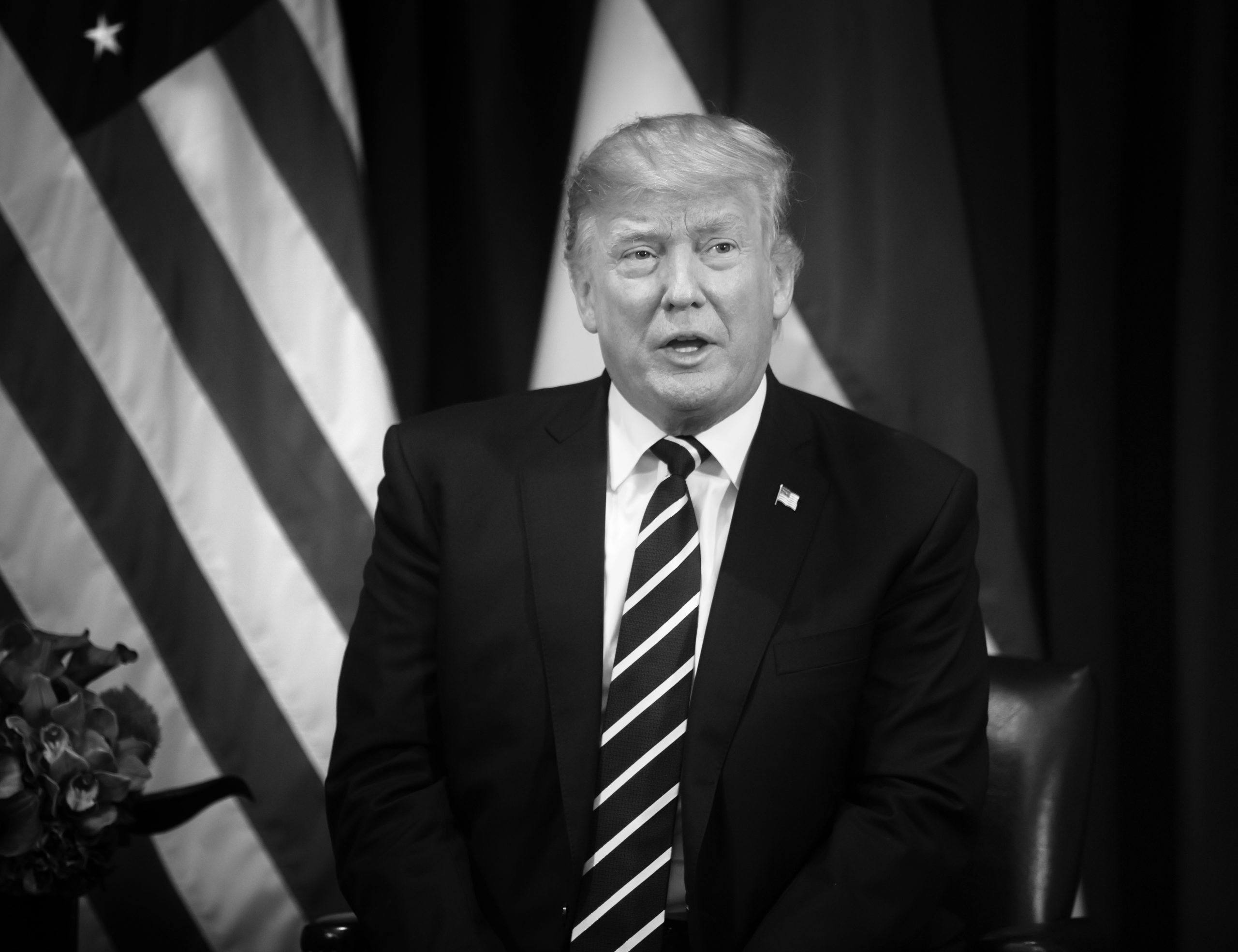
The viral reaction reflects a bigger tension around presidential health disclosures: legitimate public interest colliding with the limits of image-based speculation.
Donald Trump’s neck was shown in close-up at the White House Correspondents’ Dinner in Washington, D.C., and the WHCD neck close-up images sparked health speculation online. This article explains what the photo showed, why online commentators focused on it, and what remains unproven about any medical meaning.
The dinner, hosted by the White House Correspondents’ Association, became the setting for a public debate because scrutiny of Trump’s health, age and transparency is already intense. The available evidence confirms a visible close-up and a viral reaction, not a diagnosis.
A close-up overtook the event
The attention did not center on a policy statement, a joke or a formal announcement from the White House Correspondents’ Dinner. It centered on a tightly framed image of Trump’s neck and the way it appeared once it was zoomed, shared and discussed online.
Commentators focused on the look of his skin, including perceived redness and texture. Some treated the photo as a legitimate reason to ask questions about the president’s health. Others mocked the image or dismissed the reaction as partisan theater.
A third response was more cautious: a still image can be misleading. Lighting, makeup, camera angle, age, shaving, image compression and the quality of a shared screenshot can all change how skin appears to viewers who were not in the room.
That is why the photo became more than a photo. It became a test of how quickly a visible detail can turn into a political health narrative before any official medical explanation is attached to it.
The prior White House explanation
The WHCD reaction landed in a context that already included public attention on Trump’s neck. NBC News reported that on March 2, 2026, White House physician Dr. Sean Barbabella addressed visible redness on the right side of Trump’s neck.
Barbabella said Trump was using a “very common cream” as a “preventative skin treatment” prescribed by the White House doctor. He said the treatment would be used for one week and that the redness was expected to last for a few weeks.
That explanation is important, but so are its limits. The statement did not identify the cream or describe the specific reason for the preventive treatment. It also did not say that every later photo of Trump’s neck showed the same issue.
No public medical statement in the available reporting tied the White House Correspondents’ Dinner close-up to a specific condition. The White House had addressed a prior visible skin issue; online claims about the dinner image went further than that record supports.
What a photo cannot prove
Public figures, especially presidents, are photographed constantly. That creates an unusual amount of visual evidence, but not the kind of evidence a doctor would need to make a diagnosis.
A close-up can reveal something real. It can also exaggerate ordinary details. Skin can look different because of irritation, treatment, sun exposure, makeup, shaving, lighting or the way an image is processed and reposted.
That distinction matters because the online reaction moved quickly from observation to speculation. Saying that viewers noticed redness or texture is supported by the reaction. Saying the image proves a medical condition is not supported by the public evidence described in the available reporting.
The careful reading is narrower: the photo drew attention to Trump’s appearance and intensified questions already surrounding his health. It did not, on its own, establish what caused what viewers saw.
Age makes the scrutiny sharper
Trump is now 80, and that fact gives health questions added political force. A president’s physical and mental fitness is a legitimate public concern for voters, lawmakers and foreign governments because the office carries unusual demands and risks.
At the same time, legitimate public interest does not make social media a medical record. Supporters may reflexively reject every visible concern as hysteria. Critics may treat every mark, bruise or awkward image as proof of decline. Neither reaction gives the public a reliable answer.
Presidents do not have the same privacy expectations as private citizens when it comes to fitness for office. The public has a reasonable interest in major illnesses, medications, procedures or impairments that could affect decision-making or stamina.
But a zoomed-in image cannot show medical history, lab results, a dermatologist’s evaluation or whether a visible mark is temporary. Even when a White House physician comments, the public generally receives a summary rather than a full clinical picture.
Earlier marks shaped the reaction
The WHCD image was not the first time visible marks on Trump prompted public questions. NBC News noted that red, irritated skin on his neck was visible at a Medal of Honor ceremony in the East Room of the White House and in photographs from his State of the Union address.
Trump has also faced attention over bruises on his hands. He previously told The Wall Street Journal that bruising was connected to taking a larger dose of aspirin than doctors had recommended. He said aspirin thins the blood and that he had taken the larger dose for years.
The White House separately said in February 2025 that one visible hand bruise was the result of Trump shaking hands repeatedly. Those explanations did not end speculation, but they show how small visible changes can become part of a broader story about age and disclosure.
Trump had an annual physical exam in April, according to prior White House disclosures cited by NBC News. The White House also said he underwent another routine yearly checkup in October. Trump later told reporters he had imaging that was “perfect,” and Barbabella later described imaging of Trump’s cardiovascular system and abdomen as “perfectly normal,” according to NBC News.
The unanswered question remains
The central unresolved issue is whether the WHCD close-up showed the same redness previously described by Trump’s doctor, a different temporary irritation, an artifact of photography or something else. No public evidence in the available reporting confirms a medical condition from the dinner images alone.
It is also unclear whether the White House will address this specific wave of attention. Officials may decide the earlier explanation about preventative skin treatment is sufficient. Critics are likely to argue that the health disclosures of an 80-year-old president should be more detailed.
The episode shows how modern political health stories can start without a medical bulletin. A camera angle becomes a screenshot, the screenshot becomes a claim, and the claim becomes a debate over trust.
The safest conclusion is not that the WHCD image proves a serious problem. It is that one close-up of Donald Trump’s neck exposed the unstable line between legitimate scrutiny of presidential health and internet diagnosis built on limited visual evidence.
Leave a Reply