Michigan Democrat Abdul El-Sayed has a clear image problem, according to Fox News polling. But CNN’s comparison of eight pivotal Senate contests found Republican nominees facing broader favorability deficits.
Candidate favorability is not a vote forecast. Party loyalty, state political lean, turnout, campaign spending and national events can all shape an election result. Still, polling on how voters view Senate candidates offers one measure of the challenges facing each party.
According to CNN’s review of available polling averages, the Republican nominee held a net-positive image rating in only one of the eight races considered most likely to determine Senate control: Alaska. Every Democratic candidate in that group except El-Sayed was in net-positive territory.
Seven contests favor Democrats on candidate image
CNN’s analysis found the Democratic nominee was viewed more favorably than the Republican in seven of the eight pivotal contests, with gaps ranging from 8 points to 24 points.
That comparison does not establish that Democrats will win those races. An unfavorable view does not stop a voter from supporting a candidate because of party identification or positions on the economy, abortion, immigration, taxes or the president.
But the averages complicate an argument that Democrats alone have a candidate-quality problem. El-Sayed stands out as a Democratic weakness, while several Republican nominees begin the general-election phase with comparable or worse image ratings.
Maine and Texas illustrate the deficits
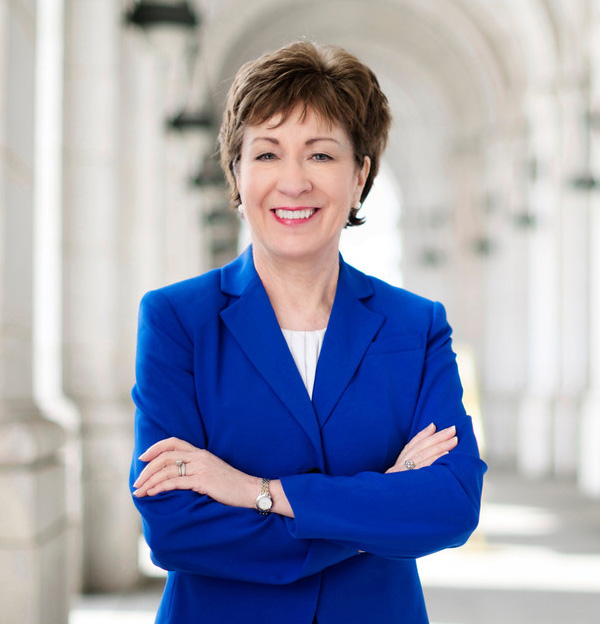
In polling averages cited by CNN, Republican Sen. Susan Collins of Maine and Texas Attorney General Ken Paxton each stood 12 points underwater, meaning their unfavorable ratings exceeded their favorable ratings by 12 points.
Former Maine state Senate President Troy Jackson was at plus-3, a 15-point advantage over Collins on that measure. Collins has repeatedly won in a state that leans Democratic in presidential elections, making her ability to sustain a personal coalition especially consequential.
A Fox News poll found that 55% of registered voters in Maine were extremely or very concerned that Collins voted with President Donald Trump too often. That was close to the 54% in a Michigan Fox News poll who said they were extremely or very concerned that El-Sayed’s positions were too extreme.
In Texas, Democrat James Talarico was 5 points above water in the cited averages while Paxton was 12 points underwater, a 17-point difference. Texas remains difficult terrain for Democrats, but the contrast shows how candidate perceptions can affect a race in a state with an unfavorable partisan backdrop.
Other races show sizable gaps
In Georgia, Sen. Jon Ossoff had one of the widest image advantages in CNN’s analysis over Republican Rep. Mike Collins. Iowa state Sen. Josh Turek likewise held a substantial edge over Republican Rep. Ashley Hinson.
Former North Carolina Gov. Roy Cooper stood 14 points above water in the polling averages, compared with minus-1 for former Republican National Committee Chair Michael Whatley. In Ohio, former Democratic Sen. Sherrod Brown was at plus-4 while appointed Republican Sen. Jon Husted was at minus-5.
Alaska was the only race in which the Republican candidate had a positive net image rating. Even there, Sen. Dan Sullivan was at plus-1 while Democrat Mary Peltola was at plus-9.
One possible reason for some of the Democratic advantages is candidate familiarity. Cooper, Brown and Ossoff are established statewide figures. Lesser-known candidates such as Turek and Talarico may not yet have been strongly defined by voters, although low name recognition can become a disadvantage as opposition advertising increases.
Michigan remains the key exception
El-Sayed is the exception in the eight-race comparison. According to CNN’s review of available polling averages, Michigan was the only crucial race in which Democrats had the less popular candidate.
A Fox News poll put El-Sayed 13 points underwater among registered voters: 42% viewed him favorably and 55% viewed him unfavorably. The survey found him roughly even with Republican former Rep. Mike Rogers in a head-to-head matchup, though El-Sayed was narrowly behind.
Rogers also had a negative net rating in that poll, at minus-6. Michigan is therefore not a simple case of a well-liked Republican running against an unpopular Democrat, though El-Sayed’s rating gives Democrats a distinct reason for concern in a race important to their hopes of winning a Senate majority.
Early impressions can still change
Republicans could argue that frustration with Trump is influencing perceptions of GOP candidates, particularly candidates voters see as closely aligned with him. A shift in the national political environment could alter those impressions.
Democrats also face a limitation noted in CNN’s analysis: the party itself is not especially popular. A stronger personal image may allow a Democratic nominee to create some distance from the national party brand, but it is unclear whether that separation can endure in a highly nationalized midterm campaign.
Campaigns will spend heavily to define their opponents, and voters who have paid limited attention to lesser-known candidates will receive more information before Election Day. The available polling does not settle the Senate fight. It shows that El-Sayed is a meaningful Democratic vulnerability in Michigan while Republicans face a wider burden of voter skepticism toward their nominees across other pivotal contests.
Leave a Reply