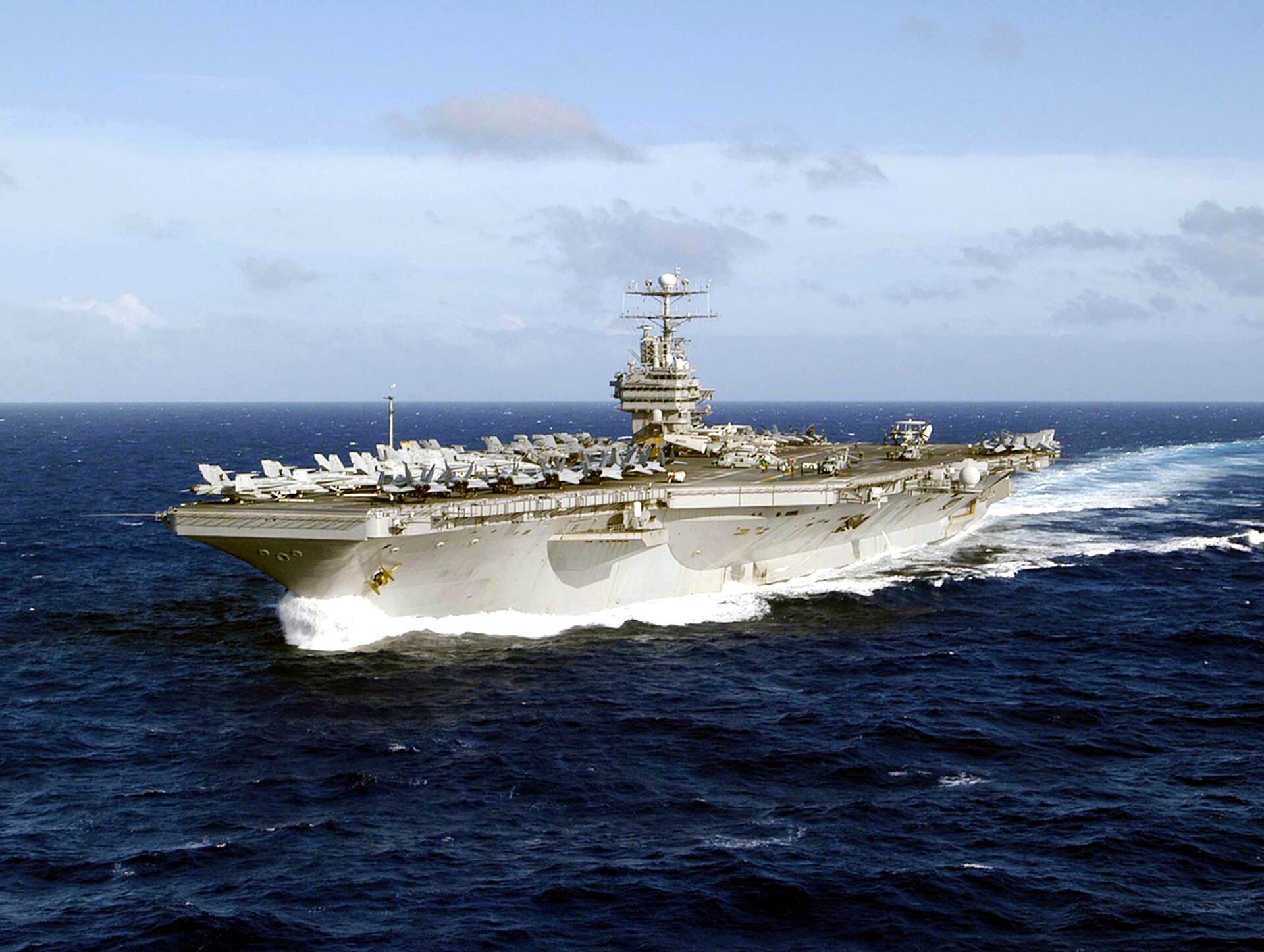
The dispute centers on the strain of an unusually long deployment for roughly 5,000 sailors and Marines. It also highlights the gap between families’ accounts and the Navy’s assessment of life aboard the carrier.
Officials are demanding an investigation involving the USS Abraham Lincoln after families raised alarm about conditions affecting sailors aboard the aircraft carrier. Senate Democrats want answers from Navy leaders about reports of food shortages, plumbing problems and mental-health concerns during a deployment that has lasted more than 250 days, including more than 200 consecutive days at sea.
The USS Abraham Lincoln dispute matters because the accounts from families and lawmakers sharply contrast with the Navy’s assertion that the ship has clean water, working air conditioning and healthy meal options. The central question is whether a lengthy deployment and disrupted supply routes are creating risks the service has not fully addressed in public.
Lawmakers press the Navy for answers
Sen. Richard Blumenthal of Connecticut wrote to Defense Secretary Pete Hegseth and acting Navy Secretary Hung Cao seeking an accounting of conditions aboard the carrier, according to CBS News. He cited reports of basic-supply shortages, possible water contamination, plumbing troubles, deck-safety concerns and worsening mental health.

Blumenthal’s letter focused on the duration of the ship’s deployment. His office said the carrier had been deployed for more than 250 days and had not come ashore for more than 200 days, describing that stretch as a record for consecutive days at sea.
Sen. Ruben Gallego of Arizona called for the Navy to permit a bipartisan congressional delegation to visit the Lincoln for an oversight investigation. That request is broader than a routine exchange of letters: an in-person congressional visit could allow lawmakers to question leadership and review conditions directly.
Neither senator’s demand by itself establishes that a formal congressional inquiry has begun. It does, however, put the Navy under pressure to explain how it is monitoring living conditions, morale and access to support services while the carrier remains deployed.
Families describe a different reality
Family members reportedly confronted Navy leadership in two recent meetings over difficult conditions aboard the ship, including food shortages, and asked when their loved ones would return home. The Lincoln carries about 5,000 sailors and Marines, making even day-to-day supply problems a major operational and family concern.
Some families also reported severe mental-health struggles and attempted suicides among personnel. Those accounts are serious allegations, but they are not the same as independently verified findings from an investigation.
Military Times reported that several sailors had tried to go overboard or had been stopped from doing so in recent months, an account cited by Gallego in his call for oversight. The Navy told CBS News that, based on the information available to the command, it had not identified an increase in reported suicidal ideation or suicide attempts aboard the ship.
That disagreement is at the heart of the controversy. Families are describing warning signs they believe demand urgent scrutiny, while Navy officials say their available reporting does not show a broader rise in such incidents.
The Navy points to disrupted supply lines
A Navy official said the Lincoln has been operating in a “highly contested environment” in which traditional Middle East supply hubs were disrupted by combat actions. The official said commanders prioritized supplies in this order: food, hygiene items and then mail.
The Navy’s explanation acknowledges that the deployment environment has complicated resupply, even as it rejects the suggestion that sailors lack essentials. The service said current reports from the ship showed continuous access to clean water, functional air conditioning and healthy meal options.
Those statements leave important practical questions unresolved. A ship can maintain official access to meals and water while sailors and families still experience shortages, quality concerns or uneven availability in particular spaces or at particular points in an extended deployment.
The Navy also said the Lincoln has a support network that includes deployment-resilience counselors, chaplains, Fleet and Family Support Center services, Military OneSource and medical professionals. Lawmakers are effectively asking whether those resources are sufficient for the demands of the deployment, not merely whether they exist.
An overboard case is being reviewed
Separately, the Navy confirmed that a sailor assigned to the air wing attached to the USS Abraham Lincoln went overboard earlier in August. The sailor was recovered by an air-wing search and helicopter, received treatment from the ship’s medical department and was transferred off the ship for additional care.
The sailor’s family was notified, the Navy said. The circumstances of that incident are under investigation.
That is a distinct investigation from the wider oversight push sought by Gallego and supported by concerns raised by other lawmakers and families. Still, the incident has intensified attention on the carrier at a time when questions about exhaustion, morale and living conditions were already emerging.
Officials have not publicly tied the overboard case to the reports about broader conditions on the ship. It would be premature to draw that connection without the Navy’s findings.
Why deployment conditions now matter
Aircraft carriers are built to sustain long operations, but extended time at sea tests more than equipment and logistics. It can affect sleep, maintenance workloads, access to fresh supplies, communication with families and the ability of sailors to recover from routine stress.
The Lincoln case is also a test of transparency. Congress does not need to accept every family report as established fact to seek a clearer account of how the Navy investigates complaints, communicates with relatives and safeguards personnel during demanding operations.
For the Navy, the immediate challenge is to provide evidence that its assurances match sailors’ experience. For lawmakers, the task is to distinguish between problems caused by an exceptionally difficult operational environment and problems that may reflect preventable failures in command, resupply or support.
What happens next depends on whether the Pentagon responds publicly to Blumenthal’s letter, whether the Navy allows congressional visitors aboard the carrier, and what the separate investigation into the overboard incident finds. Until then, the USS Abraham Lincoln remains the focus of competing accounts: families seeking fuller scrutiny and a Navy insisting it is meeting the crew’s essential needs.
Leave a Reply