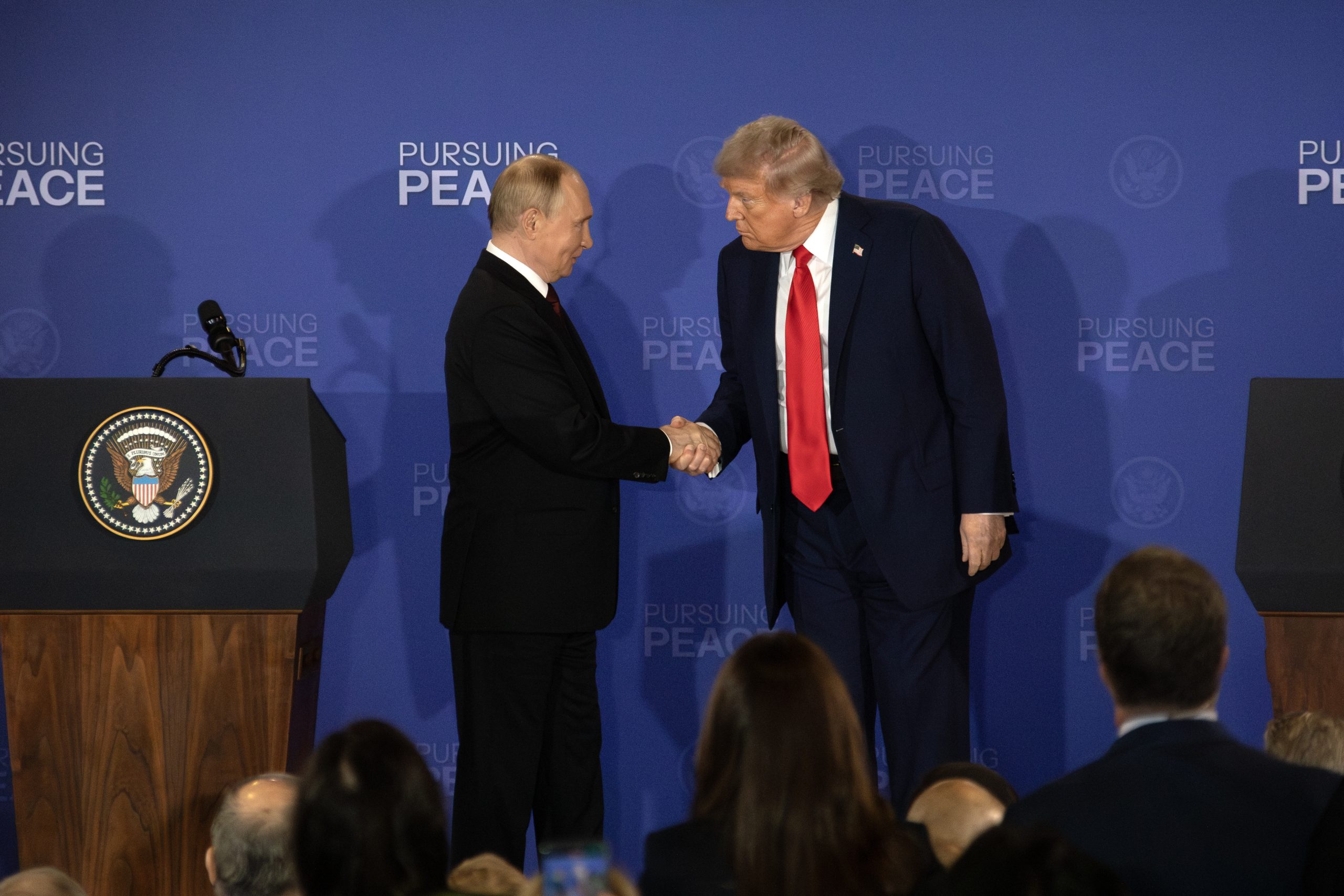
The shift from campaign certainty to governing caveats shows why the Ukraine war has resisted a one-day solution. It also raises questions about how voters should judge bold foreign-policy promises.
Donald Trump said he was being sarcastic about his promise to end the Russia-Ukraine war in 24 hours, telling Full Measure in a clip dated Friday, March 14, 2025, that he had been “a little bit sarcastic.” Russia and Ukraine were still fighting, the war was still unresolved after the deadline passed, and his earlier campaign pledge to settle the war quickly had collided with negotiations that have not produced a deal.
The reversal matters because Trump’s 24-hour Ukraine war promise was not a stray joke buried in one speech. It became part of his argument that personal leverage, pressure on both sides and dealmaking instincts could succeed where years of diplomacy had not.
A boast meets a battlefield
Trump’s original claim was unusually easy to test. According to Associated Press reporting cited in the Idaho Public Press account, he said in March 2023 that he could solve the war between Russia and Ukraine in 24 hours if he returned to the White House.
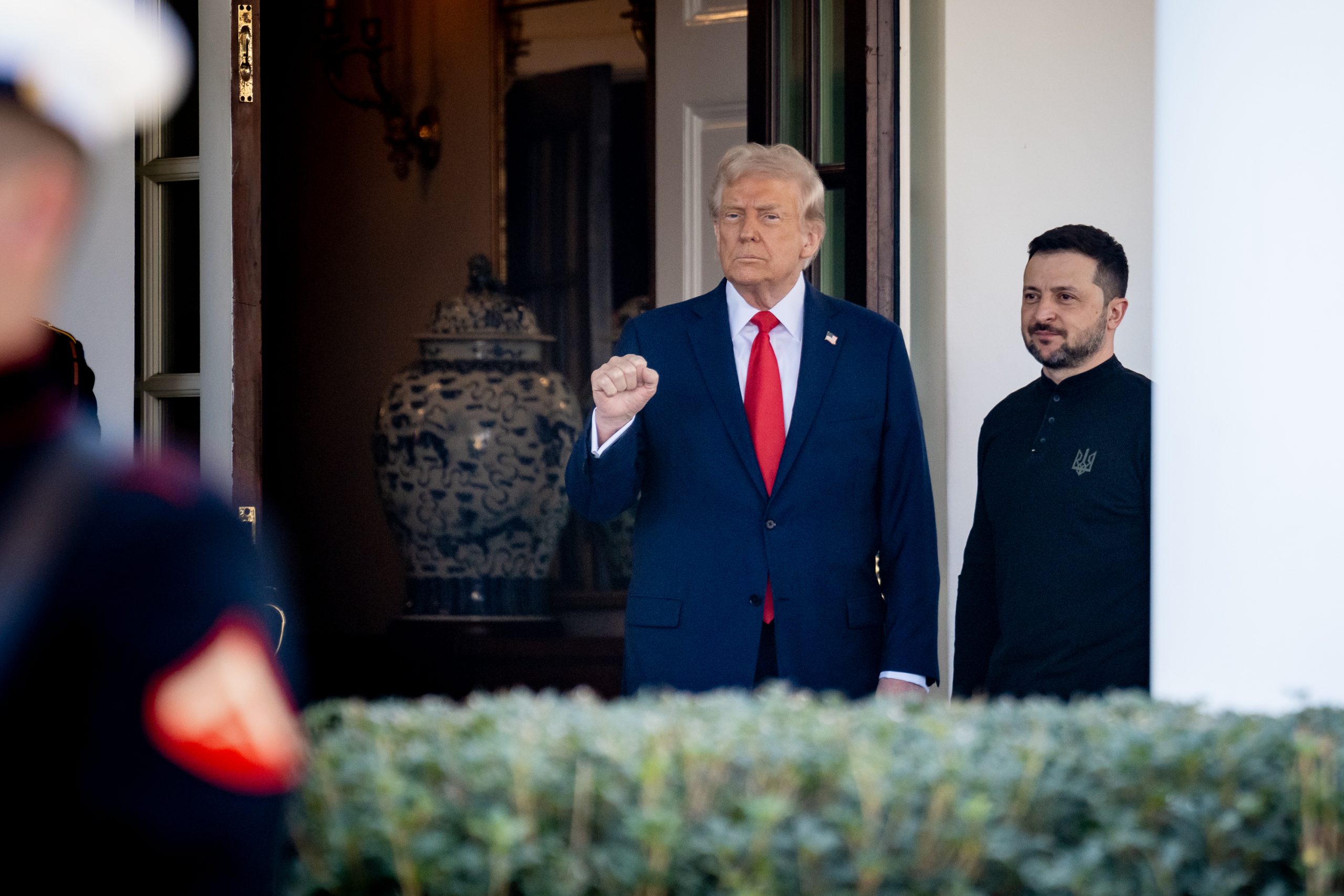
He repeated the theme in other public settings. At a CNN town hall in May 2023, he said Russians and Ukrainians were dying and that he would have the war ended in 24 hours. In August 2024, he told a National Guard Conference that, after winning and before even arriving at the Oval Office, he would have the war settled.
Campaign rhetoric is often inflated. Candidates compress complicated policy into slogans because certainty sells better than caveats. But the 24-hour clock was different. It put a measurable number on a war involving occupied territory, security guarantees, U.S. aid, sanctions, Russian demands and Ukraine’s survival as a sovereign state.
The clock changed after victory
Once Trump was in position to act, the language shifted. AP reported that on Dec. 16, 2024, at Mar-a-Lago, Trump was asked whether he still believed he could make a deal with Vladimir Putin and Volodymyr Zelenskyy. His answer was no longer a guarantee: he said he was going to try.
That was a meaningful move from certainty to effort. It did not mean diplomacy was dead, but it did show that the campaign line had run into the normal limits of statecraft.
In January 2025, retired Lt. Gen. Keith Kellogg, Trump’s special envoy to Ukraine and Russia, floated a 100-day target for ending the war, according to AP. A 100-day horizon is still ambitious. It is also not 24 hours.
Trump continued to project momentum. He said on Jan. 31 that his administration had held very serious discussions with Russia. After speaking with Putin and then Zelenskyy on Feb. 12, he said he thought the parties were on the way to peace. But movement toward talks is not the same as a signed settlement.
Rubio reset expectations publicly
The administration’s clearest public reset came from Secretary of State Marco Rubio. On April 18, Rubio told reporters that no one was saying the war could be ended in 12 hours, while warning that the United States might step back from negotiations if there was not enough progress, according to AP.
Rubio’s comment was striking because it reframed the issue away from Trump’s one-day promise and toward the slower reality of diplomacy. It also suggested there was a limit to how long Washington would keep investing in a process that was not producing visible results.
Trump’s own sarcasm explanation followed a similar logic. Supporters can read it as a familiar Trump move: deliberate exaggeration meant to signal urgency, confidence and pressure. In that view, the literal clock was never the point; the point was to show he would treat the war as an immediate priority.
Critics see something else. They argue the sarcasm defense arrived only after the promise became impossible to square with events. The fact that Trump repeated the 24-hour claim across multiple venues makes it harder to dismiss as a single offhand line.
Why Ukraine and Russia resisted
The war began with Russia’s full-scale invasion of Ukraine in February 2022. By the time Trump made the 24-hour claim in 2023, the conflict had already become a grinding war over territory, sovereignty, military aid and security guarantees.
Russia and Ukraine do not share the same definition of peace. Moscow has sought to lock in territorial and strategic gains. Kyiv has resisted concessions that could reward aggression or leave Ukraine vulnerable to another attack. Those positions cannot be reconciled by presidential confidence alone.
The friction also became visible in Trump’s dealings with Zelenskyy. AP reported that a Feb. 28 Oval Office meeting turned contentious, with Trump accusing the Ukrainian leader of being disrespectful and later suggesting Zelenskyy’s anger toward Putin was an obstacle to a deal.
Trump also applied public pressure. On April 23, he criticized Zelenskyy over Crimea and accused him of prolonging the killing field. The next day, after deadly Russian strikes on Kyiv, he addressed Putin directly on Truth Social, writing: “Vladimir, STOP!” and urging that the peace deal get done.
The credibility question now
The issue is not simply whether Trump used sarcasm. The bigger question is what voters, allies and adversaries should make of a foreign-policy promise that sounded specific during a campaign and became elastic once governing began.
Presidents often overpromise on wars. Ending conflicts depends on enemy calculations, battlefield conditions, allied unity, domestic politics and the willingness of combatants to accept painful trade-offs. A U.S. president can influence those factors, but cannot dictate them all.
That is why the 24-hour promise carried unusual stakes. It suggested that the main obstacle was not the conflict’s complexity, but the absence of the right negotiator. The months that followed have challenged that premise.
There is still a fair distinction between bravado and policy. Trump’s allies can argue that he raised expectations to create leverage and force urgency. His opponents can argue that reducing a live war to a one-day dealmaking challenge understated the human and strategic costs.
What remains unresolved
The war remains the central fact. Trump’s revised explanation does not answer whether the United States is closer to a durable settlement, what terms Washington would accept, or how far it would pressure either side to compromise.
It also leaves unclear how the administration would define success. A ceasefire, a frozen conflict and a lasting peace agreement are not the same thing. Each would carry different risks for Ukraine, Europe, Russia and the United States.
For now, the 24-hour Ukraine war promise has become a test case in campaign accountability. Trump framed the war as a problem he could solve quickly. The record so far shows a much harder reality: negotiations can be opened with phone calls, but wars do not end on a slogan’s timetable.
Leave a Reply