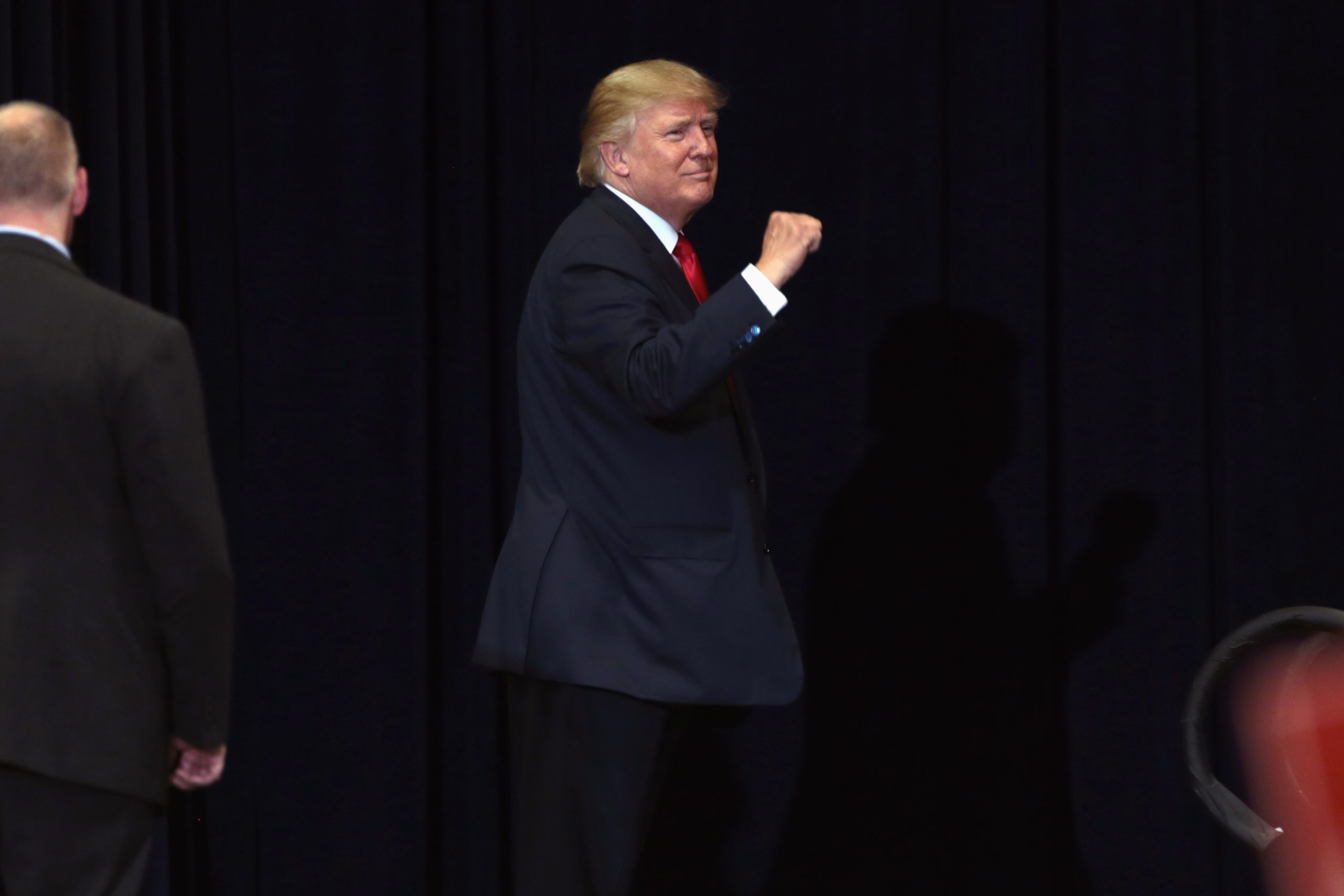
The same policy sold as a crackdown on Washington bureaucracy is landing in communities where federal paychecks support local economies. The hardest question is whether voters see the cuts as reform or as damage close to home.
Donald Trump signed an executive order to shrink the United States government, and that Trump executive order is now being linked to job losses in red states: the federal workforce is being cut, and Republican-led states are feeling the impact. The fight centers on roughly 2 million federal workers nationwide, Reuters’ report that about 100,000 employees had been fired or taken buyouts, and state-level losses measured in figures such as 8,000 jobs.
That is why the story is bigger than Washington. Federal jobs are not clustered only around the capital; they help support military towns, rural agency offices, veterans services, prisons, parks, labs and call centers across the country.
The order behind the cuts
The policy at the center of the backlash is Trump’s directive to reduce the size of the federal workforce, carried out alongside the Department of Government Efficiency, known as DOGE. Supporters describe it as a long-overdue attempt to cut waste, flatten bureaucracy and force agencies to justify payrolls.
Critics see something different: a blunt downsizing campaign that treats public workers as a budget line before measuring what those workers actually do. The practical effect is already visible in firings, buyouts, hiring limits and agency plans to reduce head count.
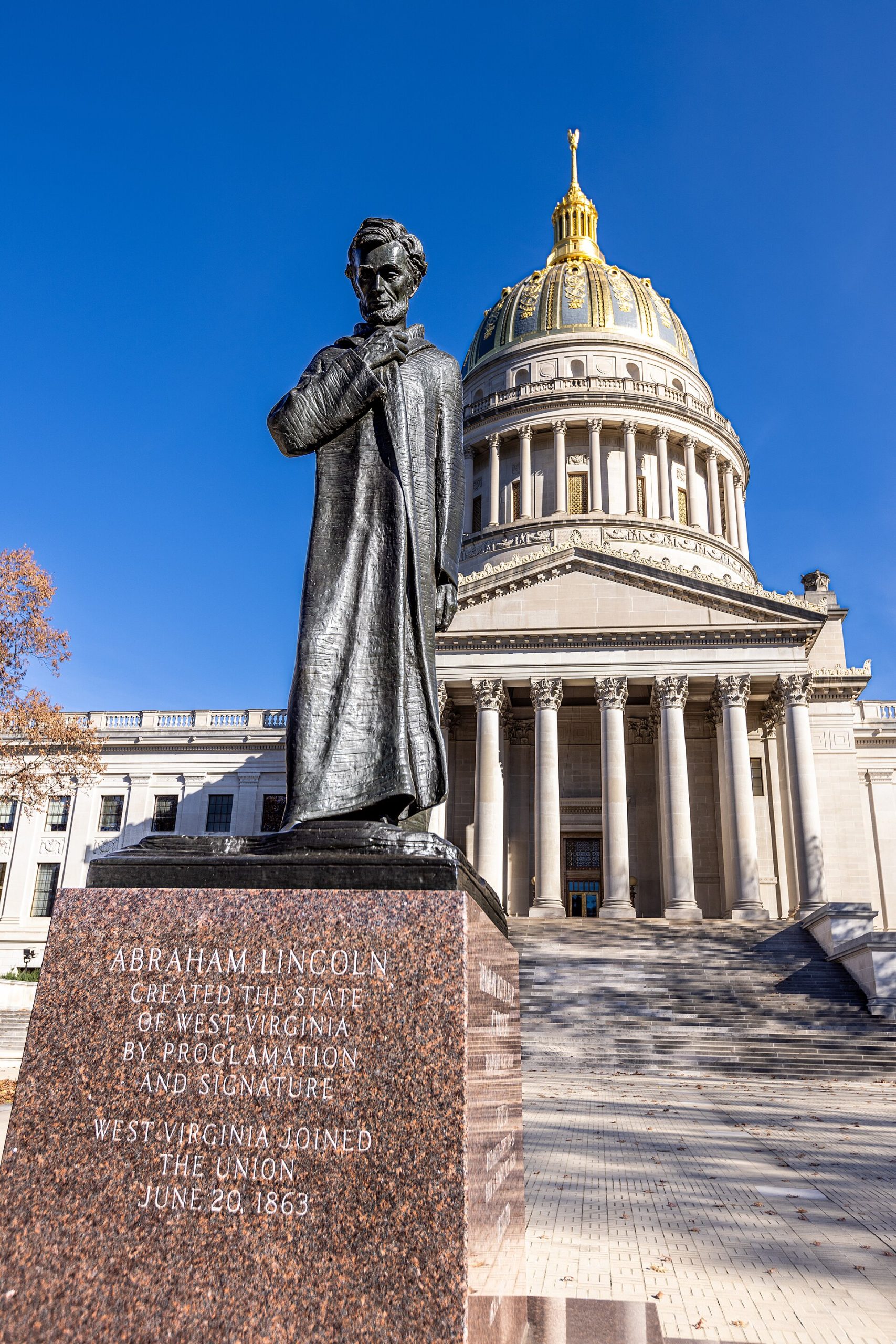
Reuters reported in March that DOGE-related cuts were bringing pain to Trump-friendly communities, including a West Virginia town where federal work had been a key source of stable income. The same Reuters report said that, at that point, about 100,000 workers had been fired or had accepted buyouts.
That number does not capture the full ripple effect. When a federal job disappears, so can spending at grocery stores, repair shops, child care centers and restaurants. Contractors tied to federal offices may also lose work, even if they never appear in federal employment totals.
Why red states are exposed
The political shorthand can be misleading. “Federal workforce” often sounds like Washington, D.C., but the federal government employs people across the United States. Many work far from the capital in places that voted heavily for Trump.
Republican-led states can be especially exposed because federal facilities are often major employers in smaller labor markets. A military installation, a federal prison, a land-management office or a veterans facility can anchor a local economy in a way that is easy to overlook from a national spreadsheet.
That is why an 8,000-job figure matters when it shows up at the state or regional level. In a national labor market, 8,000 jobs may look modest. In a smaller state, or in a town built around a few big public employers, it can mean weaker household spending, fewer customers for local businesses and less tax revenue for local governments.
The political tension is sharp: communities that backed a smaller federal government may still depend on federal paychecks. Voters may support cutting “bureaucracy” in the abstract while objecting when the cut lands at a local office, park, health center or claims-processing unit.
West Virginia shows the tradeoff
Reuters’ West Virginia reporting captured the contradiction in human terms. The cuts were not playing out as a remote argument over agency charts; they were affecting people in a Trump-voting area where federal employment helped stabilize the local economy.
That example matters because it undercuts a common assumption in national politics: that federal cuts mainly punish blue cities or the Washington suburbs. Some of the most vulnerable communities are in the Trump heartland, where public jobs can be among the better-paying and more reliable options available.
Local pain does not automatically translate into political backlash. Some voters may still support Trump’s broader goal, arguing that short-term disruption is necessary to reduce spending or change how government works.
But the more specific the cuts become, the harder that argument gets. A voter may favor trimming “waste” and still worry when a spouse loses a job, a neighbor takes a buyout, a veterans office slows down or a federal contractor stops hiring.
The data is still incomplete
There is a reason to be careful with sweeping claims. The federal workforce is huge, roughly 2 million civilian employees, and job data can lag behind policy decisions. Buyouts, retirements, firings and transfers may show up differently across reports.
The Bureau of Labor Statistics tracks government employment, but monthly data can blur the timing and cause of cuts. A job loss in a red state may be tied directly to a federal downsizing order, but it may also reflect agency restructuring, local budget shifts, contract changes or normal churn.
That does not mean the connection is imaginary. An executive order that directs agencies to shrink payrolls is a direct driver of fewer federal positions. The harder task is assigning exact state-by-state blame in real time.
Contractors make the picture even murkier. If a private company loses federal work and lays off employees, those workers may be counted in the private sector, not as federal job losses. That can hide the true local impact of government cuts.
The competing political case
Trump’s allies argue that the federal government grew too large, too expensive and too insulated from consequences. From that view, job losses are not evidence of failure; they are proof that the administration is doing what it promised.
There is also a broader conservative argument that government payrolls should not be treated as an economic development program. If an agency is inefficient, supporters say, preserving jobs for local spending alone is not a good enough reason to keep it intact.
Opponents counter that the cuts are being made faster than agencies, workers and communities can absorb. They argue that a smaller payroll can mean slower services, weaker oversight and economic harm in places that have fewer alternatives.
Both arguments can be true in part. Government can be inefficient, and cuts can still be reckless. A job can be publicly funded and still essential to the private businesses around it.
What to watch next
The key test will be whether the economic pain remains scattered or becomes a pattern in Republican-led states. If federal job losses keep showing up in red-state labor markets, the politics of “cutting Washington” could become much more local.
Watch for three signals: state unemployment changes in areas with federal facilities, contractor layoffs tied to agency spending, and service delays that make the cuts visible to residents who do not work for the government.
Also watch how Republican officials respond. Some may defend the cuts publicly while privately pressing agencies to spare facilities in their districts. That is a familiar pattern in federal spending fights: condemn the bureaucracy, protect the local payroll.
The clean takeaway is this: Trump’s executive order may be aimed at the federal workforce, but its consequences do not stop at federal buildings. In red states, the same cuts sold as anti-Washington reform can land as lost jobs, weaker spending and a harder economic question for the communities that helped put Trump in office.
Leave a Reply