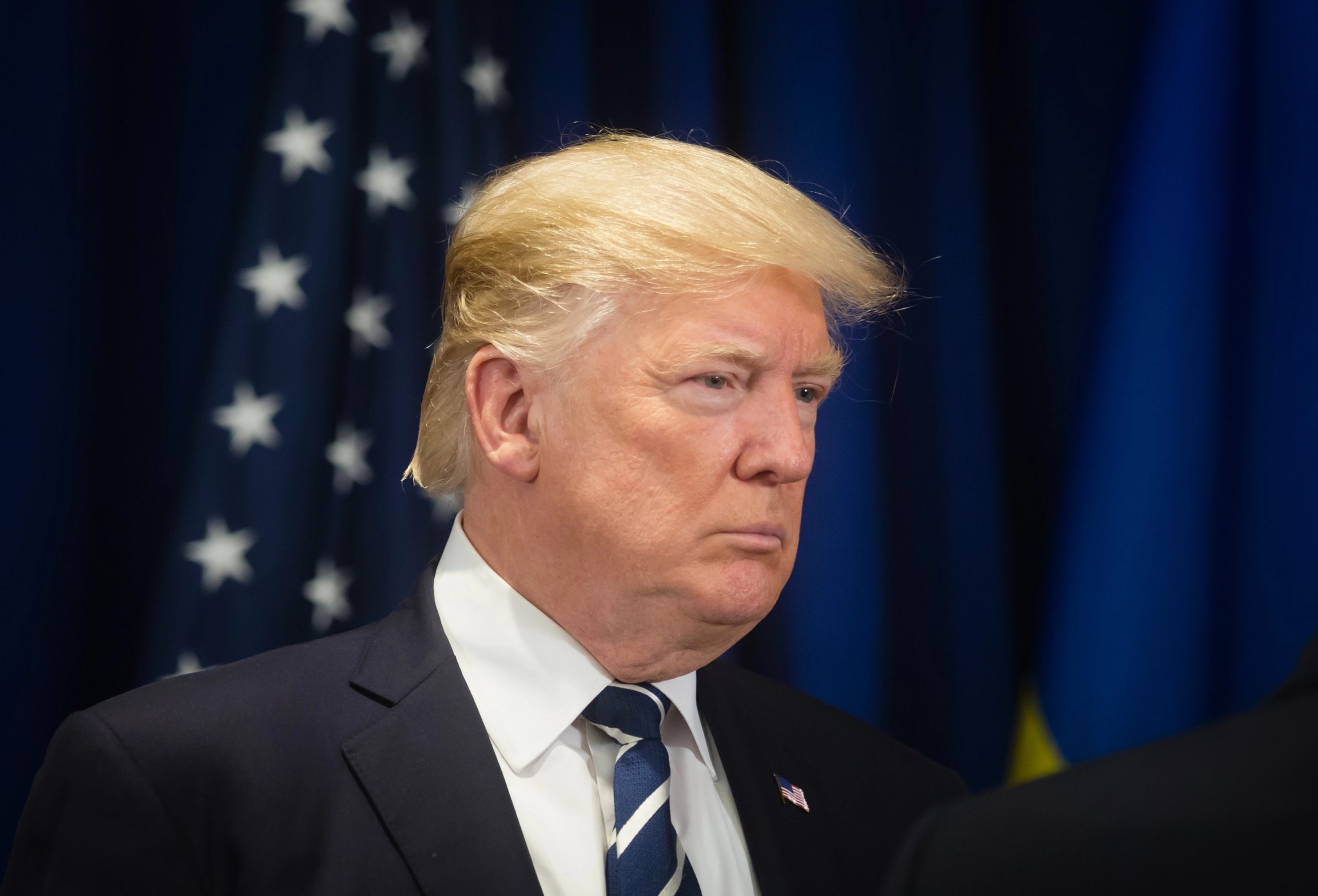
A viral image criticism moved quickly from what viewers saw to what people assumed about the White House. The verified facts support the mockery and the accusation’s existence, not the alleged intent behind it.
Donald Trump’s appearance drew online criticism after a televised appearance on Monday, when viewers pointed to a crooked tie and wrinkled shirt in an image that circulated online. The Mirror US, in a story republished by MSN, reported criticism of Trump’s White House team after one X user highlighted his tie, shirt, collar, suit, makeup and hair. But there is no proof that staff deliberately neglected his appearance, and the viral implication — that aides let him look unpolished on purpose — remains an Unproven Staff Claim.
The useful question is how a Crooked Tie Turned into something bigger than a clothing jab. Trump’s Crooked Tie became a case study in how fast online criticism can move from visual observation to an allegation about motives inside the White House.
A visual jab became intent
The core of the story is simple: Trump appeared on live television, viewers noticed details of his clothing and grooming, and an image from that brief appearance circulated online.
According to the Mirror US item republished by MSN, the criticism focused on visible elements including a crooked golden tie and a wrinkled shirt. The cited X user also pointed to Trump’s collar, suit, makeup and hair, while leaving some uncertainty about whether the appearance meant anything beyond an unflattering moment.
That uncertainty is the hinge. Saying a shirt looked wrinkled or a tie looked crooked is a judgment about an image. Saying the White House team allowed that appearance on purpose is a claim about knowledge, choice and intent.
The first type of claim is supported by the reported social media criticism. The second is not established by the available reporting.
What the reporting actually shows
The verified record, as presented in the available material, shows that Trump’s appearance drew online comment and that the criticism was directed in part at people around him. It also shows that The Mirror US reported the reaction and that the article was republished by MSN.
What it does not show is equally important. The available material does not identify a White House staff member who saw the issue before Trump appeared. It does not document an internal decision to ignore his appearance. It does not include an on-record explanation from the White House about what happened before the televised moment.
That gap matters because the staff allegation is not just about optics. It suggests conduct: that aides deliberately let Trump go on camera looking less polished than expected.
Without evidence about what staff knew or did, the claim remains online commentary reported as criticism, not a verified account of events inside the White House.
Why the claim traveled
The allegation spread because it fit a familiar political frame. Presidents and major political figures are usually surrounded by staff, cameras, advance teams and image-conscious aides. When something looks off, viewers often assume someone should have noticed.
That assumption can be reasonable as a reaction, but it is not the same as proof. Clothing can shift. A shirt can crease. A tie can move between moments. A still image can make a brief live shot look more dramatic than it appeared in motion.
None of those alternate explanations is confirmed either. They simply show why the leap to intent is a bigger claim than the image alone can carry.
The viral version depends on a more pointed idea: that the people around Trump may have let his look deteriorate on purpose. Available reporting supports that people made or circulated that accusation. It does not prove the accusation true.
Trump’s image history adds context
The reaction also landed in a broader history of Trump and image-making. The Washington Post has reported on Trump’s longtime interest in physical appearance, including his use of “central casting” language and comments about how people look in political settings.
Glamour, citing Axios and New York Times reporting, previously described Trump as particular about staff attire and grooming. That context helps explain why critics connected a rumpled appearance to the people around him rather than treating it as a random wardrobe moment.
Still, context is not evidence of what happened Monday. Prior reporting about Trump’s attention to presentation can make the online reaction easier to understand, but it does not prove that aides deliberately neglected him before the live appearance.
In other words, Trump’s reputation for caring about presentation may have made the criticism more shareable. It does not close the evidentiary gap.
Opinion versus allegation
This episode turns on a distinction that often gets blurred online. Viewers are free to mock a crooked tie, a wrinkled shirt, a collar, a suit, makeup or hair. Those are subjective reactions to what they believe they saw.
The staff claim is different. It assigns responsibility and motive to people who are not shown, quoted or documented in the available material.
That does not mean the criticism was fabricated. It means the verified claim should be kept narrow: an appearance prompted social media criticism, and some of that criticism accused Trump’s White House team of letting the look happen.
The unsupported claim is the more provocative one: that the team did so deliberately.
The takeaway from the viral moment
For Trump’s critics, the image fit a broader habit of scrutinizing his presentation and the machinery around him. For supporters, the focus on grooming and clothing may read as shallow ridicule or another example of appearance-based political mockery.
Both reactions can emerge from the same image. That is why the distinction between observation and proof matters.
The safest reading is limited and clear: Donald Trump’s televised appearance on Monday drew online criticism over a crooked tie and wrinkled shirt; The Mirror US, in a story republished by MSN, reported that the criticism included an accusation aimed at Trump’s White House team; and available reporting does not show that anyone intentionally allowed the look to happen.
The viral story may be memorable because of the tie. The factual story is about the unsupported jump from what viewers saw to what they claimed staff meant to do.
Leave a Reply