
Abbott’s confident prediction is also a message to Republicans with reservations about Paxton. The available reporting, however, offers no polling or fundraising data to show how broadly those concerns are shared.
Greg Abbott predicted that Texas voters will rush to support Ken Paxton, dismissing Republican concerns about Paxton’s support in the Senate race. The Texas governor’s confidence rests on the idea that voters will ultimately focus on the choice between Paxton and Democrat James Talarico, rather than divisions inside the GOP.
Abbott is making a political forecast, not presenting evidence of a measurable shift among voters. No polling, fundraising figures or turnout data in the available reporting establishes whether Paxton is gaining, losing or holding steady with Texans.
Abbott wants the race reframed
The central message from Abbott is less about the late-summer mood than about how he expects the campaign to develop before Election Day. He is betting that Republican-leaning voters who may have reservations about Paxton will decide that the Democratic alternative is less acceptable.
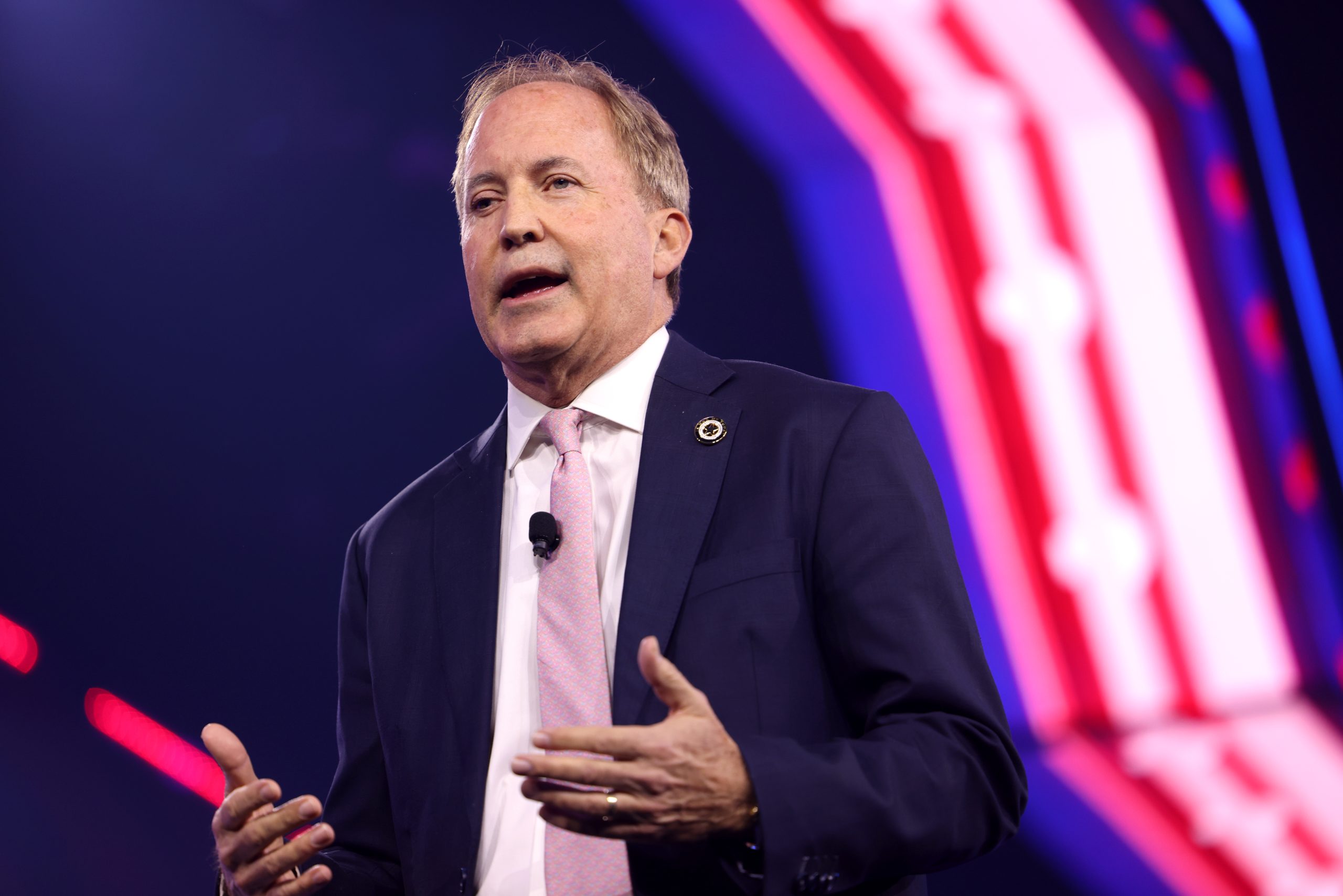
That puts Talarico at the center of Abbott’s case. Rather than laying out an extended argument for Paxton solely on his own strengths, Abbott suggested voters would consolidate behind the Republican nominee after learning more about Talarico’s record.
It is a familiar campaign calculation in statewide contests, where party identification can matter as much as a candidate’s individual vulnerabilities or appeal. For Abbott, the goal appears to be making the Senate race a choice between competing parties rather than a referendum on internal Republican criticism.
November is Abbott’s benchmark
In remarks quoted by ABC News and reproduced by Political Wire, Abbott argued that the meaningful test will come when ballots are cast, not during the August phase of the campaign.
“What matters in elections is not in August, what matters in elections is November,” Abbott said. He described the contest as one between Republican “common sense” and Democratic policies that he characterized in much harsher terms.
Abbott then made his most emphatic prediction: once voters become more familiar with Talarico’s record, he said, they would be “rushing to vote for Ken Paxton.” The statement signals confidence in Paxton’s eventual support, but it is not proof that voters have already moved in that direction.
GOP concerns remain hard to measure
Abbott’s decision to brush aside Republican concerns is significant because it acknowledges that questions around Paxton have not disappeared from the campaign conversation. At the same time, the available reporting does not detail the full scope of the concerns he was addressing.
It also does not establish how widespread those concerns are among Republican voters. Doubts expressed by party officials, activists or donors do not necessarily amount to a broad electoral problem.
That uncertainty leaves room for competing interpretations. Abbott’s allies can view his intervention as a high-profile show of party confidence, while critics may argue that the need for such reassurance points to unresolved tensions. The available reporting does not settle either view.
As Texas’ Republican governor, Abbott has substantial statewide visibility. His public support offers Paxton validation from one of the state’s best-known GOP figures and encourages Republicans to keep their attention on the matchup with Talarico.
Paxton enters with name recognition
Paxton is not an unknown candidate asking Texans to form a first impression. The Texas secretary of state’s listing identifies him as the state’s Republican attorney general, while Abbott is listed as the Republican governor.
That established profile can work in more than one direction. Familiarity can help a candidate who has spent years in statewide office, but it can also mean voters arrive with settled views that are difficult for a campaign to reshape.
Abbott’s approach appears designed to use that reality to Paxton’s advantage. Instead of asking Texans to look at Paxton in isolation, he is urging them to assess him in the context of a Senate choice against Talarico.
Early campaign signals still matter
Abbott is correct that elections are decided in November, and the voters who ultimately cast ballots are the ones who determine the result. Summer headlines, activist disputes and donor conversations can look different once campaigns intensify.
But early party concerns can still have practical effects if they influence fundraising, volunteer enthusiasm, endorsements or turnout. They can become more consequential if an opponent successfully turns them into a wider argument about judgment, electability or a candidate’s governing record.
Politico’s reporting on Abbott’s appearance also described the governor as confident about the contest between Paxton and Talarico. Whether that confidence is borne out will depend on how effectively Paxton keeps the campaign focused on the Democrat, and whether GOP doubts remain part of the public debate.
The forecast is not the verdict
For now, Abbott has drawn a clear line: he does not see Paxton as a Republican weakened by intraparty unease. He sees him as the candidate Texas voters will choose once the race becomes more defined.
The unanswered questions are whether Republican concerns fade or deepen, and how independent or less firmly partisan voters judge both candidates. Those answers will come from the campaign and, ultimately, the vote—not from a governor’s prediction in August.
Leave a Reply