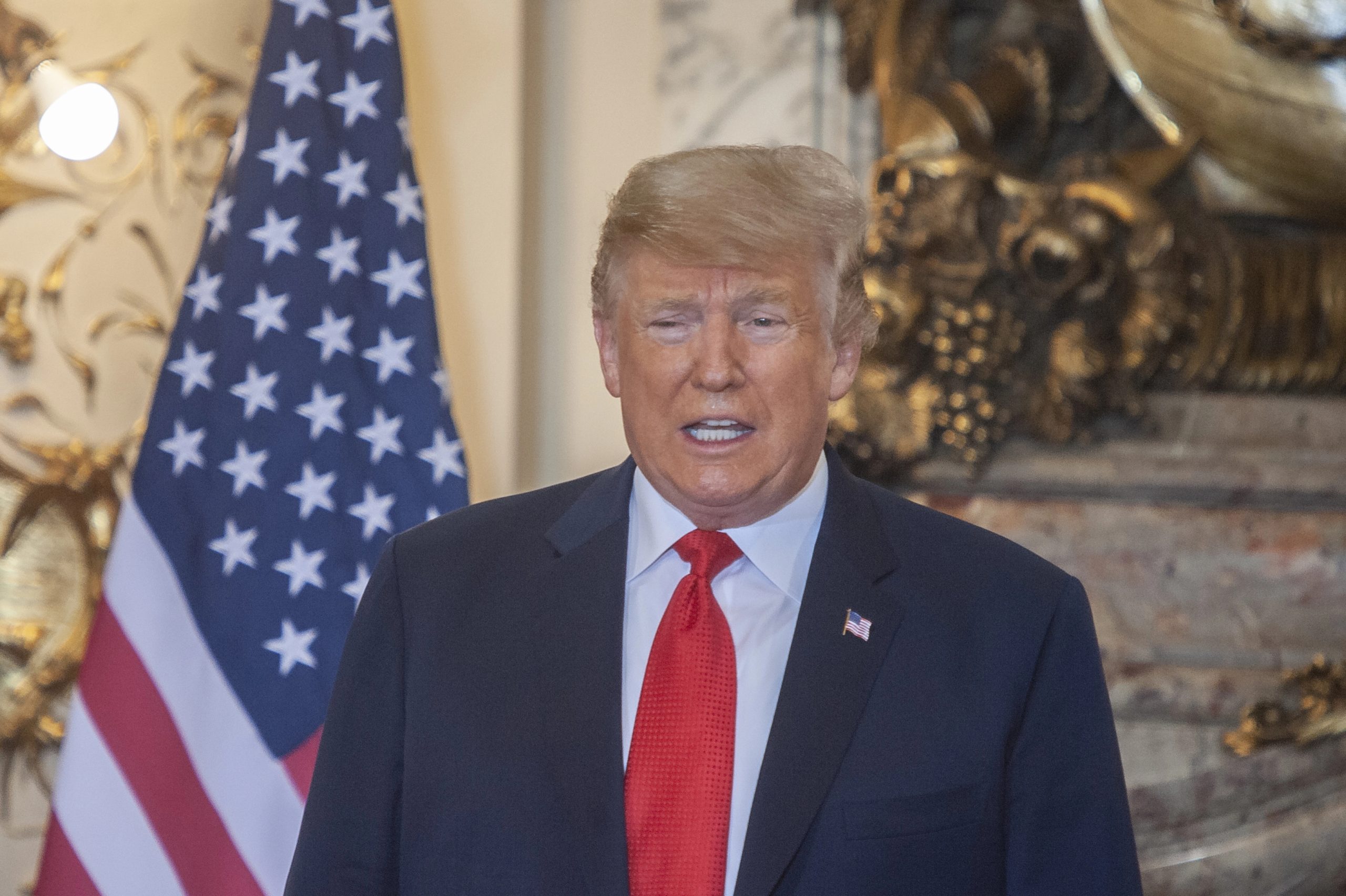
The twilight argument is not that Trump has disappeared. It is that the movement he built may be losing room to grow even as it keeps shaping Washington.
Trumpism is entering a decline or end phase, at least according to the sharpest reading now circulating around Trump: the phrase “late-stage Trumpism” frames an assessment of Trump’s political legacy while Trump-era politics still holds power. This article assesses Trump’s political legacy, the current status of Trump-era politics, and why “twilight” can describe weakness even when the movement remains electorally dangerous.
That is the tension behind the “twilight” claim. It is not that Trumpism has vanished. It is that its strongest habits — personal loyalty, executive confrontation, permanent grievance and suspicion of institutions — may now be producing smaller political returns and larger governing costs.
Twilight is not disappearance
Calling this a twilight phase is not the same as saying Trump is finished. Political movements can enter a late stage while they still command headlines, staff agencies, dominate a party or terrify opponents.
The late-stage label points to diminishing returns. The same style that once felt disruptive can start to feel repetitive. The same attacks that once rallied voters can narrow the coalition. The same reliance on one dominant figure can make succession harder, not easier.
That is why the phrase matters now. Trumpism is no longer being judged only as an insurgency. It is being judged as a governing project, a political brand and a legacy machine. Those are much tougher tests than winning attention.
Power is not the same as persuasion
One reason the twilight argument has force is that Trumpism’s power has become increasingly associated with executive force rather than broad legislative persuasion. A 2025 article hosted by PubMed Central, examining the start of Trump’s second presidency, described the administration as standing out for extremely aggressive executive actions and limited engagement with legislation.
Supporters can read that as proof of decisiveness. If Congress is slow, hostile or gridlocked, a president who moves quickly through executive authority looks, to them, like someone cutting through a system designed to block change.
Critics see the opposite. Executive action can be fast, but it is often more fragile than law. A movement that governs mainly through orders, emergency framing and personal command may be powerful in the moment while building less durable consent.
This is the core twilight question: is Trumpism expanding its reach, or is it substituting intensity for growth?
The legacy file is split
Trump’s supporters have a ready answer to any claim of decline. The National Archives preserves the Trump White House’s own accomplishments page, which credited the administration with 7 million new jobs before the pandemic, a 3.5 percent unemployment rate, nearly 160 million Americans employed, and $3.2 trillion in tax relief through the Tax Cuts and Jobs Act.
That record is central to how Trumpism explains itself. It presents Trump not as a chaos figure, but as a president who delivered tax cuts, deregulation, market gains and a pre-pandemic economy that supporters remember as strong.
But the counter-record is just as important to the twilight argument. A 2022 article hosted by the National Institutes of Health examined what it called the Trump administration’s inability to mount a timely and effective response to the COVID-19 outbreak despite ample warning. For critics, the pandemic exposed the limits of a political style built on combativeness, distrust of expertise and loyalty tests.
That split legacy is not a side issue. It is the battlefield. Trumpism’s future depends partly on whether voters remember economic confidence, institutional disruption, pandemic failure, cultural combat — or some volatile mix of all four.
The succession problem remains
Trumpism has always been bigger than a policy checklist. It is a mood, a media ecosystem, a theory of enemies, a promise to punish institutions viewed as corrupt or hostile, and a claim that ordinary politics cannot fix the country.
That makes it portable in some ways. Candidates can copy the language. Influencers can repeat the grievances. Officeholders can adopt the posture. The movement has already reshaped what many Republican voters expect from their leaders.
But it is also highly personalized. Trump’s name, instincts and ability to dominate attention are not easily transferred. A successor can imitate the cadence and miss the chemistry. A party can inherit the resentments without inheriting the turnout machine.
If late-stage Trumpism has a structural weakness, this may be it: the movement can outgrow institutions, but it may not outgrow Trump himself.
Fatigue can become strategy
There is another possibility. What looks like exhaustion to critics may function as strategy for supporters. Repetition can reinforce identity. Permanent conflict can keep a coalition emotionally engaged. A politics of siege can make every investigation, bureaucratic obstacle or unfavorable ruling feel like confirmation of the movement’s worldview.
That is why declarations of Trumpism’s end have often aged badly. Trump has repeatedly benefited from opponents who mistook fatigue among critics for collapse among supporters. A movement can be tiresome to one audience and galvanizing to another.
Still, fatigue matters. Politics requires more than keeping loyalists furious. It also requires persuading the uncertain, governing the uninterested and delivering results that survive beyond a single news cycle.
Late-stage movements often struggle there. They become fluent in mobilization but weaker at conversion. They know how to identify enemies, but not always how to solve problems once power is obtained.
What would disprove twilight
The twilight thesis is not inevitable. It would be weakened if Trumpism produced durable legislative wins, broadened its coalition, built competent institutions around its priorities, and developed successors who could win without merely reenacting Trump.
It would also be weakened if voters decided that disruption itself is the desired outcome. For a large share of the electorate, breaking norms is not necessarily a flaw; it is the promise. That makes conventional measures of political health less reliable than they used to be.
But the thesis gains strength if the movement becomes more dependent on executive action, more centered on personal loyalty, less capable of persuasion, and more invested in relitigating old battles than defining a future.
The cleanest reading is this: the twilight of late-stage Trumpism does not mean the lights are out. It means the movement is being tested by the burden of its own success. After years of shaping American politics, Trumpism now has to prove it can be more than disruption with a familiar name attached.
Leave a Reply