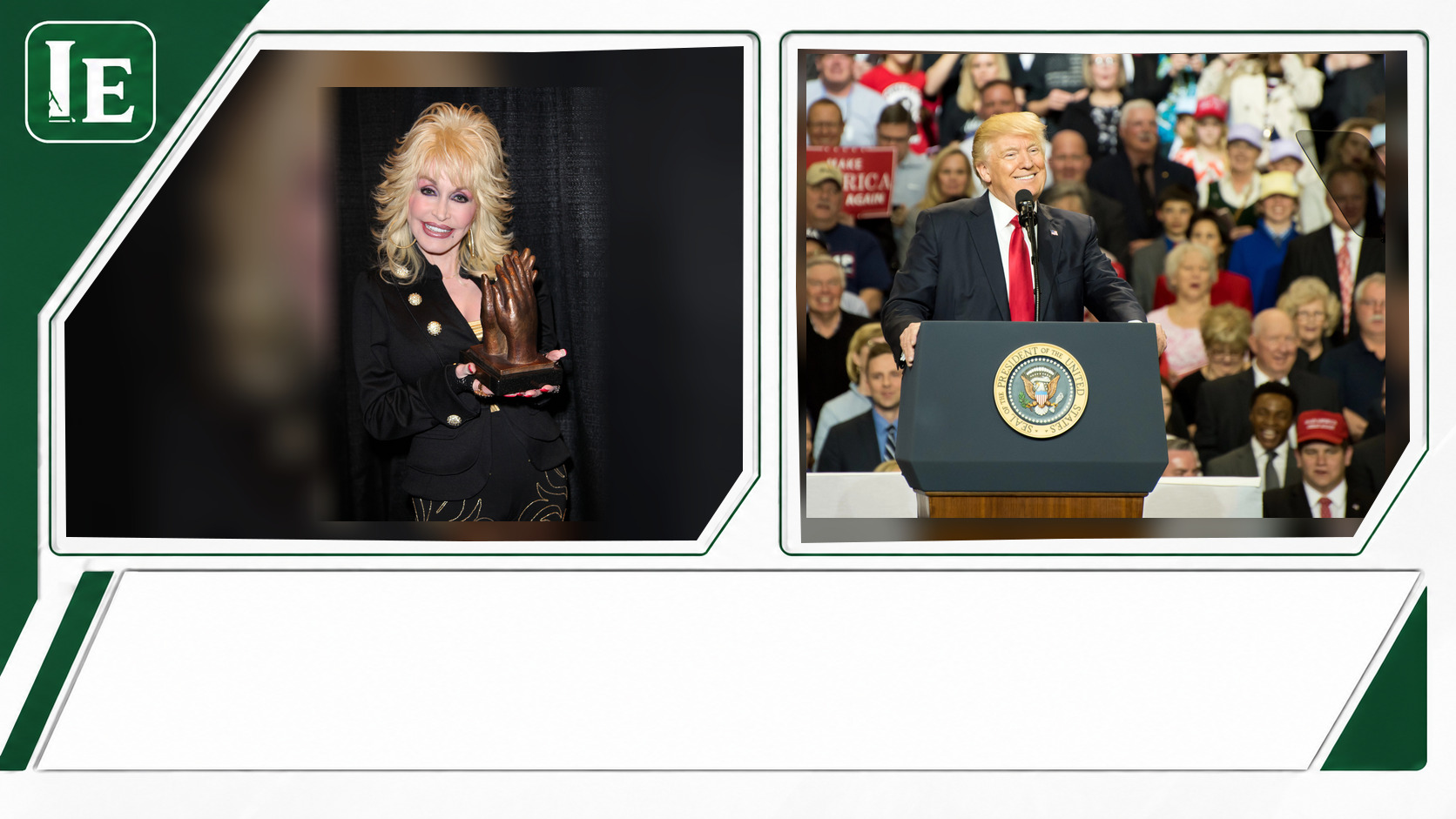
Trump’s tribute places Dolly Parton’s death in a rare kind of national public mourning. It also reflects the reach of a career that connected country music, pop culture and children’s literacy.
Donald Trump ordered U.S. flags to be lowered in honor of Dolly Parton after the singer died at age 80. Beginning at 6 p.m. ET on August 25, 2026, Trump said flags will be flown at half-staff throughout the United States for one week, calling Parton an exceptional artist whose loss would be felt by millions.
The move turns a celebrity death into a visible national tribute. It recognizes not only Parton’s country-music catalog, but also the public role she built through decades of philanthropy, business and a persona that crossed political and generational lines.
Trump’s one-week flag directive
Trump announced the tribute in a Truth Social post shortly after Parton’s death was made public. He said he was lowering the American flag across the country for a week and described her as one of country music’s greatest performers “and far beyond.”

His message included an unusually sweeping appraisal: “There has never been anyone like her, and never will.” He added that the world loved Parton.
The practical meaning is straightforward for the public: flags at federal sites and other locations observing the presidential directive are expected to fly at half-staff during the announced period. Details about implementation at every state, local and private location were not spelled out in Trump’s post.
A tribute after her death
Parton’s death was announced in a video message shared through her social-media accounts by her nephew, Bryan Seaver, according to USA Today. The announcement did not provide a cause of death.
Her health had been a matter of public concern in 2025, when she postponed concert dates and referred to “health challenges.” Still, the available reporting leaves important questions about the circumstances of her death unanswered.
That uncertainty has not changed the immediate focus of the tributes: a public outpouring for an entertainer whose image was familiar even to many people who did not follow country music closely.
Why Parton reached beyond country
Parton emerged from a poor childhood in rural East Tennessee and became one of Nashville’s defining stars. Her songs included “Jolene,” “Coat of Many Colors,” “9 to 5” and “I Will Always Love You,” a song that later became a global hit in Whitney Houston’s recording.
But treating her only as a hitmaker misses the scale of her influence. Parton moved between country, pop, film, television and theme-park entertainment while keeping a recognizably direct, playful public voice.
She also made her Appalachian roots central to her story rather than something to outgrow. That gave her success a particular meaning for fans who saw in her career a rare combination of ambition, self-invention and loyalty to home.
The philanthropic legacy in view
For many families, Parton’s most tangible legacy is the Imagination Library, her book-gifting program for young children. The program has distributed more than 300 million books over 31 years, according to USA Today.
That work helped turn her fame into a long-running public service project. A parent receiving a free book in the mail may have encountered Parton less as a recording artist than as the name behind a child’s early reading routine.
The contrast is part of why the response to her death has been so broad. Her sequined stage image could be extravagant; her charitable work was often practical, local and aimed at children.
A rare shared cultural symbol
Presidential flag tributes carry symbolic weight because they place a person’s death in a national frame. They do not settle every debate about a public figure or make grief politically neutral, especially when the announcement comes from a polarizing president.
Yet Parton occupied an unusual space in American culture. She avoided being easily reduced to one audience, one genre or one political identity, even as people across those divides claimed her as their own.
Trump’s order is therefore more than a formal gesture. It is an acknowledgment that Parton’s impact was measured not just in records sold or awards won, but in the uncommon ability to be regarded as part of the country’s shared cultural life.
What the coming week will show
Over the next week, the half-staff flags will provide a visible marker of mourning while tributes continue from musicians, fans and organizations tied to Parton’s life and work. Memorial plans and further details about her death had not been established in the reporting available on August 25.
The enduring questions will be less about whether Parton was a major star than about how to account for the full reach of her legacy. Few entertainers left such a substantial body of songs while also building a charitable institution with a lasting presence in children’s homes.
Trump’s words were emphatic, but the public response may be the clearer measure of the moment: Dolly Parton was mourned not simply as a famous singer, but as an American institution.
Leave a Reply