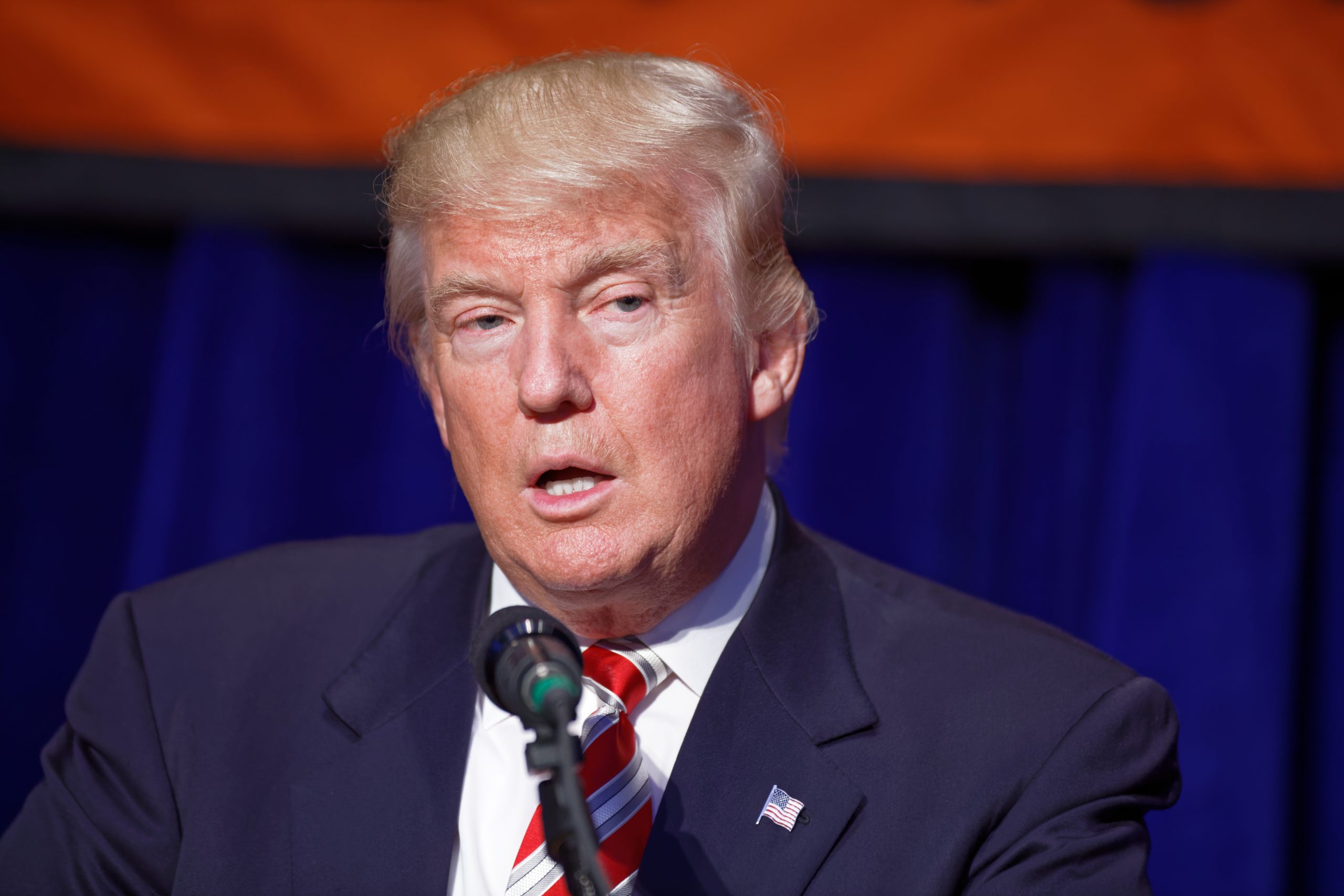
The commentary frames Trump’s conduct and public appearances as a test not just of one politician, but of the party and media ecosystem around him.
Donald Trump is the target of a blunt criticism in a Raw Story opinion piece arguing that he is physically and mentally declining, and that Republicans or Trump supporters are called out for backing him despite his conduct. The article is an opinion piece, not a neutral news report, and its central charge is deliberately harsh.
The point is less that a lone wolf finally told Trump what nobody else has the guts to say than that so few people inside his political coalition appear willing to say it publicly. That silence is the real subject.
The attack is about loyalty
The Raw Story commentary, as summarized in the available excerpt, opens by questioning people who have chosen loyalty to Donald Trump over the United States. It describes an entire political party as keeping its head in the sand rather than admitting what critics say has become obvious about Trump’s conduct and public performance.

That is a familiar anti-Trump argument, but the intensity matters. The writer is not only condemning Trump. The sharper target is the Republican permission structure around him: elected officials, activists, media allies and supporters who defend, rationalize or ignore behavior that opponents view as disqualifying.
Because this is opinion writing, readers should treat its judgments as political argument, not medical finding. Claims that Trump is declining physically or mentally are part of the columnist’s critique of fitness for office, not a diagnosis established by independent medical evidence in the excerpt.
Why this keeps resonating
Trump criticism is not scarce. What makes pieces like this travel is the accusation that the people closest to power are pretending not to see what critics believe is happening in plain sight.
The column’s frame also taps into a broader anxiety: whether American politics has become less about performance in office and more about allegiance. In that view, the key question is no longer whether Trump says something false, offensive or erratic. It is whether any Republican with influence will pay a price for calling it out.
Trump’s defenders see the same dynamic very differently. Many argue that coverage of his speeches and appearances is filtered through hostility, that voters already judged his flaws against the alternatives, and that elite outrage has become a substitute for policy debate. To them, attacks on his fitness often sound like an effort to delegitimize a political movement rather than assess a president.
That disagreement is why the story has legs. It is not just about one columnist’s anger. It is about whether public standards for presidential behavior still exist across party lines.
The dinner became a symbol
The Raw Story excerpt points to Trump’s appearance at a rescheduled White House Correspondents’ Dinner as one example driving the critique. The writer describes the event as a moment when journalists and media figures absorbed Trump’s attacks rather than confronting him in the room.
That detail matters because the White House Correspondents’ Dinner is not an ordinary rally. It is a ritual gathering of political power, media status and Washington self-image. When Trump uses that kind of venue to attack journalists, critics see a test of institutional nerve.
The counterargument is that journalists are not protesters and should not turn formal events into confrontations. A walkout or shouted rebuke might create a viral moment, but it could also blur the line between coverage and participation.
Still, the column’s frustration reflects a wider complaint among Trump opponents: that institutions often adapt to his behavior faster than they challenge it. In that reading, silence becomes a political act.
Warnings were already on record
The Raw Story piece is not alone in arguing that Trump’s return to power exposed problems critics had long predicted. A Washington Post opinion column published in 2025 made a similar point, warning that prosecutions could become persecutions, pardons for Jan. 6 defendants could follow, and U.S. policy toward NATO, immigration, civil rights and the economy could shift sharply under Trump.
That Washington Post column framed the issue as a warning ignored. Raw Story’s version is angrier and more personal, but the underlying claim is similar: Trump’s behavior is not a surprise, and neither is the willingness of allies to defend him.
Official White House materials, including the White House’s public remarks page for President Trump, show the administration presenting its own version of events directly to supporters and the press. That matters because Trump’s political operation does not depend on traditional media approval in the way earlier presidents often did.
Critics can call a speech rambling or abusive. Supporters can see the same performance as combative, funny or authentic. The gap between those readings is now one of the defining facts of American politics.
Fitness claims need care
Accusations about mental or physical decline are politically potent and ethically tricky. Voters are entitled to judge a president’s public performance, stamina, clarity and temperament. But commentary that sounds like a medical conclusion should be separated from verified health information.
That distinction is not a defense of Trump. It is a standard that should apply to any public official. A president’s age, schedule, speech patterns and public conduct are fair subjects for scrutiny; unsupported diagnosis is something else.
The stronger argument in the Raw Story piece is not clinical. It is civic. The writer is asking why people who once claimed to care about presidential dignity, national strength, personal conduct and respect for institutions continue to excuse behavior they would likely condemn in an opponent.
That is where the Republican Party faces the most uncomfortable question. If loyalty to Trump overrides every prior standard, then those standards were never as firm as the party said they were.
What remains unanswered
The hard part for Trump critics is that blunt denunciations rarely move his base. Many supporters have heard versions of this case for years and see them as proof that political and media establishments despise the movement they belong to.
The more consequential audience may be Republican officials who privately worry about Trump but publicly stay aligned. The Raw Story column’s anger is aimed at them as much as at voters: the people with platforms, titles and incentives to keep quiet.
What remains unclear is whether any single rebuke, dinner moment or viral column can change that calculation. Trump’s hold on the party has survived scandals, impeachments, criminal conviction, electoral backlash and years of elite condemnation.
So the takeaway is sober: the loudest criticism of Trump may not reveal much new about Trump. It reveals the ongoing bargain around him — and the reluctance of many Republicans to admit what that bargain costs.
Leave a Reply