
Texas lawmakers have considered a detailed classroom-display mandate supported by activist David Barton. The proposal puts an older Supreme Court precedent alongside the court’s newer approach to religion cases.
Texas may require Ten Commandments posters in public-school classrooms under a proposal connected to a broader effort by Texas conservative activist David Barton. The effort has reopened a constitutional dispute over religion in public education, placing Texas public schools, public-school students and the Supreme Court at the center of a debate with potential consequences for American classrooms.
Texas lawmakers have considered Senate Bill 10, a measure that could require a Ten Commandments poster or framed copy in every public elementary and secondary school classroom. The proposal is tied to a broader campaign by Texas conservative activist David Barton to restore Ten Commandments displays in American public education. If enacted, the mandate could trigger a constitutional lawsuit and ultimately be reviewed by the U.S. Supreme Court.
Supporters point to the commandments’ historical and civic influence, while opponents argue that requiring the display amounts to government-backed religious instruction in schools attended by children. The dispute places Texas public schools at the center of a national test of how the court’s evolving approach to religion cases could affect classroom displays nationwide, including whether states may require religious texts or symbols in public-school classrooms.
It also prescribed the presentation. The display would be at least 16 inches wide and 20 inches tall, use the text set out in the legislation, and be printed in type large enough for a person with average vision to read from anywhere in the room.
Those details matter because they make the measure a classroom-by-classroom requirement rather than a broad statement of principle. A uniform mandate could give other states a practical template if they pursue similar policies, while also creating a clear target for litigation.
David Barton, 72, has spent decades promoting a view of American history that places Christianity at the center of the nation’s founding and civic identity. The Wall Street Journal described him as a quiet force in a state-by-state campaign to bring religion more directly into public education.
Why classrooms carry different weight
Supporters of the Texas approach argue that the Ten Commandments influenced American and Texas law and can be displayed as a recognition of legal and cultural history. The Legislature’s committee analysis said the proposal was intended to remind students of what backers regard as the Commandments’ foundational role in the state’s and nation’s legal traditions.
The disagreement is not over whether religion can be studied in school. Critics draw a line between teaching about religious ideas in history or literature and requiring a sacred text to appear on the wall of every classroom.
That distinction is especially important in public schools. Students are a captive audience for much of the day, and schools serve children from many religions as well as children with no religious affiliation. A state-required display can therefore carry a different message from a religious item in a private home, a house of worship or a voluntary student group.
Critics say the mandate would communicate official endorsement of one religious tradition, with particular force for younger students. Supporters counter that acknowledging the Commandments’ place in history would not compel anyone to engage in religious observance.
The precedent neither side can ignore
The clearest obstacle to mandatory classroom postings is Stone v. Graham, the 1980 Supreme Court decision that struck down a Kentucky law requiring the Ten Commandments to be displayed in public-school classrooms. The Court found that the requirement lacked a clearly secular legislative purpose and violated the First Amendment’s Establishment Clause.
Stone remains a major precedent, and the Supreme Court has not issued a newer ruling directly approving a requirement that every public-school classroom display the Ten Commandments. That leaves the central legal question unresolved rather than settled.
Texas lawmakers nevertheless argued in the SB 10 analysis that the constitutional landscape has changed since 1980. Their argument rests in part on the Supreme Court’s movement away from the once-dominant Lemon v. Kurtzman test in later religion cases.
In Kennedy v. Bremerton School District in 2022, the Court ruled for a public-school football coach who prayed on the field after games. The Court said Establishment Clause disputes should be evaluated through historical practices and understandings instead of the Lemon framework. The decision did not explicitly overturn Stone, but supporters of classroom postings see it as a possible opening for a different outcome today.
The Texas Capitol case has limits
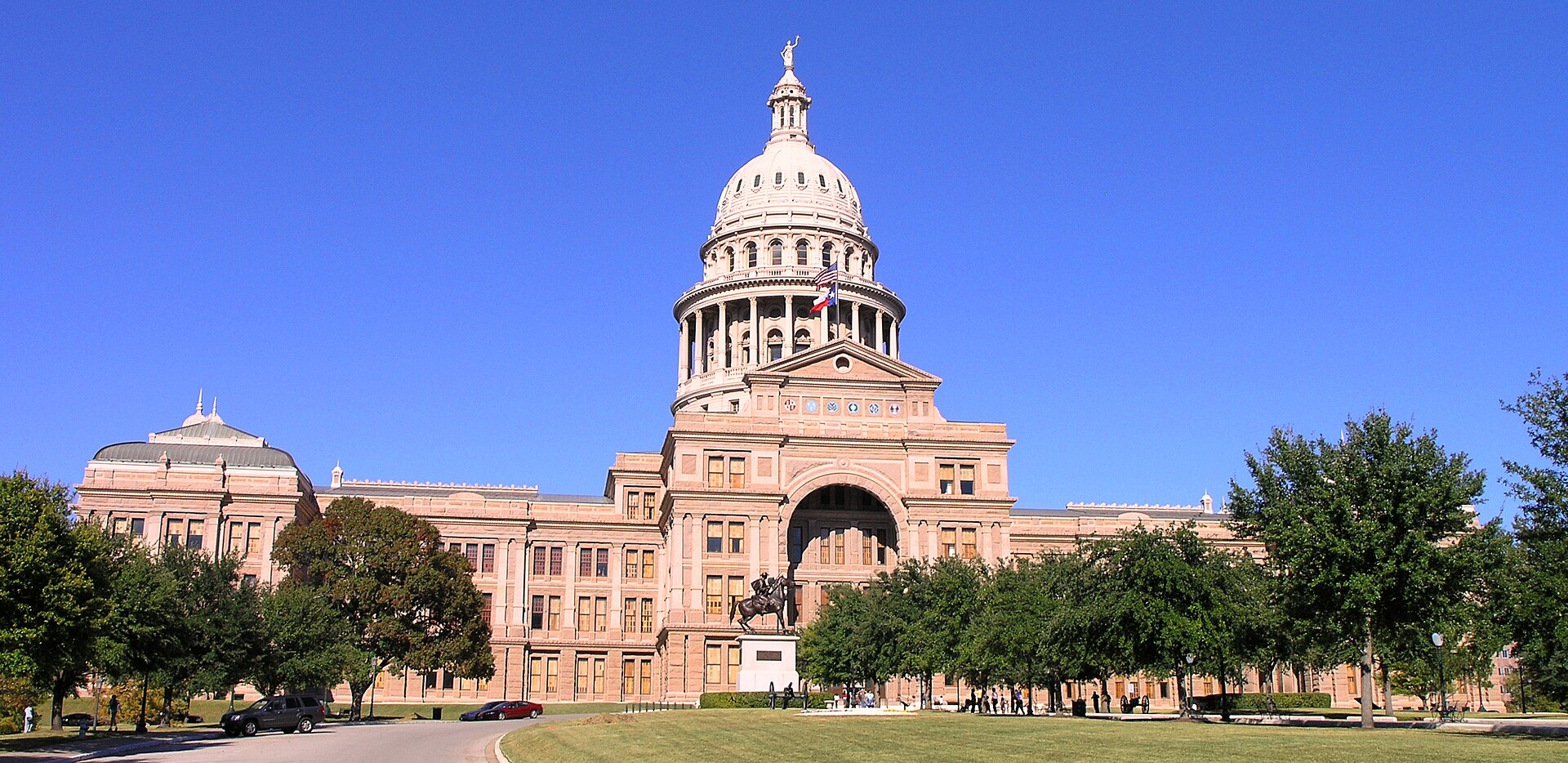
Backers also point to Van Orden v. Perry, a 2005 Supreme Court case concerning a Ten Commandments monument on the Texas Capitol grounds. The Court allowed that monument to remain, emphasizing its setting and historical context.
But a Capitol monument is not the same as a text posted in a classroom where students attend compulsory classes each day. The Texas Capitol grounds contain many markers; a required classroom display would confront students repeatedly in a far more controlled environment.
That difference gives both sides material for their arguments. Supporters can cite the Court’s willingness to view some Ten Commandments displays in historical context. Opponents can argue that the public-school setting demands distinct scrutiny because of the state’s authority over children in the classroom.
If a Texas requirement were challenged, its fate could turn on several factors: the mandated wording, lawmakers’ stated purpose, the context in which students see the display and the Supreme Court’s continuing interpretation of the Establishment Clause.
A test case with national reach
State education policies frequently become models for lawmakers elsewhere. Texas’ combination of exact language, specified dimensions and a mandate for every classroom offers a particularly portable framework for states that want to test the same constitutional boundary.
A court ruling upholding such a mandate could encourage comparable measures beyond Texas. A ruling against it could reinforce the idea that public-school classrooms occupy a special constitutional category, even as the Supreme Court takes a more history-focused approach in other religion cases.
The debate also raises practical questions that go beyond the courtroom. Even with a detailed rule, school administrators could need direction on funding, accessibility, translations and how a display requirement would interact with classroom instruction about religion, student speech and the rights of religious minorities.
The dispute is larger than wall space
Barton’s campaign reflects a broader strategy: advance policies in receptive states, then use legal challenges to test where constitutional limits now lie. The Ten Commandments proposal is one part of a larger effort to influence how public institutions describe the country’s religious past and what they may display.
The competing views are ultimately about the purpose of public education. Supporters want schools to visibly recognize religious roots they see in American law and civic life. Civil-liberties advocates and many religious-freedom scholars argue that schools should remain institutionally distant from religious doctrine to protect each student’s freedom of conscience.
For now, Texas is a focal point rather than a final answer. The proposal shows how a changed Supreme Court approach could invite new challenges to old boundaries, while Stone v. Graham still stands as a direct warning against compulsory Ten Commandments postings in public-school classrooms.
Leave a Reply